Cho Hansang, Seo Ji Hae, Wong Keith H K, Terasaki Yasukazu, Park Joseph, Bong Kiwan, Arai Ken, Lo Eng H, Irimia Daniel
BioMEMS Resource Center, Massachusetts General Hospital, Harvard Medical School, Boston, Massachusetts 02129, United States.
Mechanical Engineering and Engineering Science, Center for Biomedical Engineering and Science, University of North Carolina at Charlotte, 28223, United States.
Sci Rep. 2015 Oct 27;5:15222. doi: 10.1038/srep15222.
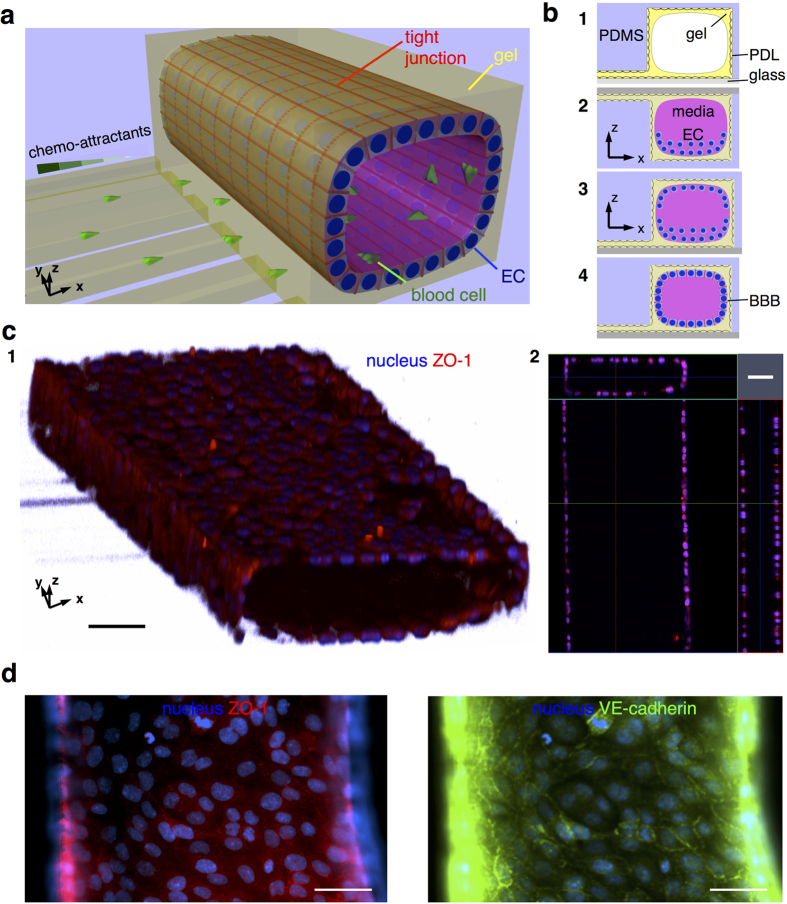
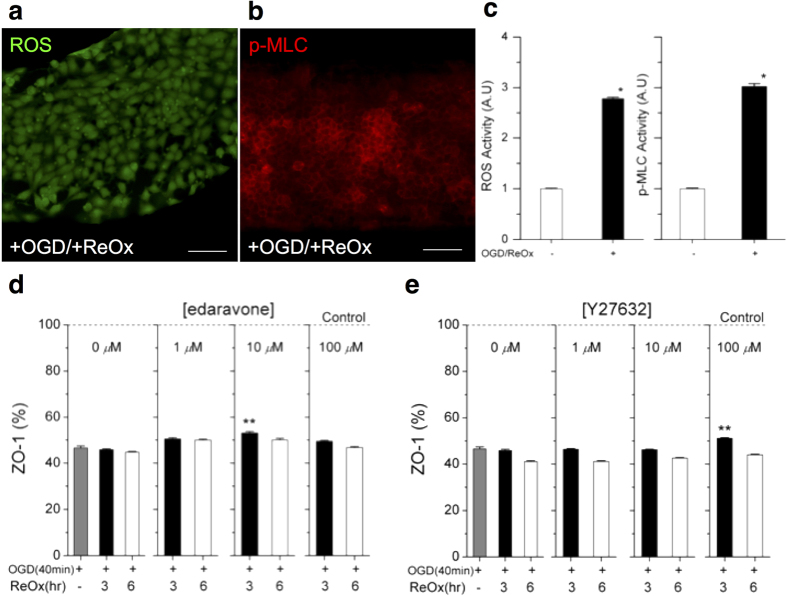
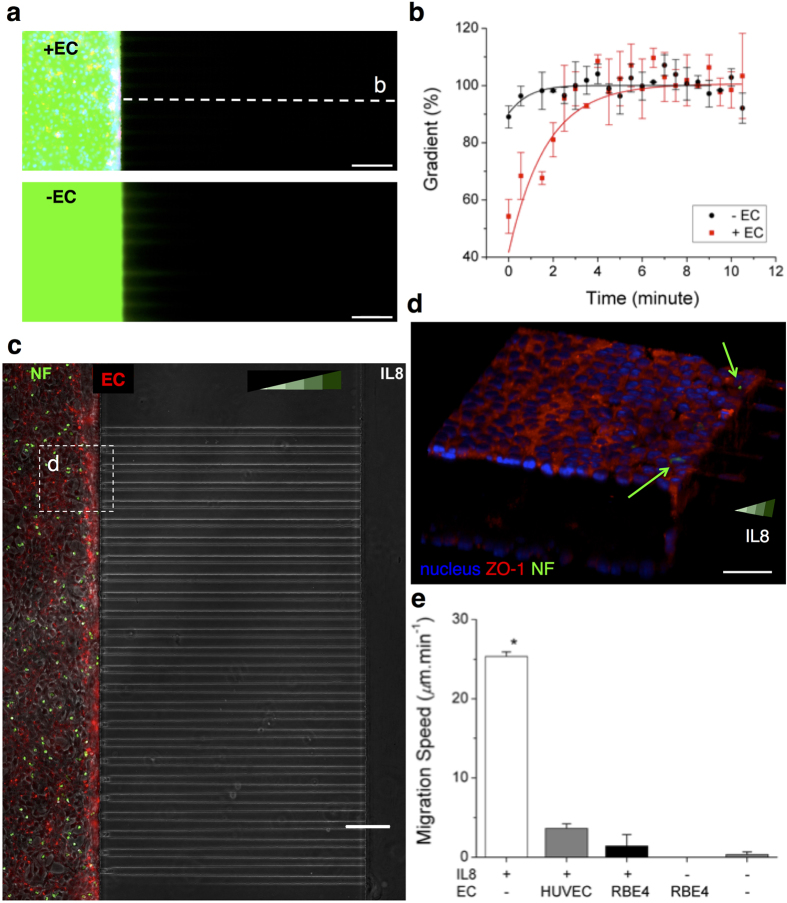
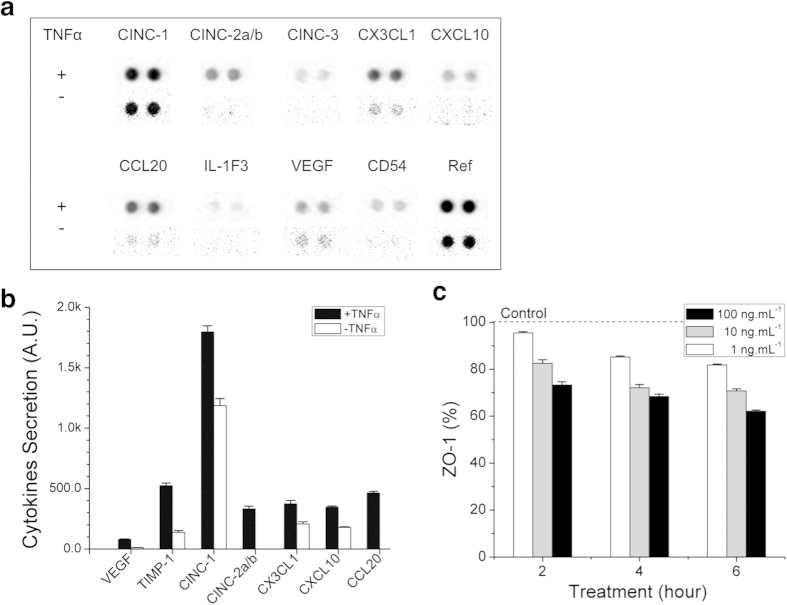
Blood-brain barrier (BBB) pathology leads to neurovascular disorders and is an important target for therapies. However, the study of BBB pathology is difficult in the absence of models that are simple and relevant. In vivo animal models are highly relevant, however they are hampered by complex, multi-cellular interactions that are difficult to decouple. In vitro models of BBB are simpler, however they have limited functionality and relevance to disease processes. To address these limitations, we developed a 3-dimensional (3D) model of BBB on a microfluidic platform. We verified the tightness of the BBB by showing its ability to reduce the leakage of dyes and to block the transmigration of immune cells towards chemoattractants. Moreover, we verified the localization at endothelial cell boundaries of ZO-1 and VE-Cadherin, two components of tight and adherens junctions. To validate the functionality of the BBB model, we probed its disruption by neuro-inflammation mediators and ischemic conditions and measured the protective function of antioxidant and ROCK-inhibitor treatments. Overall, our 3D BBB model provides a robust platform, adequate for detailed functional studies of BBB and for the screening of BBB-targeting drugs in neurological diseases.
血脑屏障(BBB)病理导致神经血管疾病,是治疗的重要靶点。然而,在缺乏简单且相关的模型的情况下,对BBB病理的研究很困难。体内动物模型高度相关,然而它们受到复杂的多细胞相互作用的阻碍,这些相互作用难以解耦。BBB的体外模型更简单,然而它们的功能有限且与疾病过程的相关性较低。为了解决这些局限性,我们在微流控平台上开发了一种三维(3D)BBB模型。我们通过展示其减少染料泄漏和阻止免疫细胞向趋化因子迁移的能力,验证了BBB的紧密性。此外,我们验证了紧密连接和黏附连接的两个组成部分ZO-1和VE-钙黏蛋白在内皮细胞边界的定位。为了验证BBB模型的功能,我们探究了神经炎症介质和缺血条件对其的破坏作用,并测量了抗氧化剂和ROCK抑制剂治疗的保护功能。总体而言,我们的3D BBB模型提供了一个强大的平台,足以用于对BBB进行详细的功能研究以及筛选针对神经系统疾病的BBB靶向药物。