Key Laboratory of Molecular and Developmental Biology, Institute of Genetics and Developmental Biology, Chinese Academy of Sciences, Beijing 100101, China.
College of Life Sciences, Hubei University, Wuhan, Hubei 430062, China.
Dis Model Mech. 2017 Oct 1;10(10):1245-1252. doi: 10.1242/dmm.028316. Epub 2017 Aug 17.
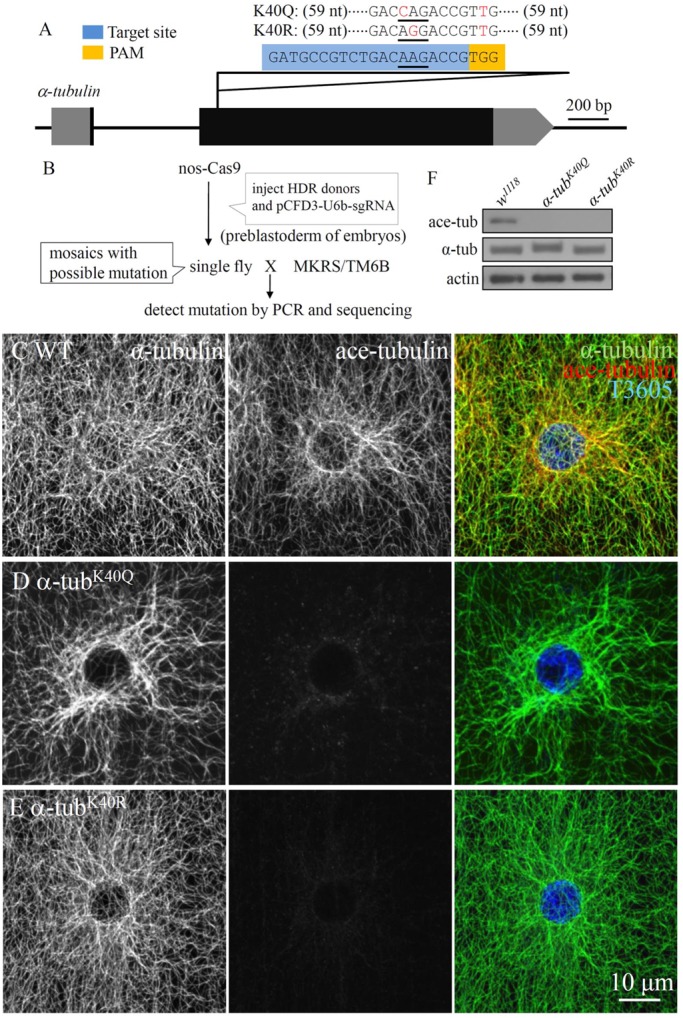
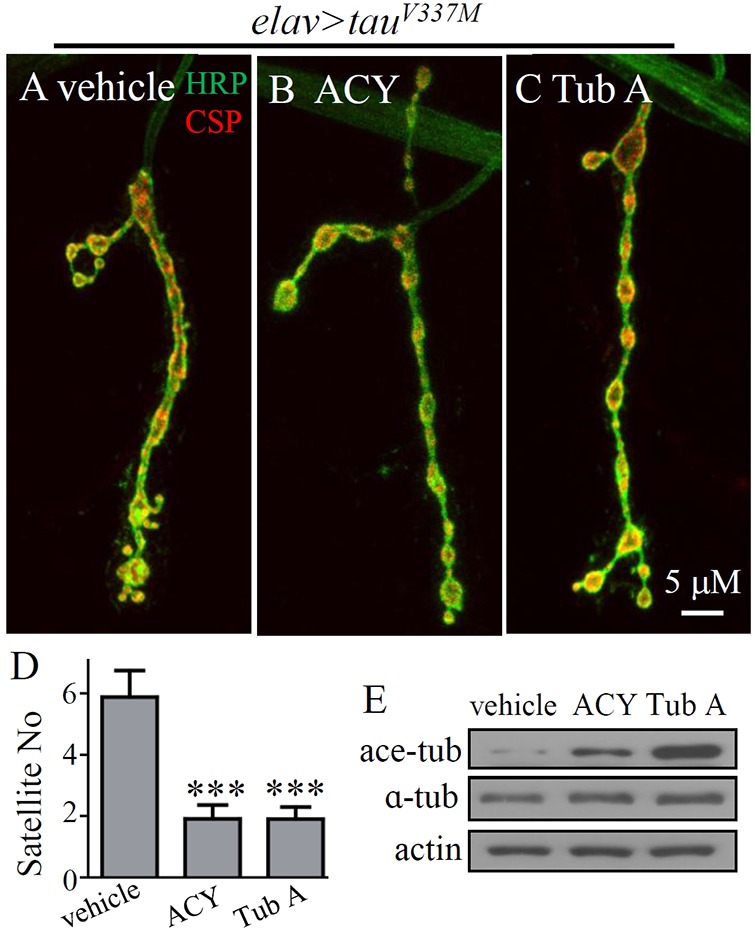
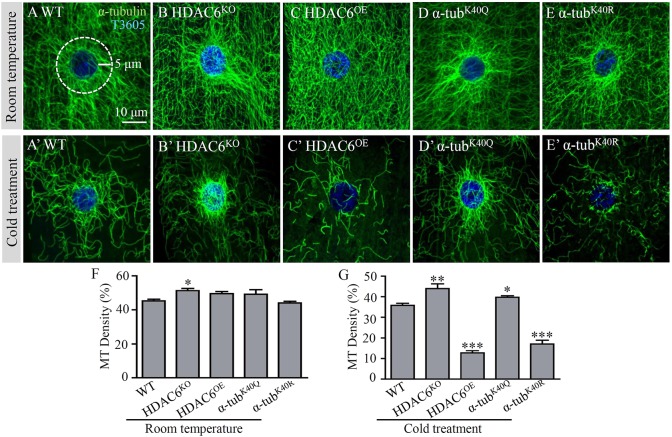
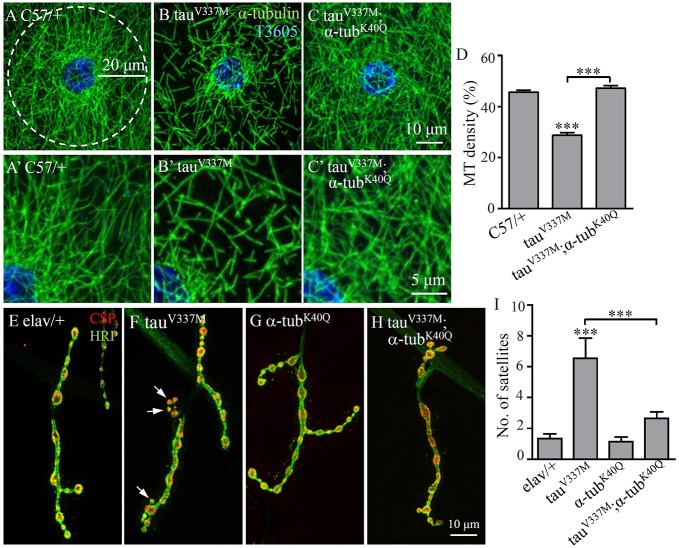
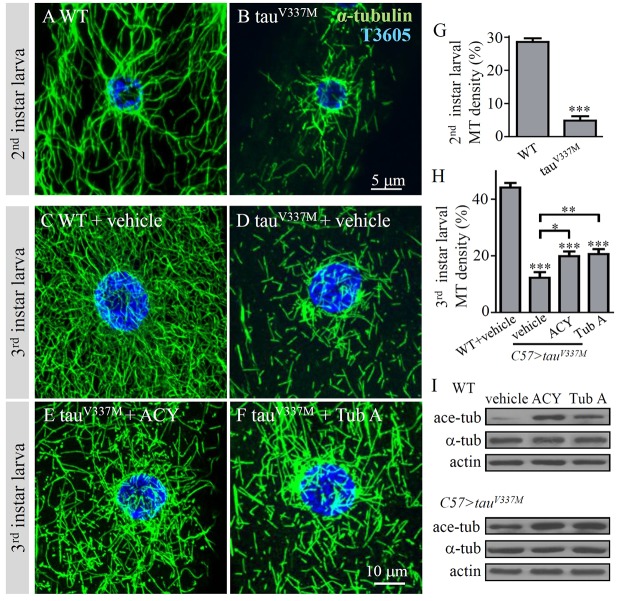
Tau normally associates with and stabilizes microtubules (MTs), but is hyperphosphorylated and aggregated into neurofibrillary tangles in Alzheimer's disease and related neurodegenerative diseases, which are collectively known as tauopathies. MTs are regulated by different forms of post-translational modification, including acetylation; acetylated MTs represent a more stable microtubule population. In our previous study, we showed that inhibition of histone deacetylase 6 (HDAC6), which deacetylates tubulin at lysine 40, rescues defects in MTs and in neuromuscular junction growth caused by tau overexpression. However, HDAC6 also acts on other proteins that are involved in distinct biological processes unrelated to tubulins. In order to examine directly the role of increased tubulin acetylation against tau toxicity, we generated a site-directed mutation by CRISPR/Cas9 technology to mimic the acetylated MTs and found that acetylation-mimicking α-tubulin rescued tau-induced MT defects and neuromuscular junction developmental abnormalities. We also showed that late administration of ACY-1215 and tubastatin A, two potent and selective inhibitors of HDAC6, rescued the tau-induced MT defects after the abnormalities had already become apparent. Overall, our results indicate that increasing MT acetylation by either genetic manipulations or drugs might be used as potential strategies for intervention in tauopathies.
正常情况下,Tau 蛋白与微管(MTs)结合并稳定其结构,但在阿尔茨海默病和相关神经退行性疾病中,Tau 蛋白会异常过度磷酸化并聚集成神经纤维缠结,这些疾病统称为 Tau 病。MTs 受多种翻译后修饰形式的调节,包括乙酰化;乙酰化的 MTs 代表了一种更稳定的微管群体。在我们之前的研究中,我们表明抑制组蛋白去乙酰化酶 6(HDAC6)可以挽救 Tau 过表达引起的 MT 缺陷和神经肌肉接头生长缺陷,因为 HDAC6 会使赖氨酸 40 上的微管蛋白去乙酰化。然而,HDAC6 还作用于其他参与与微管蛋白无关的不同生物学过程的蛋白质。为了直接研究增加的微管蛋白乙酰化对 Tau 毒性的作用,我们通过 CRISPR/Cas9 技术生成了一个定点突变,模拟乙酰化的 MTs,结果发现,乙酰化模拟的α-微管蛋白挽救了 Tau 诱导的 MT 缺陷和神经肌肉接头发育异常。我们还表明,HDAC6 的两种有效且选择性抑制剂 ACY-1215 和 tubastatin A 的后期给药可以挽救 Tau 诱导的 MT 缺陷,即使异常已经显现。总的来说,我们的结果表明,通过遗传操作或药物增加 MT 乙酰化可能被用作 Tau 病干预的潜在策略。