Department of Aerospace Engineering, Indian Institute of Science, Bangalore, India.
Department of Microbiology and Cell Biology, Indian Institute of Science, Bangalore, India.
Sci Rep. 2017 Aug 17;7(1):8645. doi: 10.1038/s41598-017-08542-5.
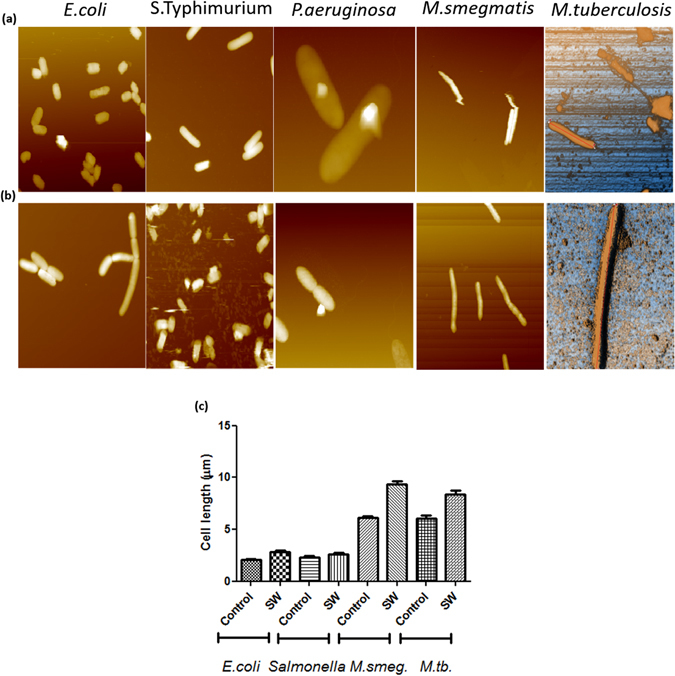
We present a novel method for shockwave-assisted bacterial transformation using a miniature oxyhydrogen detonation-driven shock tube. We have obtained transformation efficiencies of about 1.28 × 10, 1.7 × 10, 5 × 10, 1 × 10, 1 × 10 and 2 × 10 transformants/µg of DNA for Escherichia coli, Salmonella Typhimurum, Pseudomonas aeruginosa, Mycobacterium smegmatis, Mycobacterium tuberculosis (Mtb) and Helicobacter pylori respectively using this method which are significantly higher than those obtained using conventional methods. Mtb is the most difficult bacteria to be transformed and hence their genetic modification is hampered due to their poor transformation efficiency. Experimental results show that longer steady time duration of the shockwave results in higher transformation efficiencies. Measurements of Young's modulus and rigidity of cell wall give a good understanding of the transformation mechanism and these results have been validated computationally. We describe the development of a novel shockwave device for efficient bacterial transformation in complex bacteria along with experimental evidence for understanding the transformation mechanism.
我们提出了一种使用微型氢氧爆轰驱动激波管进行冲击波辅助细菌转化的新方法。使用这种方法,我们分别获得了大肠杆菌、鼠伤寒沙门氏菌、铜绿假单胞菌、耻垢分枝杆菌、结核分枝杆菌(Mtb)和幽门螺杆菌的转化效率约为 1.28×10、1.7×10、5×10、1×10、1×10 和 2×10 个转化体/µg DNA,显著高于使用传统方法获得的转化效率。Mtb 是最难转化的细菌,因此由于其转化效率低,其遗传修饰受到阻碍。实验结果表明,冲击波的稳定时间越长,转化效率越高。细胞壁杨氏模量和刚性的测量为转化机制提供了很好的理解,这些结果已经通过计算进行了验证。我们描述了一种新型冲击波装置的开发,用于在复杂细菌中进行高效的细菌转化,并提供了实验证据来理解转化机制。