Department of Biosystems, Laboratory of Gene Technology, KU Leuven, Kasteelpark Arenberg 21 box 2462, 3001, Leuven, BE, Belgium.
The Novo Nordisk Foundation Center for Biosustainability, Technical University of Denmark, Kemitorvet, Building 220, 2800 Kgs, Lyngby, DK, Denmark.
Nat Commun. 2020 Oct 20;11(1):5294. doi: 10.1038/s41467-020-19124-x.
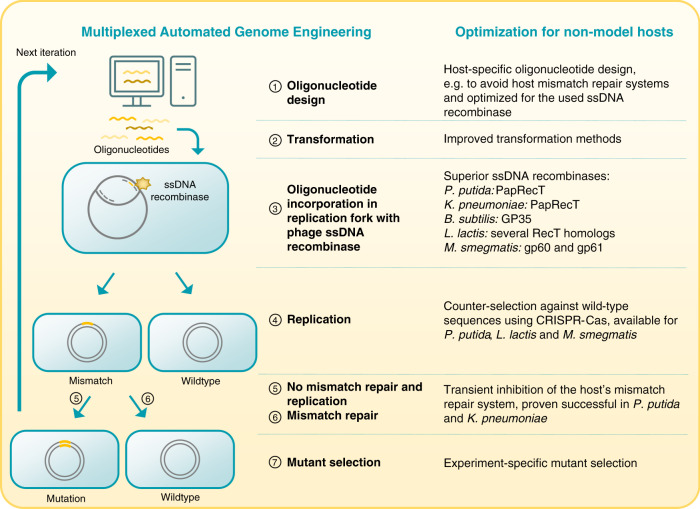
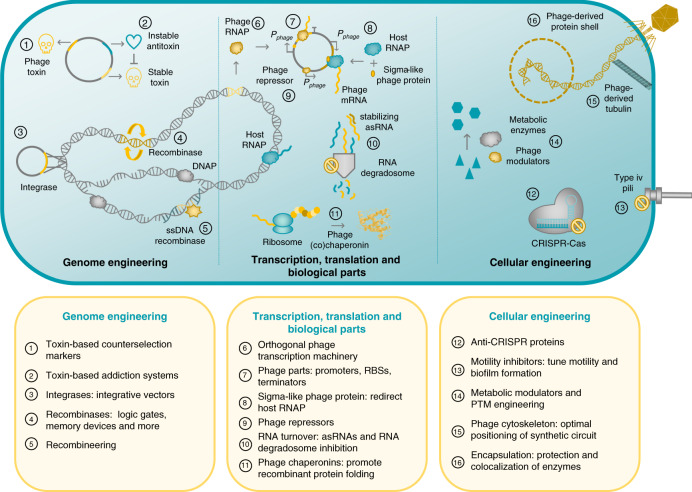
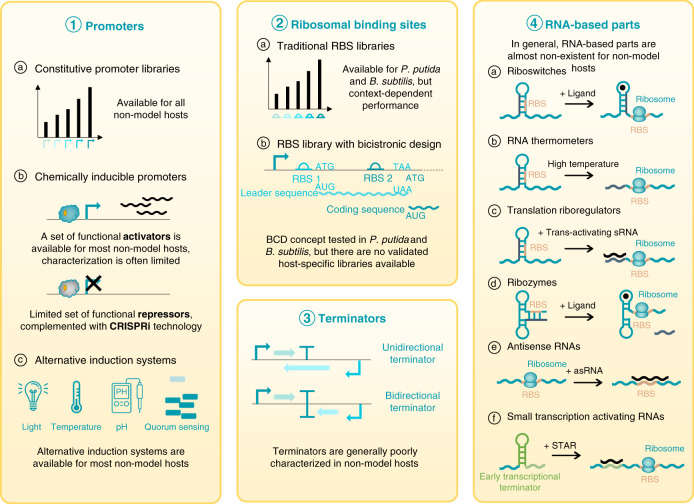
Non-model bacteria like Pseudomonas putida, Lactococcus lactis and other species have unique and versatile metabolisms, offering unique opportunities for Synthetic Biology (SynBio). However, key genome editing and recombineering tools require optimization and large-scale multiplexing to unlock the full SynBio potential of these bacteria. In addition, the limited availability of a set of characterized, species-specific biological parts hampers the construction of reliable genetic circuitry. Mining of currently available, diverse bacteriophages could complete the SynBio toolbox, as they constitute an unexplored treasure trove for fully adapted metabolic modulators and orthogonally-functioning parts, driven by the longstanding co-evolution between phage and host.
非模式细菌,如恶臭假单胞菌、乳球菌和其他物种,具有独特且多功能的代谢途径,为合成生物学(SynBio)提供了独特的机会。然而,关键的基因组编辑和重组工具需要优化和大规模多路复用,才能释放这些细菌的全部 SynBio 潜力。此外,一组经过特征描述的、物种特异性的生物部件的有限可用性阻碍了可靠遗传回路的构建。目前可利用的、多样化的噬菌体的挖掘可以完善 SynBio 工具包,因为它们是完全适应的代谢调节剂和正交功能部件的未开发的宝库,这是由噬菌体和宿主之间长期共同进化驱动的。