Ghebre Rahel G, Grover Surbhi, Xu Melody J, Chuang Linus T, Simonds Hannah
University of Minnesota Medical School, Minneapolis, MN, USA.
Human Resources for Health, Rwanda.
Gynecol Oncol Rep. 2017 Jul 21;21:101-108. doi: 10.1016/j.gore.2017.07.009. eCollection 2017 Aug.
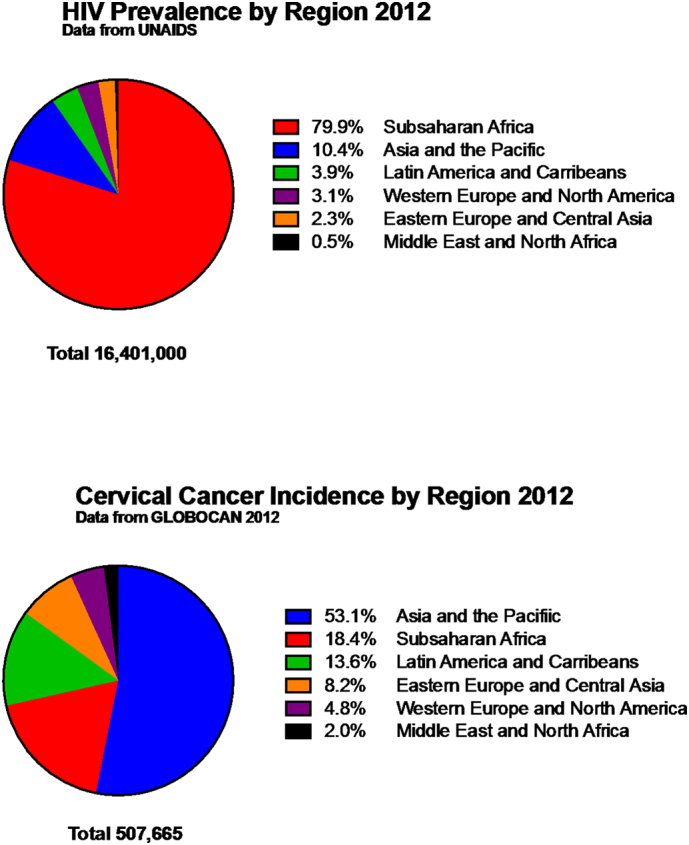
Since the initial recognition of acquired immunodeficiency syndrome (AIDS) in 1981, an increased burden of cervical cancer was identified among human immunodeficiency virus (HIV)-positive women. Introduction of antiretroviral therapy (ART) decreased risks of opportunistic infections and improved overall survival. HIV-infected women are living longer. Introduction of the human papillomavirus (HPV) vaccine, cervical cancer screening and early diagnosis provide opportunities to reduce cervical cancer associated mortality. In line with 2030 Sustainable Development Goals to reduce mortality from non-communicable diseases, increased efforts need to focus on high burden countries within sub-Saharan Africa (SSA). Despite limitations of resources in SSA, opportunities exist to improve cancer control. This article reviews advancements in cervical cancer control in HIV-positive women.
自1981年首次确认获得性免疫缺陷综合征(艾滋病)以来,已发现人类免疫缺陷病毒(HIV)阳性女性的宫颈癌负担有所增加。抗逆转录病毒疗法(ART)的引入降低了机会性感染的风险并提高了总体生存率。感染HIV的女性寿命更长。人乳头瘤病毒(HPV)疫苗的引入、宫颈癌筛查和早期诊断为降低宫颈癌相关死亡率提供了机会。为了符合2030年减少非传染性疾病死亡率的可持续发展目标,需要加大力度关注撒哈拉以南非洲(SSA)的高负担国家。尽管SSA资源有限,但仍有改善癌症控制的机会。本文综述了HIV阳性女性宫颈癌控制方面的进展。