a Centre of Molecular Inflammation Research and Department of Cancer Research and Molecular Medicine, Faculty of Medicine and Health Sciences , Norwegian University of Science and Technology , Trondheim , Norway.
b Department of Biomedical Laboratory Science, Faculty of Natural Sciences , Norwegian University of Science and Technology , Trondheim , Norway.
Autophagy. 2017 Oct 3;13(10):1664-1678. doi: 10.1080/15548627.2017.1345411. Epub 2017 Aug 18.
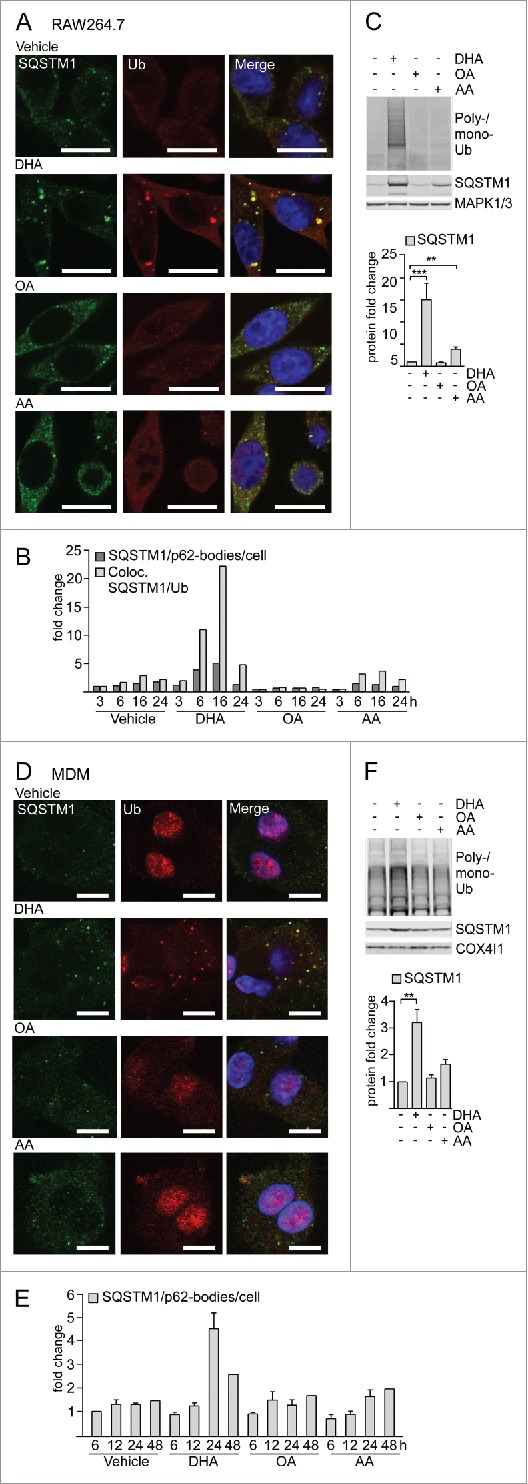
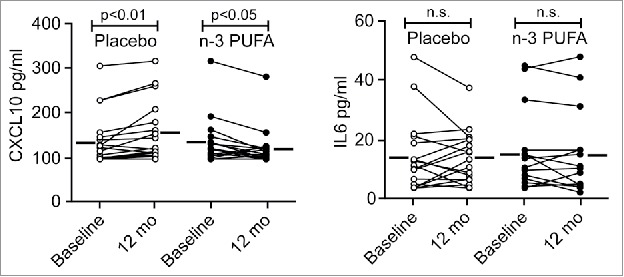
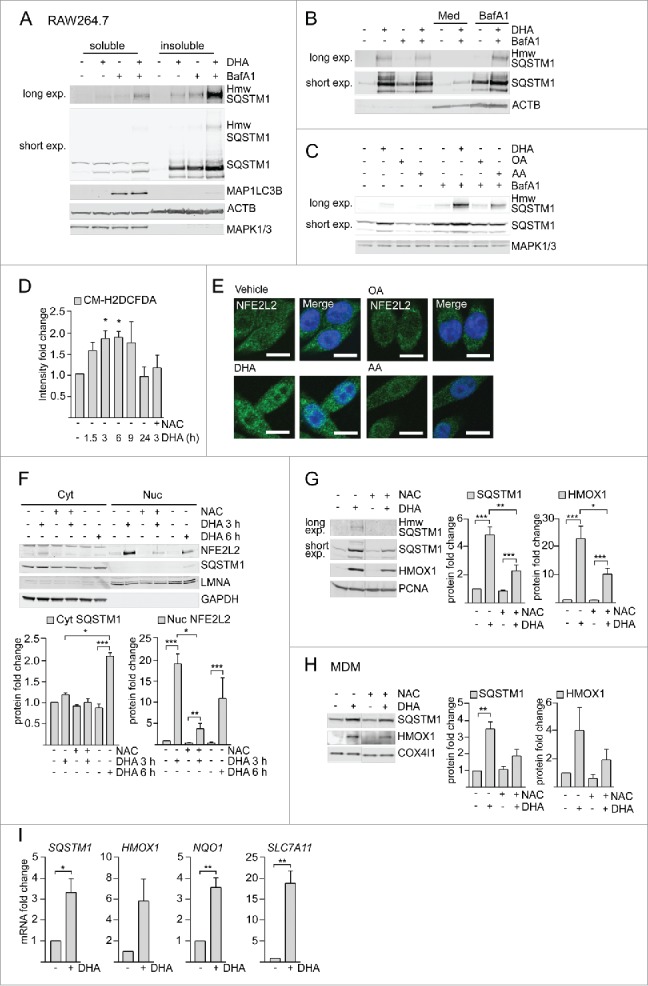
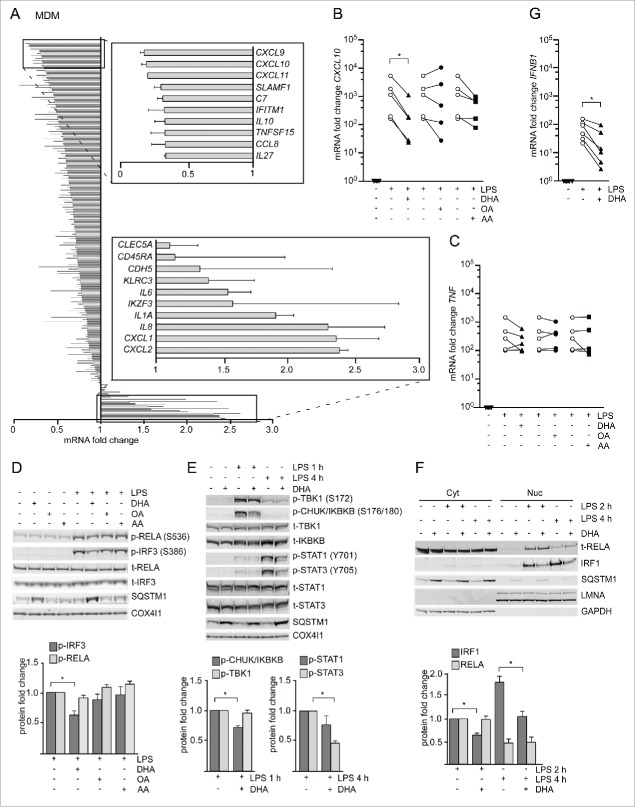
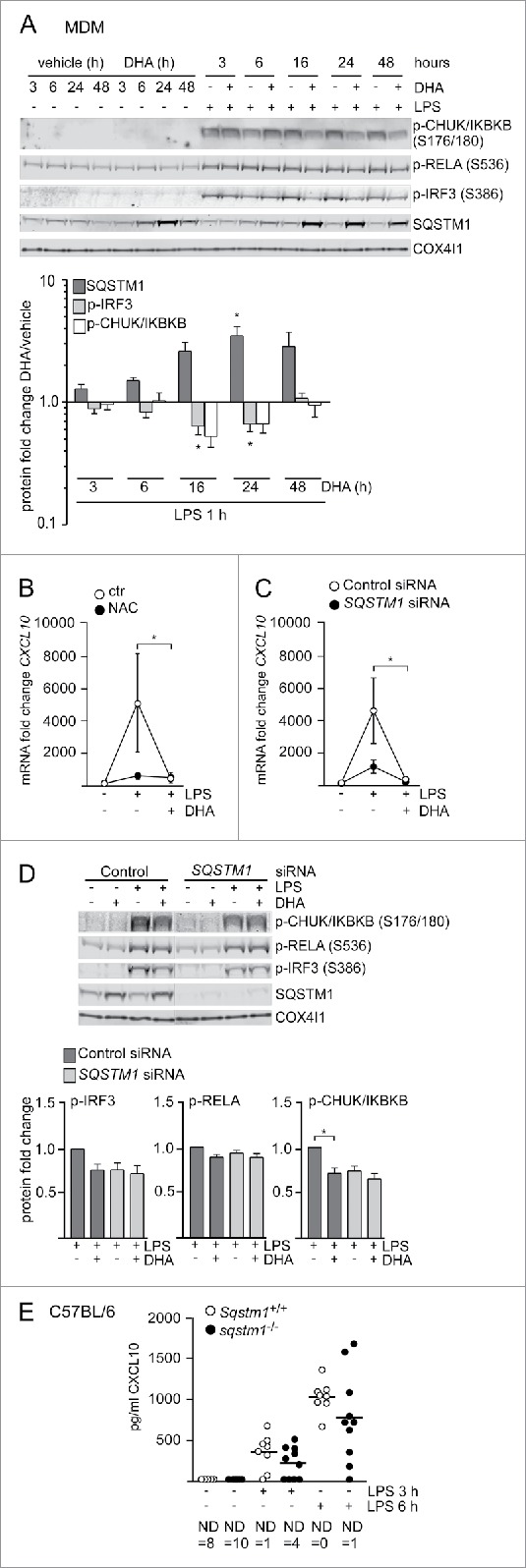
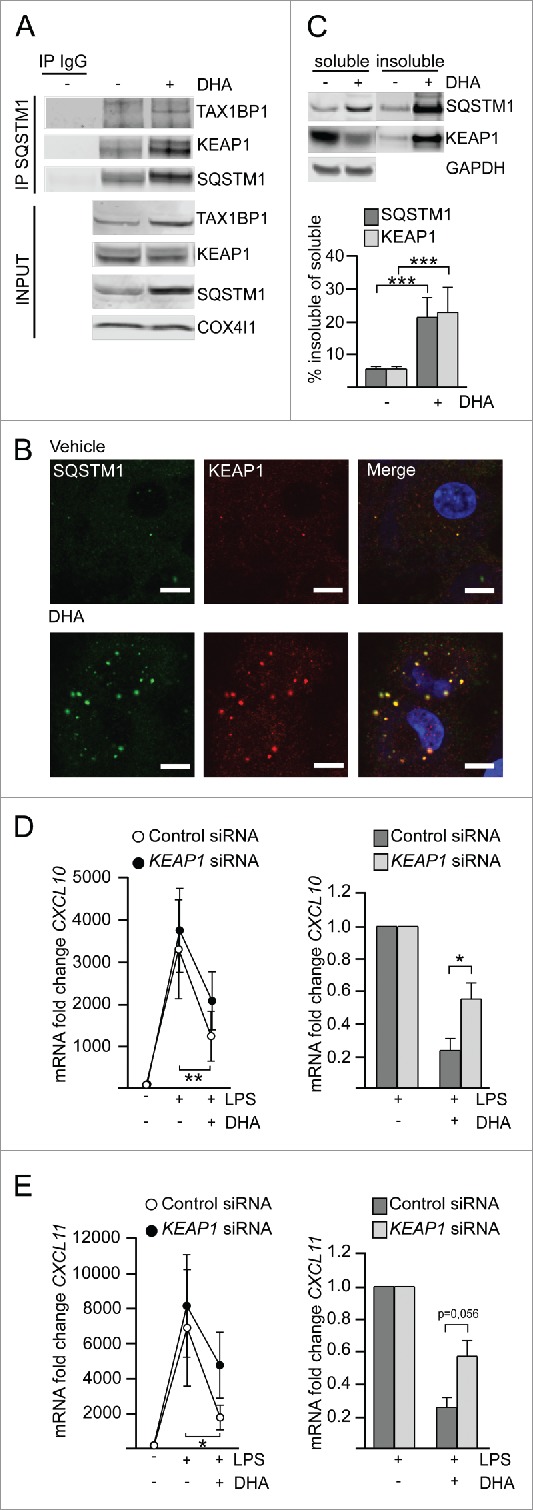
Inflammation is crucial in the defense against infections but must be tightly controlled to limit detrimental hyperactivation. Our diet influences inflammatory processes and omega-3 polyunsaturated fatty acids (n-3 PUFAs) have known anti-inflammatory effects. The balance of pro- and anti-inflammatory processes is coordinated by macrophages and macroautophagy/autophagy has recently emerged as a cellular process that dampens inflammation. Here we report that the n-3 PUFA docosahexaenoic acid (DHA) transiently induces cytosolic speckles of the autophagic receptor SQSTM1/p62 (sequestosome 1) (described as SQSTM1/p62-bodies) in macrophages. We suggest that the formation of SQSTM1/p62-bodies represents a fast mechanism of NFE2L2/Nrf2 (nuclear factor, erythroid 2 like 2) activation by recruitment of KEAP1 (kelch like ECH associated protein 1). Further, the autophagy receptor TAX1BP1 (Tax1 binding protein 1) and ubiquitin-editing enzyme TNFAIP3/A20 (TNF α induced protein 3) could be identified in DHA-induced SQSTM1/p62-bodies. Simultaneously, DHA strongly dampened the induction of pro-inflammatory genes including CXCL10 (C-X-C motif chemokine ligand 10) and we suggest that formation of SQSTM1/p62-bodies and activation of NFE2L2 leads to tolerance towards selective inflammatory stimuli. Finally, reduced CXCL10 levels were related to the improved clinical outcome in n-3 PUFA-supplemented heart-transplant patients and we propose CXCL10 as a robust marker for the clinical benefits mobilized by n-3 PUFA supplementation.
炎症对于抵御感染至关重要,但必须加以严格控制,以避免过度激活造成损害。我们的饮食会影响炎症过程,而ω-3 多不饱和脂肪酸(n-3 PUFAs)具有已知的抗炎作用。促炎和抗炎过程的平衡由巨噬细胞协调,自噬/细胞自噬最近已成为一种抑制炎症的细胞过程。在这里,我们报告 n-3 PUFA 二十二碳六烯酸(DHA)在巨噬细胞中短暂诱导自噬受体 SQSTM1/p62(自噬体相关蛋白 1)的细胞质斑点(描述为 SQSTM1/p62-体)。我们认为 SQSTM1/p62-体的形成代表了 NFE2L2/Nrf2(核因子,红细胞 2 样 2)通过募集 KEAP1(kelch 样 ECH 相关蛋白 1)快速激活的机制。此外,在 DHA 诱导的 SQSTM1/p62-体中可以鉴定出自噬受体 TAX1BP1(Tax1 结合蛋白 1)和泛素编辑酶 TNFAIP3/A20(TNFα诱导蛋白 3)。同时,DHA 强烈抑制了包括 CXCL10(C-X-C 基序趋化因子配体 10)在内的促炎基因的诱导,我们认为 SQSTM1/p62-体的形成和 NFE2L2 的激活导致对选择性炎症刺激的耐受。最后,CXCL10 水平的降低与 n-3 PUFA 补充的心脏移植患者临床结局的改善有关,我们提出 CXCL10 作为 n-3 PUFA 补充所带来的临床获益的可靠标志物。