School of Medicine, University of California, San Francisco, CA, USA.
Department of Pathology, University of California, San Francisco, CA, USA.
Acta Neuropathol Commun. 2016 Oct 31;4(1):115. doi: 10.1186/s40478-016-0384-6.
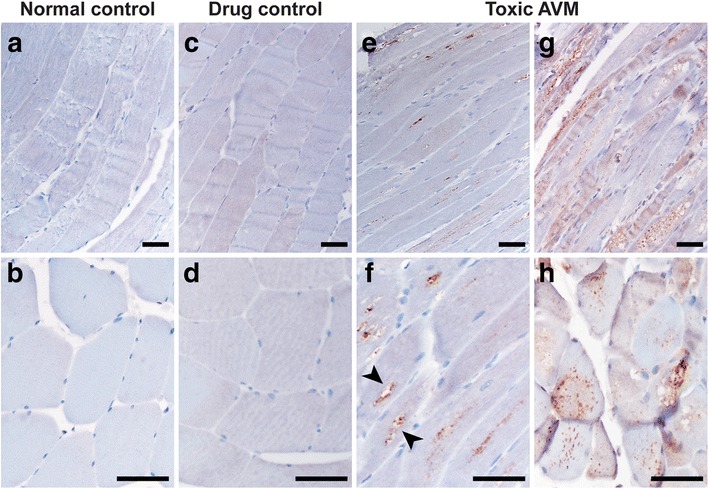
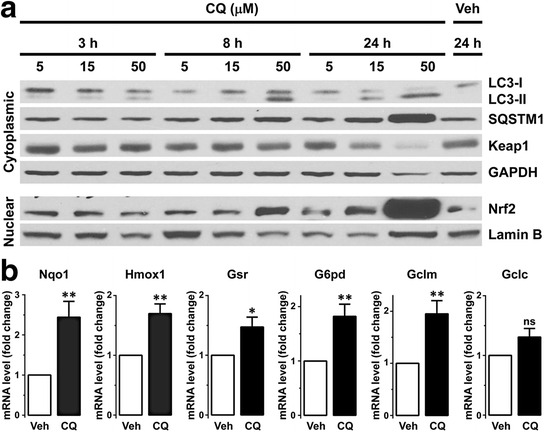
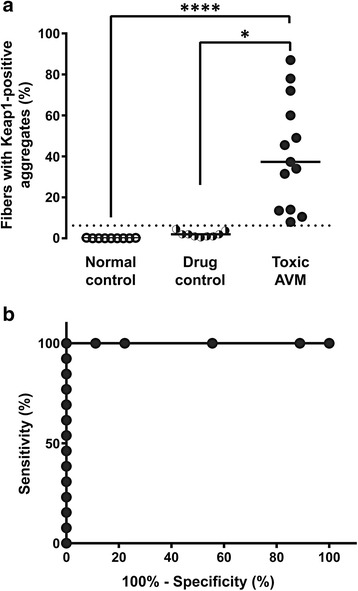
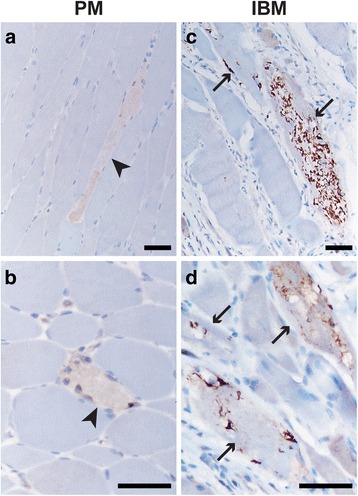
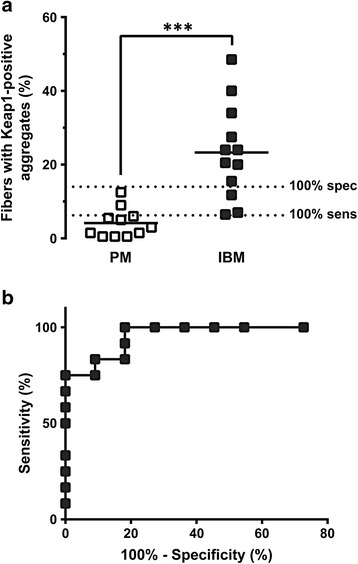
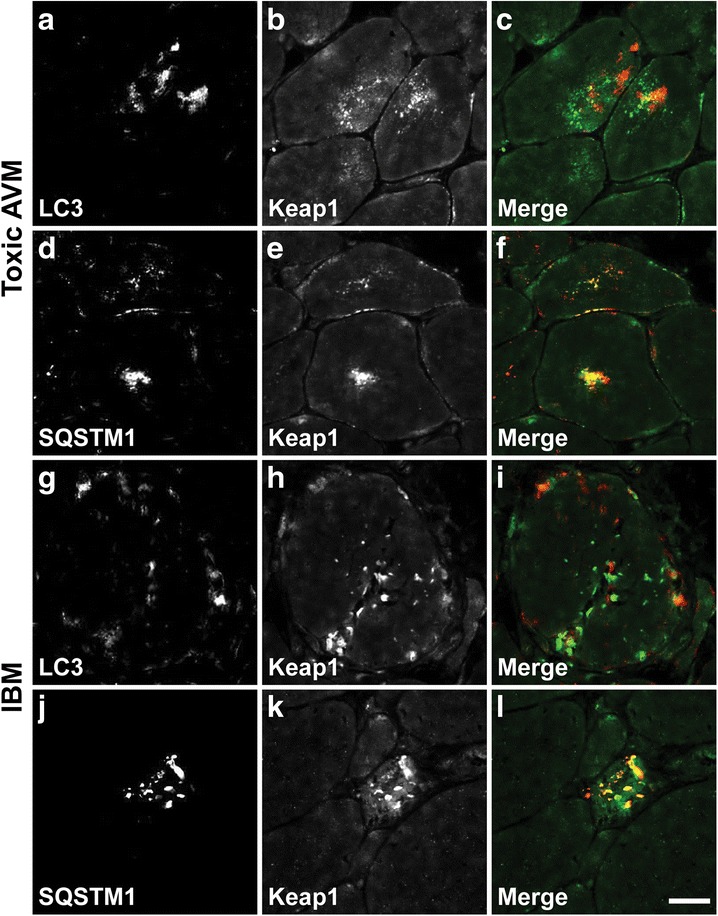
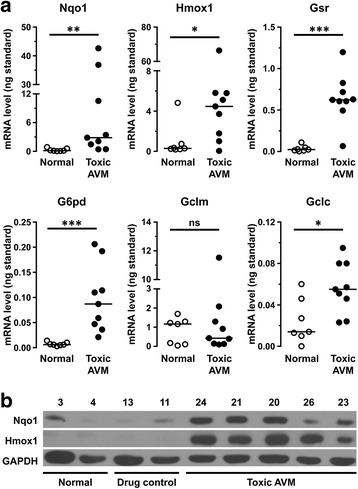
Nrf2 (nuclear factor [erythroid-derived 2]-like 2; the transcriptional master regulator of the antioxidant stress response) is regulated through interaction with its cytoplasmic inhibitor Keap1 (Kelch-like ECH-associated protein 1), which under basal conditions targets Nrf2 for proteasomal degradation. Sequestosome 1 (SQSTM1)/p62-a multifunctional adapter protein that accumulates following autophagy inhibition and can serve as a diagnostic marker for human autophagic vacuolar myopathies (AVMs)-was recently shown to compete with Nrf2 for Keap1 binding, resulting in activation of the Nrf2 pathway. In this study, we used 55 human muscle biopsies divided into five groups [normal control, hydroxychloroquine- or colchicine-treated non-AVM control, hydroxychloroquine- or colchicine-induced toxic AVM, polymyositis, and inclusion body myositis (IBM)] to evaluate whether Keap1-SQSTM1 interaction led to increased Nrf2 signaling in human AVMs. In toxic AVMs and IBM, but not in control muscle groups or polymyositis, Keap1 antibody labeled sarcoplasmic protein aggregates that can be used as an alternate diagnostic marker for both AVM types; these Keap1-positive aggregates were co-labeled with the antibody against SQSTM1 but not with the antibody against autophagosome marker LC3 (microtubule-associated protein 1 light chain 3). In human AVM muscle, sequestration of Keap1 into the SQSTM1-positive protein aggregates was accompanied by an increase in mRNA and protein levels of Nrf2 target genes; similarly, treatment of differentiated C2C12 myotubes with autophagy inhibitor chloroquine led to an increase in the nuclear Nrf2 protein level and an increase in expression of the Nrf2-regulated genes. Taken together, our findings demonstrate that Nrf2 signaling is upregulated in autophagic muscle disorders and raise the possibility that autophagy disruption in skeletal muscle leads to dysregulation of cellular redox homeostasis.
Nrf2(核因子[红细胞衍生 2]样 2;抗氧化应激反应的转录主调节因子)通过与细胞质抑制剂 Keap1(Kelch-like ECH-associated protein 1)相互作用进行调节,在基础条件下,Keap1 将 Nrf2 靶向到蛋白酶体降解。自噬抑制后会积累的多功能衔接蛋白 SQSTM1/p62-一种可以作为人类自噬空泡肌病(AVM)的诊断标志物的蛋白-最近被证明与 Nrf2 竞争与 Keap1 结合,从而激活 Nrf2 通路。在这项研究中,我们使用了 55 个人类肌肉活检样本,分为五组[正常对照组、羟氯喹或秋水仙碱治疗的非 AVM 对照组、羟氯喹或秋水仙碱诱导的毒性 AVM、多发性肌炎和包涵体肌炎(IBM)],以评估 Keap1-SQSTM1 相互作用是否导致人类 AVM 中 Nrf2 信号增加。在毒性 AVM 和 IBM 中,但在对照组肌肉群或多发性肌炎中,Keap1 抗体标记了肌浆中的蛋白聚集体,这些聚集体可作为两种 AVM 类型的替代诊断标志物;这些 Keap1 阳性聚集体与 SQSTM1 抗体共标记,但与自噬体标记物 LC3(微管相关蛋白 1 轻链 3)抗体不标记。在人类 AVM 肌肉中,Keap1 被隔离到 SQSTM1 阳性蛋白聚集体中,同时 Nrf2 靶基因的 mRNA 和蛋白水平增加;同样,用自噬抑制剂氯喹处理分化的 C2C12 肌管,导致核 Nrf2 蛋白水平增加和 Nrf2 调节基因的表达增加。总之,我们的研究结果表明,Nrf2 信号在自噬性肌肉疾病中上调,并提出了骨骼肌中自噬中断导致细胞氧化还原稳态失调的可能性。