Division of Dermatology and Venereology, Department of Clinical Sciences Lund, Lund University, BMC, Tornavägen 10, SE-22184, Lund, Sweden.
Dermatology and Venereology, Skane University Hospital, Lasarettsgatan 15, SE-22185, Lund, Sweden.
Sci Rep. 2017 Aug 18;7(1):8689. doi: 10.1038/s41598-017-08046-2.
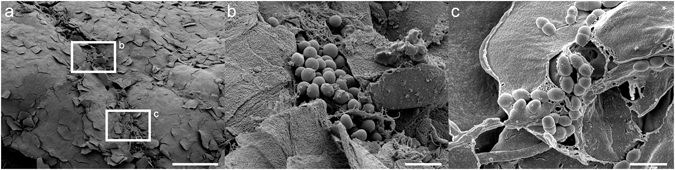
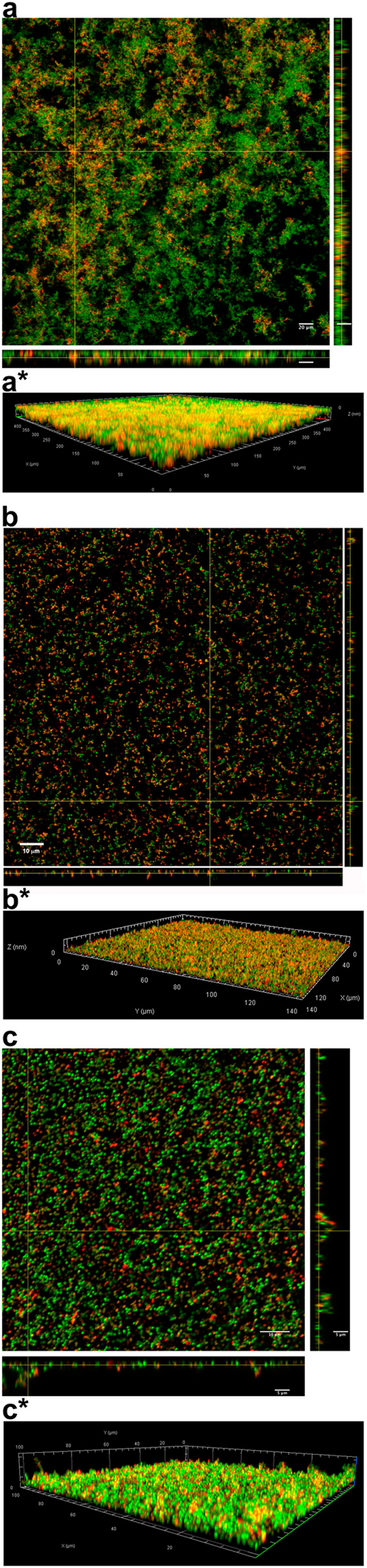
Atopic dermatitis (AD) is a chronic inflammatory skin disease characterized by an impaired epidermal barrier, dysregulation of innate and adaptive immunity, and a high susceptibility to bacterial colonization and infection. In the present study, bacterial biofilm was visualized by electron microscopy at the surface of AD skin. Correspondingly, Staphylococcus aureus (S. aureus) isolates from lesional skin of patients with AD, produced a substantial amount of biofilm in vitro. S. aureus biofilms showed less susceptibility to killing by the antimicrobial peptide LL-37 when compared with results obtained using planktonic cells. Confocal microscopy analysis showed that LL-37 binds to the S. aureus biofilms. Immuno-gold staining of S. aureus biofilm of AD skin detected the S. aureus derived protease staphopain adjacent to the bacteria. In vitro, staphopain B degraded LL-37 into shorter peptide fragments. Further, LL-37 significantly inhibited S. aureus biofilm formation, but no such effects were observed for the degradation products. The data presented here provide novel information on staphopains present in S. aureus biofilms in vivo, and illustrate the complex interplay between biofilm and LL-37 in skin of AD patients, possibly leading to a disturbed host defense, which facilitates bacterial persistence.
特应性皮炎(AD)是一种慢性炎症性皮肤病,其特征为表皮屏障受损、先天和适应性免疫失调以及对细菌定植和感染的高度易感性。在本研究中,通过电子显微镜在 AD 皮肤表面观察到细菌生物膜。相应地,从 AD 患者皮损皮肤分离出的金黄色葡萄球菌(S. aureus)在体外产生大量生物膜。与浮游细胞相比,S. aureus 生物膜对抗菌肽 LL-37 的杀伤作用的敏感性较低。共聚焦显微镜分析表明,LL-37 与 S. aureus 生物膜结合。AD 皮肤的 S. aureus 生物膜的免疫金染色检测到紧邻细菌的 S. aureus 来源的蛋白酶葡萄球菌蛋白酶。在体外,葡萄球菌蛋白酶 B 将 LL-37 降解为较短的肽片段。此外,LL-37 显著抑制 S. aureus 生物膜形成,但降解产物没有这种作用。这里提供的资料提供了关于体内 S. aureus 生物膜中存在的葡萄球菌蛋白酶的新信息,并说明了 AD 患者皮肤中生物膜和 LL-37 之间的复杂相互作用,可能导致宿主防御功能紊乱,从而促进细菌的持续存在。