Department of Brain and Cognitive Sciences, Massachusetts Institute of Technology, Cambridge, MA, USA.
Department of Psychiatry and Behavioral Sciences, Stanford University, Stanford, CA, USA.
Schizophr Res. 2018 Apr;194:70-77. doi: 10.1016/j.schres.2017.07.029. Epub 2017 Aug 18.
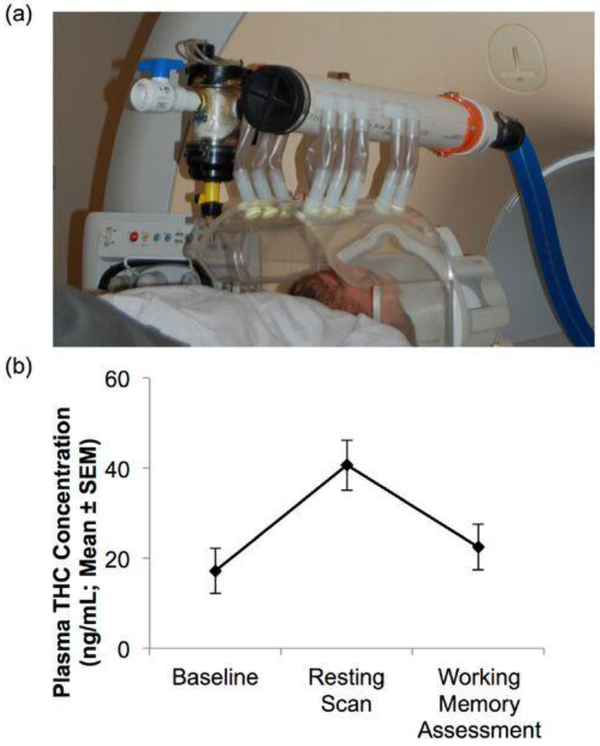
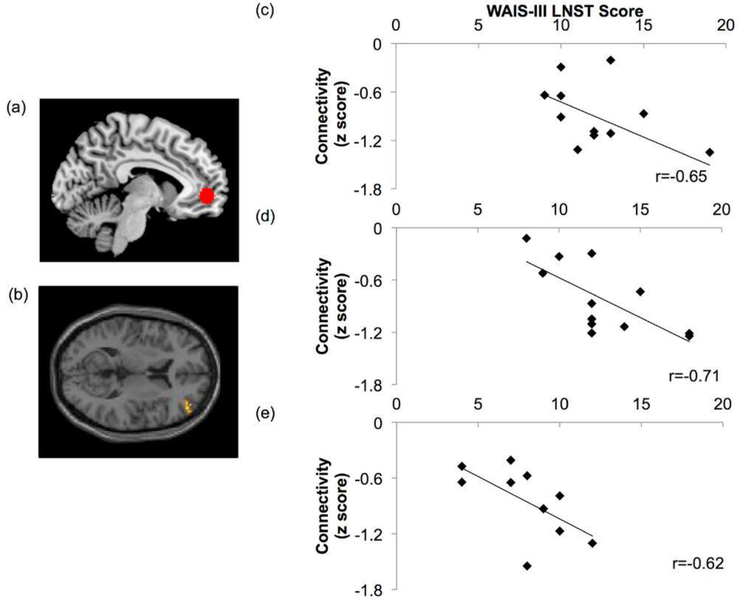
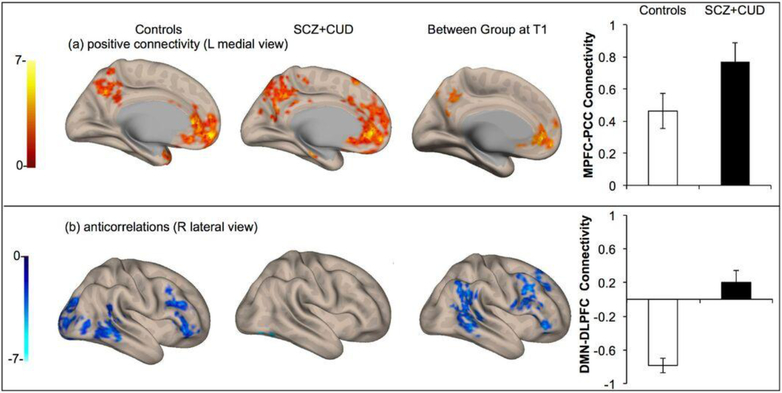
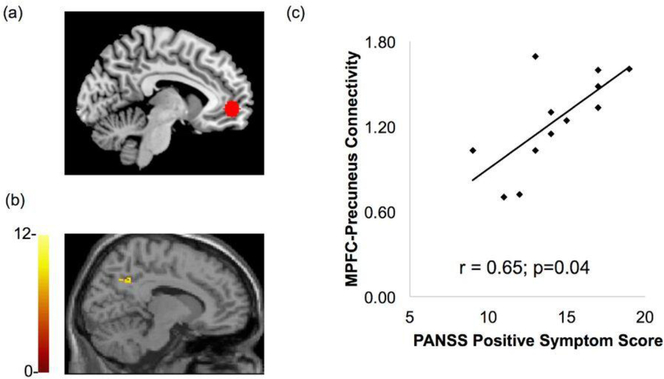
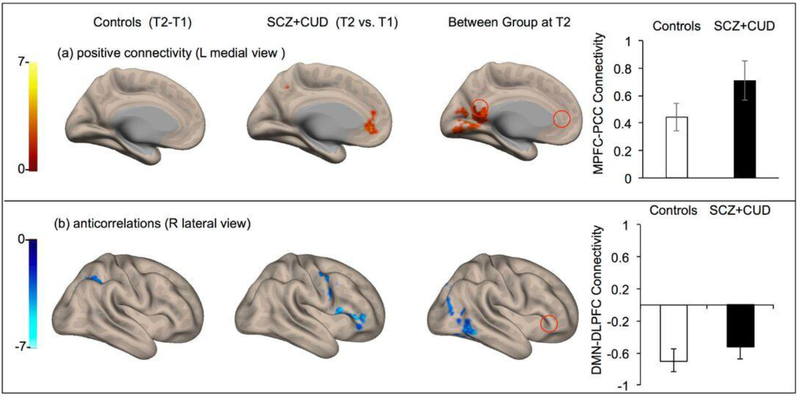
Nearly half of patients with schizophrenia (SCZ) have co-occurring cannabis use disorder (CUD), which has been associated with decreased treatment efficacy, increased risk of psychotic relapse, and poor global functioning. While reports on the effects of cannabis on cognitive performance in patients with SCZ have been mixed, study of brain networks related to executive function may clarify the relationship between cannabis use and cognition in these dual-diagnosis patients. In the present pilot study, patients with SCZ and CUD (n=12) and healthy controls (n=12) completed two functional magnetic resonance imaging (fMRI) resting scans. Prior to the second scan, patients smoked a 3.6% tetrahydrocannabinol (THC) cannabis cigarette or ingested a 15mg delta-9-tetrahydrocannabinol (THC) pill. We used resting-state functional connectivity to examine the default mode network (DMN) during both scans, as connectivity/activity within this network is negatively correlated with connectivity of the network involved in executive control and shows reduced activity during task performance in normal individuals. At baseline, relative to controls, patients exhibited DMN hyperconnectivity that correlated with positive symptom severity, and reduced anticorrelation between the DMN and the executive control network (ECN). Cannabinoid administration reduced DMN hyperconnectivity and increased DMN-ECN anticorrelation. Moreover, the magnitude of anticorrelation in the controls, and in the patients after cannabinoid administration, positively correlated with WM performance. The finding that DMN brain connectivity is plastic may have implications for future pharmacotherapeutic development, as treatment efficacy could be assessed through the ability of therapies to normalize underlying circuit-level dysfunction.
大约一半的精神分裂症 (SCZ) 患者同时存在大麻使用障碍 (CUD),这与治疗效果降低、精神病复发风险增加和整体功能下降有关。尽管关于大麻对精神分裂症患者认知表现的影响的报告存在差异,但研究与执行功能相关的大脑网络可能会阐明这些双重诊断患者中大麻使用与认知之间的关系。在本初步研究中,精神分裂症伴大麻使用障碍患者 (n=12) 和健康对照者 (n=12) 完成了两次功能磁共振成像 (fMRI) 静息扫描。在第二次扫描之前,患者吸食了一支 3.6%四氢大麻酚 (THC) 大麻香烟或服用了 15mg 大麻二酚 (THC) 药丸。我们使用静息态功能连接来检查两次扫描期间的默认模式网络 (DMN),因为该网络内的连接/活动与参与执行控制的网络的连接呈负相关,并且在正常个体执行任务时活动减少。在基线时,与对照组相比,患者表现出 DMN 过度连接,这与阳性症状严重程度相关,并且 DMN 与执行控制网络 (ECN) 之间的反相关减少。大麻素给药降低了 DMN 的过度连接,并增加了 DMN-ECN 的反相关。此外,对照组和大麻素给药后患者的反相关幅度与 WM 表现呈正相关。DMN 脑连接具有可塑性的发现可能对未来的药物治疗发展具有重要意义,因为可以通过治疗恢复潜在的回路功能障碍的能力来评估治疗效果。