Li Youjun, Yao Hongxiang, Lin Pan, Zheng Liang, Li Chenxi, Zhou Bo, Wang Pan, Zhang Zengqiang, Wang Luning, An Ningyu, Wang Jue, Zhang Xi
The Key Laboratory of Biomedical Information Engineering of Ministry of Education, Institute of Biomedical Engineering, School of Life Science and Technology, Xi'an Jiaotong UniversityXi'an, China.
National Engineering Research Center of Health Care and Medical Devices, Xi'an Jiaotong University BranchXi'an, China.
Front Aging Neurosci. 2017 Aug 3;9:259. doi: 10.3389/fnagi.2017.00259. eCollection 2017.
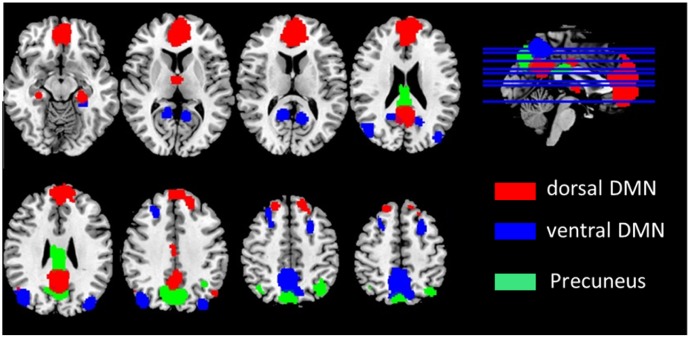
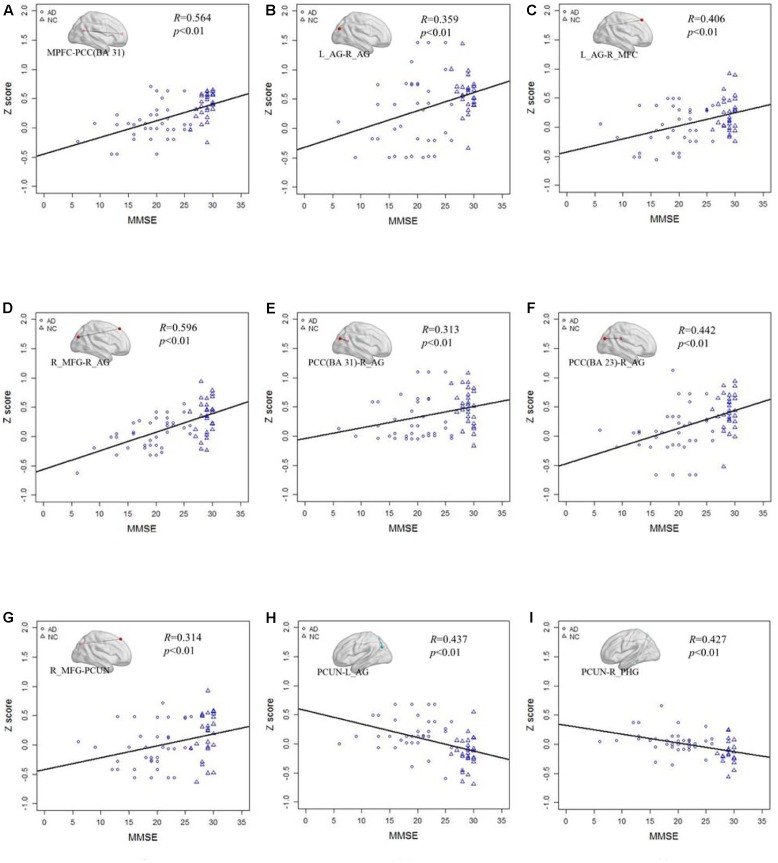
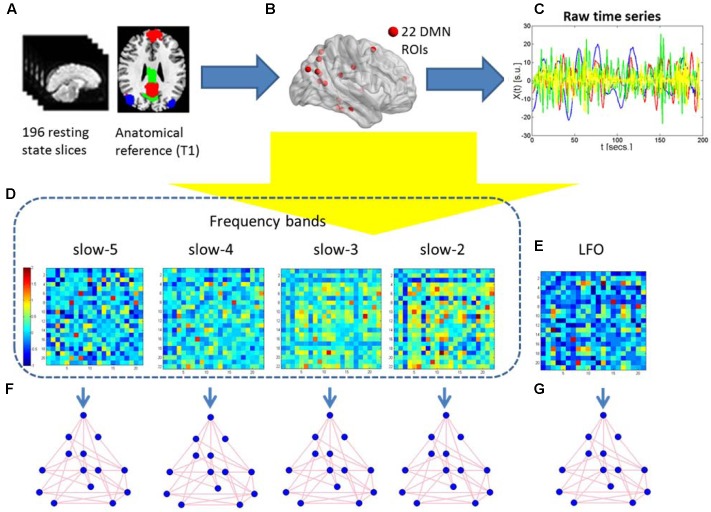
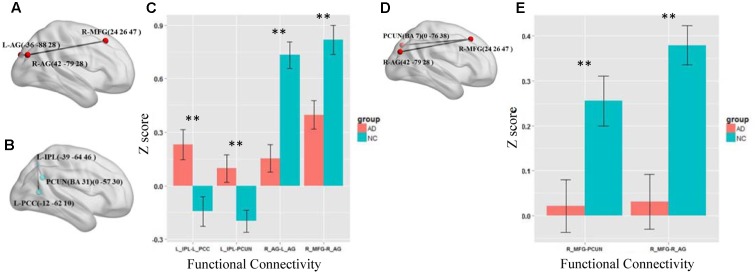
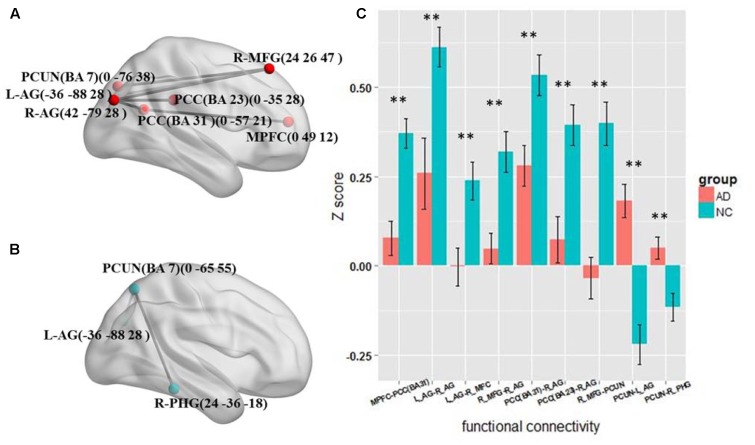
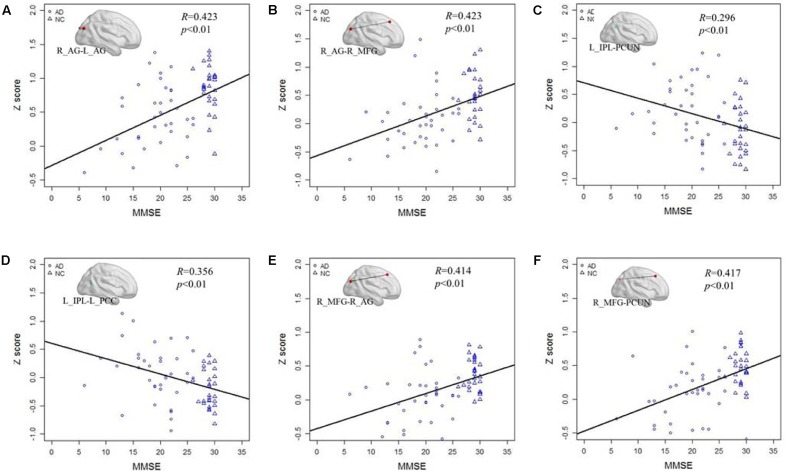
Alzheimer's disease (AD) is a neurodegenerative disorder associated with the progressive dysfunction of cognitive ability. Previous research has indicated that the default mode network (DMN) is closely related to cognition and is impaired in Alzheimer's disease. Because recent studies have shown that different frequency bands represent specific physiological functions, DMN functional connectivity studies of the different frequency bands based on resting state fMRI (RS-fMRI) data may provide new insight into AD pathophysiology. In this study, we explored the functional connectivity based on well-defined DMN regions of interest (ROIs) from the five frequency bands: slow-5 (0.01-0.027 Hz), slow-4 (0.027-0.073 Hz), slow-3 (0.073-0.198 Hz), slow-2 (0.198-0.25 Hzs) and standard low-frequency oscillations (LFO) (0.01-0.08 Hz). We found that the altered functional connectivity patterns are mainly in the frequency band of slow-5 and slow-4 and that the decreased connections are long distance, but some relatively short connections are increased. In addition, the altered functional connections of the DMN in AD are frequency dependent and differ between the slow-5 and slow-4 bands. Mini-Mental State Examination scores were significantly correlated with the altered functional connectivity patterns in the slow-5 and slow-4 bands. These results indicate that frequency-dependent functional connectivity changes might provide potential biomarkers for AD pathophysiology.
阿尔茨海默病(AD)是一种与认知能力进行性功能障碍相关的神经退行性疾病。先前的研究表明,默认模式网络(DMN)与认知密切相关,且在阿尔茨海默病中受损。由于最近的研究表明不同频段代表特定的生理功能,基于静息态功能磁共振成像(RS-fMRI)数据对不同频段的DMN功能连接性进行研究可能会为AD的病理生理学提供新的见解。在本研究中,我们基于定义明确的DMN感兴趣区域(ROI),从五个频段:慢波5(0.01-0.027Hz)、慢波4(0.027-0.073Hz)、慢波3(0.073-0.198Hz)、慢波2(0.198-0.25Hz)和标准低频振荡(LFO)(0.01-0.08Hz)探索了功能连接性。我们发现功能连接模式的改变主要发生在慢波5和慢波4频段,且连接减少的是长距离连接,但一些相对较短的连接增加了。此外,AD中DMN的功能连接改变具有频率依赖性,且在慢波5和慢波4频段之间存在差异。简易精神状态检查表评分与慢波5和慢波4频段中改变的功能连接模式显著相关。这些结果表明,频率依赖性功能连接变化可能为AD病理生理学提供潜在的生物标志物。