Pavisic Ivanna M, Firth Nicholas C, Parsons Samuel, Rego David Martinez, Shakespeare Timothy J, Yong Keir X X, Slattery Catherine F, Paterson Ross W, Foulkes Alexander J M, Macpherson Kirsty, Carton Amelia M, Alexander Daniel C, Shawe-Taylor John, Fox Nick C, Schott Jonathan M, Crutch Sebastian J, Primativo Silvia
Dementia Research Centre, Department of Neurodegenerative Diseases, Institute of Neurology, University College London, London, United Kingdom.
Centre for Medical Image Computing, Department of Computer Science, University College London, London, United Kingdom.
Front Neurol. 2017 Aug 7;8:377. doi: 10.3389/fneur.2017.00377. eCollection 2017.
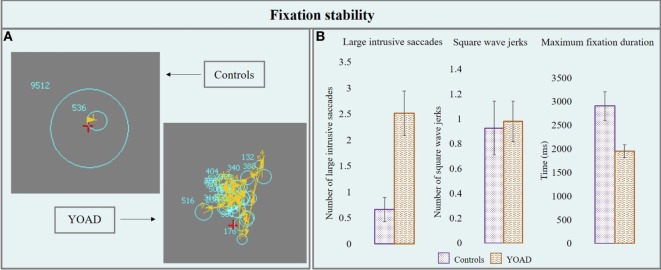
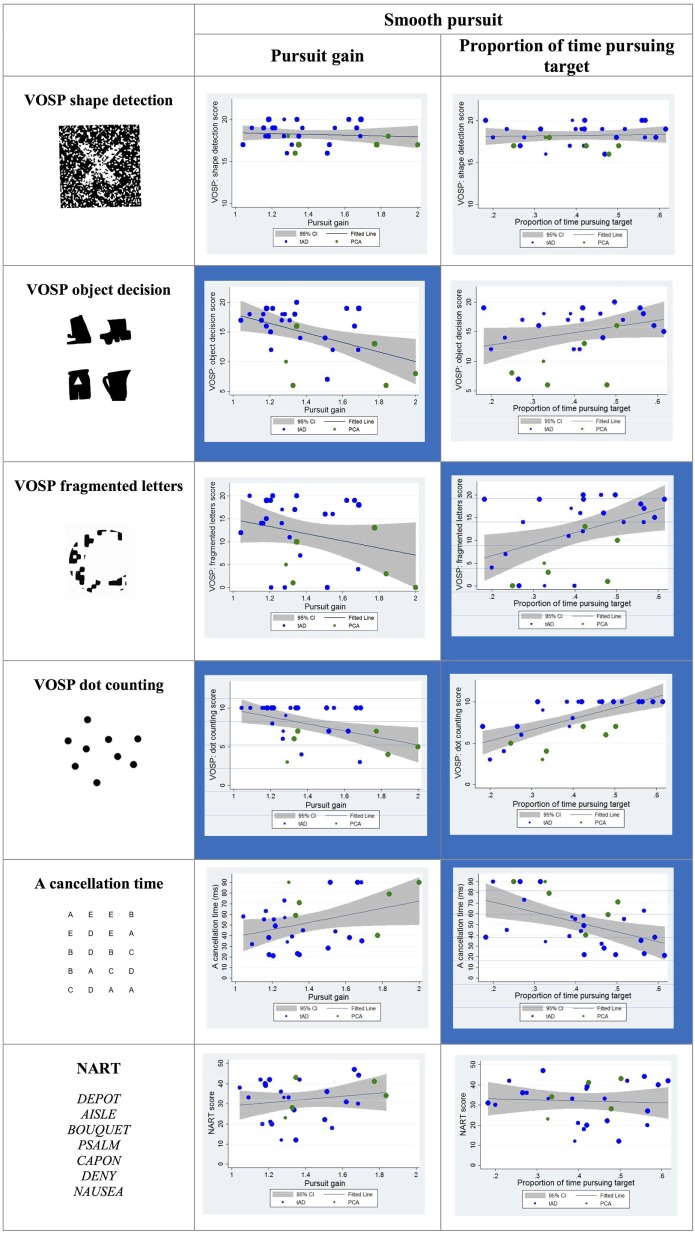
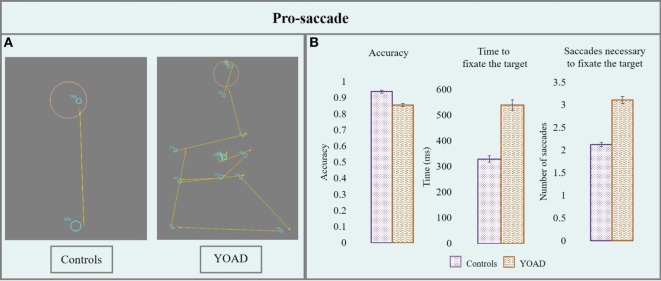
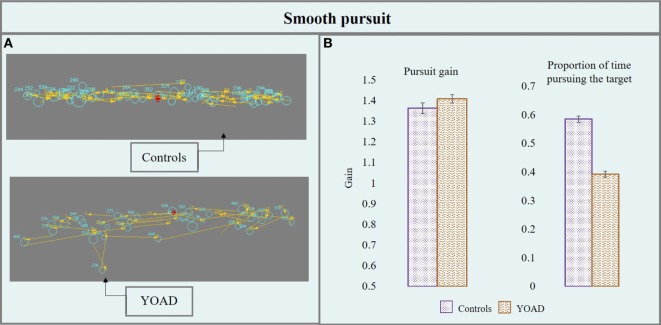
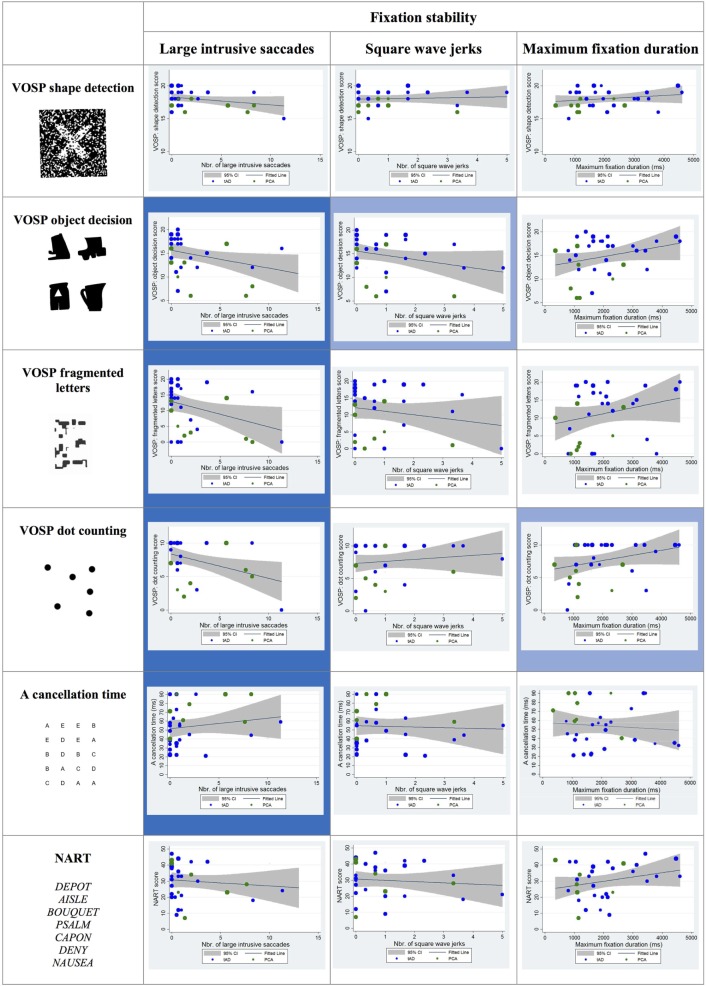
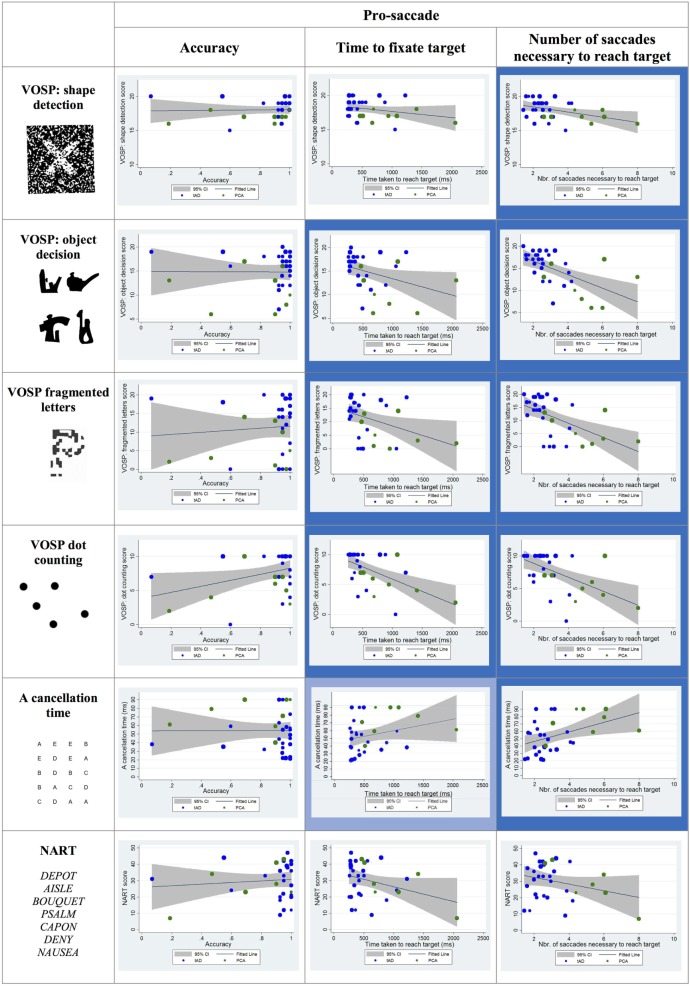
Young onset Alzheimer's disease (YOAD) is defined as symptom onset before the age of 65 years and is particularly associated with phenotypic heterogeneity. Atypical presentations, such as the clinic-radiological visual syndrome posterior cortical atrophy (PCA), often lead to delays in accurate diagnosis. Eyetracking has been used to demonstrate basic oculomotor impairments in individuals with dementia. In the present study, we aim to explore the relationship between eyetracking metrics and standard tests of visual cognition in individuals with YOAD. Fifty-seven participants were included: 36 individuals with YOAD ( = 26 typical AD; = 10 PCA) and 21 age-matched healthy controls. Participants completed three eyetracking experiments: fixation, pro-saccade, and smooth pursuit tasks. Summary metrics were used as outcome measures and their predictive value explored looking at correlations with visuoperceptual and visuospatial metrics. Significant correlations between eyetracking metrics and standard visual cognitive estimates are reported. A machine-learning approach using a classification method based on the smooth pursuit raw eyetracking data discriminates with approximately 95% accuracy patients and controls in cross-validation tests. Results suggest that the eyetracking paradigms of a relatively simple and specific nature provide measures not only reflecting basic oculomotor characteristics but also predicting higher order visuospatial and visuoperceptual impairments. Eyetracking measures can represent extremely useful markers during the diagnostic phase and may be exploited as potential outcome measures for clinical trials.
早发型阿尔茨海默病(YOAD)被定义为65岁之前出现症状,并且特别与表型异质性相关。非典型表现,如临床-放射学视觉综合征后皮质萎缩(PCA),常常导致准确诊断的延迟。眼动追踪已被用于证明痴呆症患者存在基本的眼球运动障碍。在本研究中,我们旨在探讨YOAD患者的眼动追踪指标与视觉认知标准测试之间的关系。纳入了57名参与者:36名YOAD患者(26名典型AD患者;10名PCA患者)和21名年龄匹配的健康对照者。参与者完成了三项眼动追踪实验:注视、前向扫视和平稳跟踪任务。汇总指标用作结果测量,并通过查看与视觉感知和视觉空间指标的相关性来探索其预测价值。报告了眼动追踪指标与标准视觉认知评估之间的显著相关性。在交叉验证测试中,使用基于平稳跟踪原始眼动追踪数据的分类方法的机器学习方法以约95%的准确率区分患者和对照者。结果表明,性质相对简单且特定的眼动追踪范式不仅提供反映基本眼球运动特征的测量,还能预测更高阶的视觉空间和视觉感知障碍。眼动追踪测量在诊断阶段可能是极其有用的标志物,并且可被用作临床试验的潜在结果测量指标。