Hoffmann Maria, Pettengill James B, Gonzalez-Escalona Narjol, Miller John, Ayers Sherry L, Zhao Shaohua, Allard Marc W, McDermott Patrick F, Brown Eric W, Monday Steven R
Division of Microbiology, Office of Regulatory Science, Center for Food Safety and Nutrition, U.S. Food and Drug AdministrationCollege Park, MD, United States.
Division of Public Health Informatics and Analytics, Office of Food Defense, Communication and Emergency Response, Center for Food Safety and Nutrition, U.S. Food and Drug AdministrationCollege Park, MD, United States.
Front Microbiol. 2017 Aug 7;8:1459. doi: 10.3389/fmicb.2017.01459. eCollection 2017.
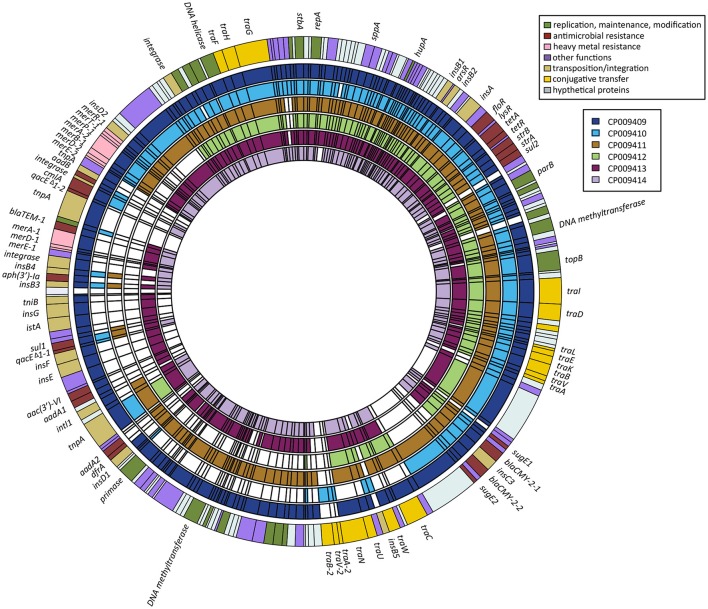
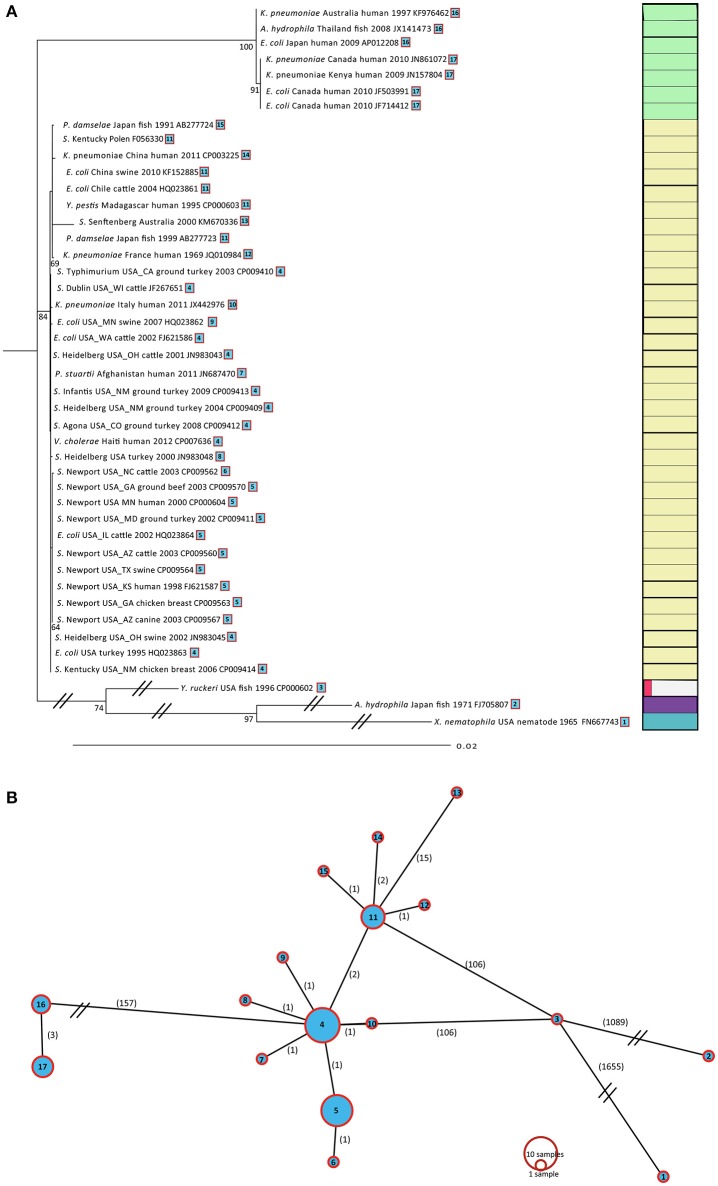
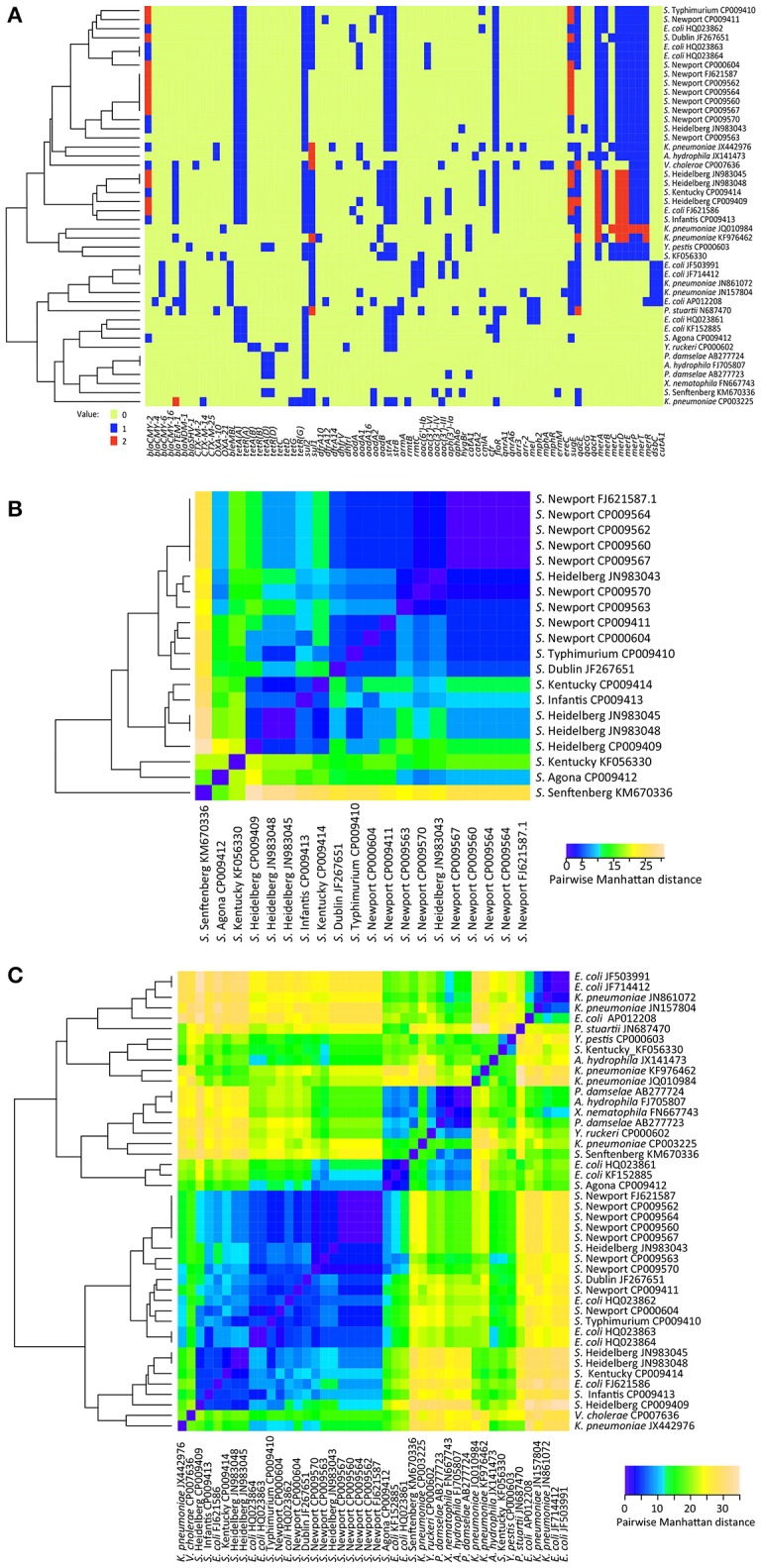
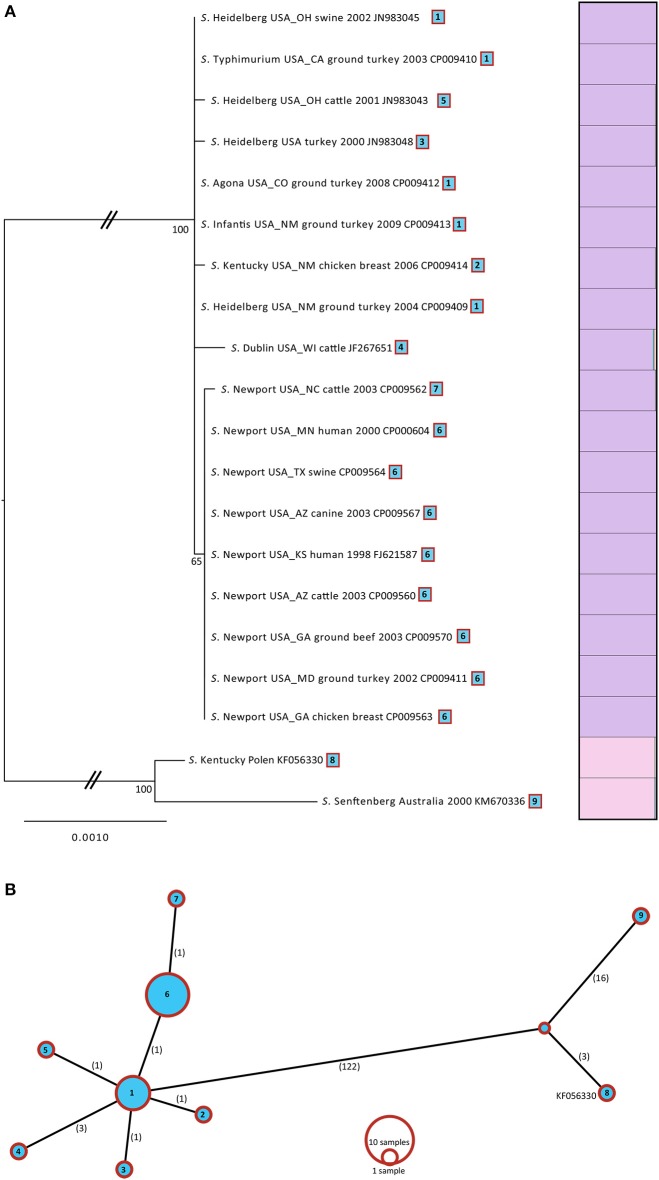
Determinants of multidrug resistance (MDR) are often encoded on mobile elements, such as plasmids, transposons, and integrons, which have the potential to transfer among foodborne pathogens, as well as to other virulent pathogens, increasing the threats these traits pose to human and veterinary health. Our understanding of MDR among has been limited by the lack of closed plasmid genomes for comparisons across resistance phenotypes, due to difficulties in effectively separating the DNA of these high-molecular weight, low-copy-number plasmids from chromosomal DNA. To resolve this problem, we demonstrate an efficient protocol for isolating, sequencing and closing IncA/C plasmids from sp. using single molecule real-time sequencing on a Pacific Biosciences (Pacbio) Sequencer. We obtained six isolates from poultry, representing six different serovars, each exhibiting the MDR-Ampc resistance profile. plasmids were obtained using a modified mini preparation and transformed with DH10Br. A Qiagen Large-Construct kit™ was used to recover highly concentrated and purified plasmid DNA that was sequenced using PacBio technology. These six closed IncA/C plasmids ranged in size from 104 to 191 kb and shared a stable, conserved backbone containing 98 core genes, with only six differences among those core genes. The plasmids encoded a number of antimicrobial resistance genes, including those for quaternary ammonium compounds and mercury. We then compared our six IncA/C plasmid sequences: first with 14 IncA/C plasmids derived from available at the National Center for Biotechnology Information (NCBI), and then with an additional 38 IncA/C plasmids derived from different taxa. These comparisons allowed us to build an evolutionary picture of how antimicrobial resistance may be mediated by this common plasmid backbone. Our project provides detailed genetic information about resistance genes in plasmids, advances in plasmid sequencing, and phylogenetic analyses, and important insights about how MDR evolution occurs across diverse serotypes from different animal sources, particularly in agricultural settings where antimicrobial drug use practices vary.
多重耐药性(MDR)的决定因素通常由移动元件编码,如质粒、转座子和整合子,它们有可能在食源性病原体之间转移,也有可能转移到其他致病性病原体,增加了这些特性对人类和兽医健康构成的威胁。由于难以有效地将这些高分子量、低拷贝数质粒的DNA与染色体DNA分离,我们对多重耐药性的理解受到缺乏用于跨耐药表型比较的封闭质粒基因组的限制。为了解决这个问题,我们展示了一种高效的方案,用于从某菌种中分离、测序和封闭IncA/C质粒,该方案使用太平洋生物科学公司(PacBio)的单分子实时测序仪。我们从家禽中获得了六个分离株,代表六种不同的血清型,每个分离株都表现出多重耐药-头孢菌素酶(MDR-Ampc)耐药谱。使用改良的小量制备法获得质粒,并将其转化到大肠杆菌DH10Br中。使用Qiagen大构建试剂盒™ 回收高度浓缩和纯化的质粒DNA,该DNA使用PacBio技术进行测序。这六个封闭的IncA/C质粒大小在104至191 kb之间,共享一个稳定、保守的骨架,包含98个核心基因,这些核心基因之间只有六个差异。这些质粒编码了许多抗菌抗性基因,包括季铵化合物和汞的抗性基因。然后,我们比较了我们的六个IncA/C质粒序列:首先与从美国国立生物技术信息中心(NCBI)获得的14个来源于大肠杆菌的IncA/C质粒进行比较,然后与另外38个来源于不同分类群的IncA/C质粒进行比较。这些比较使我们能够构建一幅关于这种常见质粒骨架如何介导抗菌抗性的进化图景。我们的项目提供了关于质粒中抗性基因的详细遗传信息、质粒测序的进展和系统发育分析,以及关于多重耐药性进化如何在来自不同动物来源的不同血清型中发生的重要见解,特别是在抗菌药物使用实践不同的农业环境中。