National Center for Biotechnology Information, National Library of Medicine, National Institutes of Health, Bethesda, MD, USA.
Center for Food Safety and Applied Nutrition, U.S. Food and Drug Administration, College Park, Maryland, USA.
Sci Rep. 2021 Jun 16;11(1):12728. doi: 10.1038/s41598-021-91456-0.
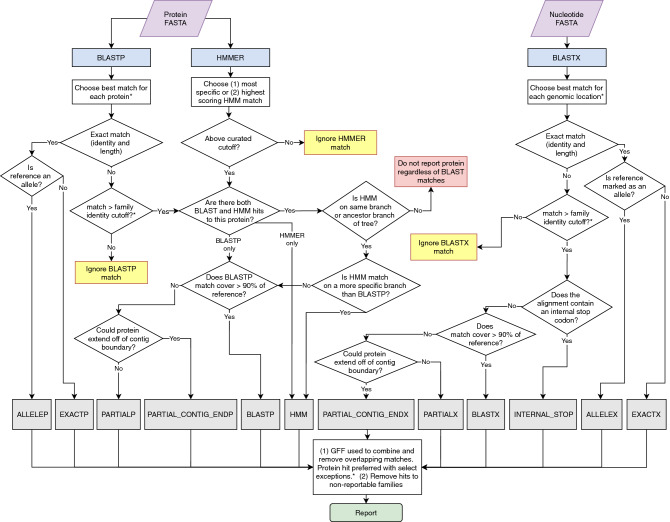
Antimicrobial resistance (AMR) is a significant public health threat. With the rise of affordable whole genome sequencing, in silico approaches to assessing AMR gene content can be used to detect known resistance mechanisms and potentially identify novel mechanisms. To enable accurate assessment of AMR gene content, as part of a multi-agency collaboration, NCBI developed a comprehensive AMR gene database, the Bacterial Antimicrobial Resistance Reference Gene Database and the AMR gene detection tool AMRFinder. Here, we describe the expansion of the Reference Gene Database, now called the Reference Gene Catalog, to include putative acid, biocide, metal, stress resistance genes, in addition to virulence genes and species-specific point mutations. Genes and point mutations are classified by broad functions, as well as more detailed functions. As we have expanded both the functional repertoire of identified genes and functionality, NCBI released a new version of AMRFinder, known as AMRFinderPlus. This new tool allows users the option to utilize only the core set of AMR elements, or include stress response and virulence genes, too. AMRFinderPlus can detect acquired genes and point mutations in both protein and nucleotide sequence. In addition, the evidence used to identify the gene has been expanded to include whether nucleotide or protein sequence was used, its location in the contig, and presence of an internal stop codon. These database improvements and functional expansions will enable increased precision in identifying AMR genes, linking AMR genotypes and phenotypes, and determining possible relationships between AMR, virulence, and stress response.
抗菌药物耐药性(AMR)是一个重大的公共卫生威胁。随着经济实惠的全基因组测序技术的兴起,可用于评估 AMR 基因含量的计算方法可用于检测已知的耐药机制,并可能识别新的机制。为了能够准确评估 AMR 基因含量,作为多机构合作的一部分,NCBI 开发了一个全面的 AMR 基因数据库,即细菌抗菌药物耐药参考基因数据库和 AMR 基因检测工具 AMRFinder。在这里,我们描述了扩展参考基因数据库,现在称为参考基因目录,以包括假定的酸、杀生物剂、金属、应激抗性基因,以及毒力基因和物种特异性点突变。基因和点突变按广泛的功能以及更详细的功能进行分类。随着我们扩展了已识别基因的功能组合以及功能,NCBI 发布了 AMRFinder 的新版本,称为 AMRFinderPlus。这个新工具允许用户选择仅使用 AMR 元素的核心集,或者也包括应激反应和毒力基因。AMRFinderPlus 可以在蛋白质和核苷酸序列中检测获得性基因和点突变。此外,用于识别基因的证据已扩展到包括是否使用核苷酸或蛋白质序列、其在连续体中的位置以及是否存在内部终止密码子。这些数据库改进和功能扩展将提高识别 AMR 基因的准确性,将 AMR 基因型和表型联系起来,并确定 AMR、毒力和应激反应之间可能存在的关系。