Ledezma-Tejeida Daniela, Ishida Cecilia, Collado-Vides Julio
Programa de Genómica Computacional, Centro de Ciencias Genómicas, Universidad Nacional Autónoma de MéxicoCuernavaca, Mexico.
Front Microbiol. 2017 Aug 3;8:1466. doi: 10.3389/fmicb.2017.01466. eCollection 2017.
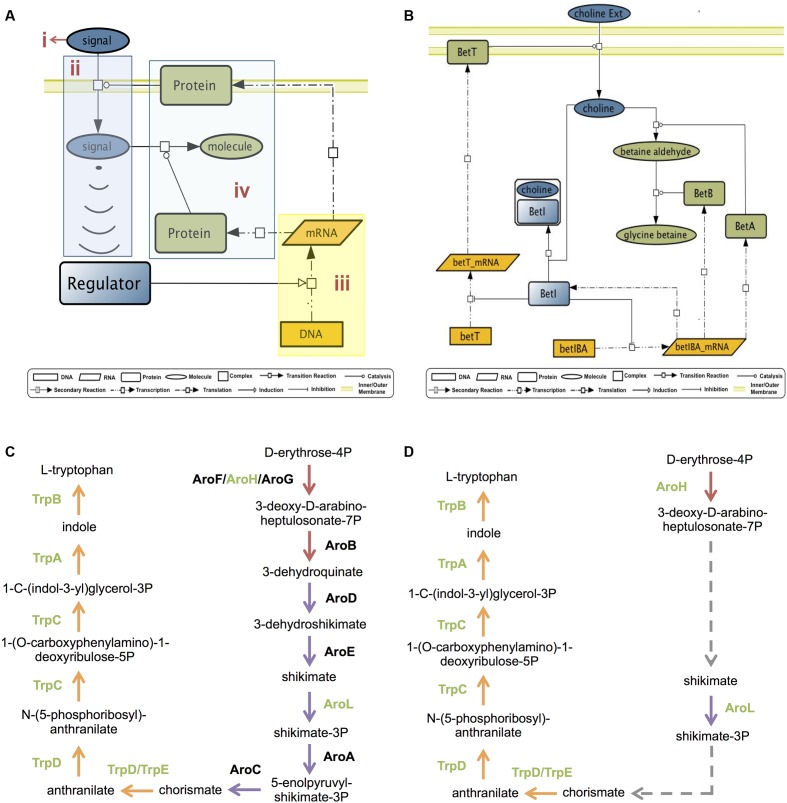
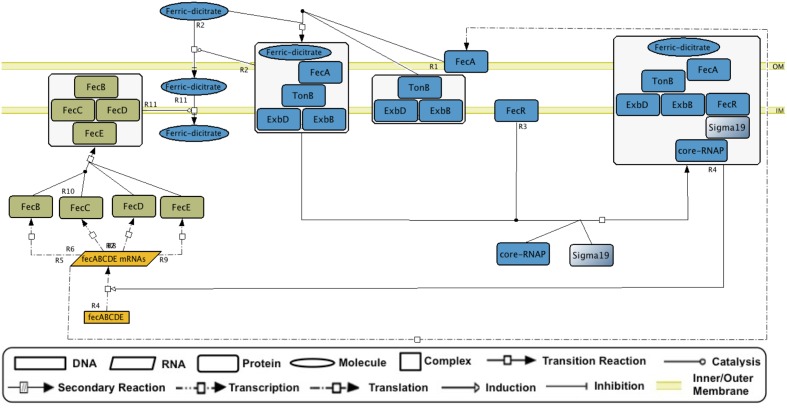
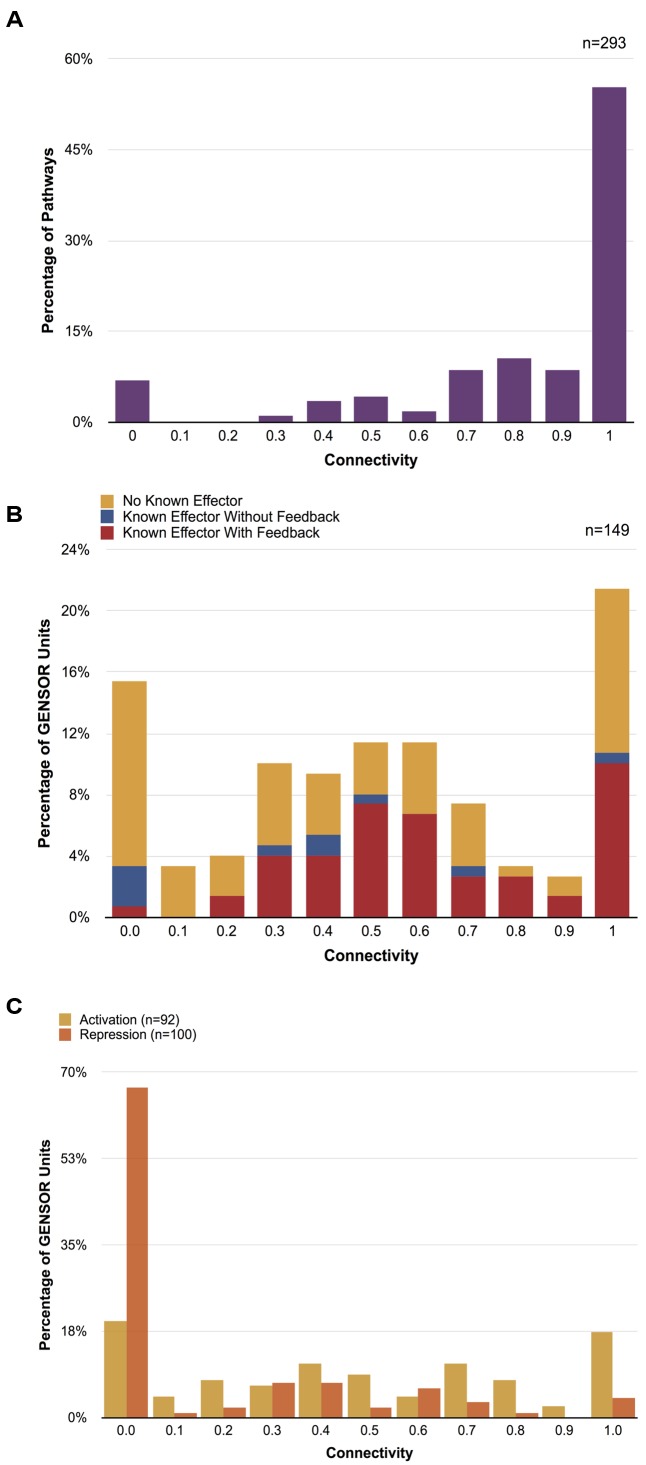
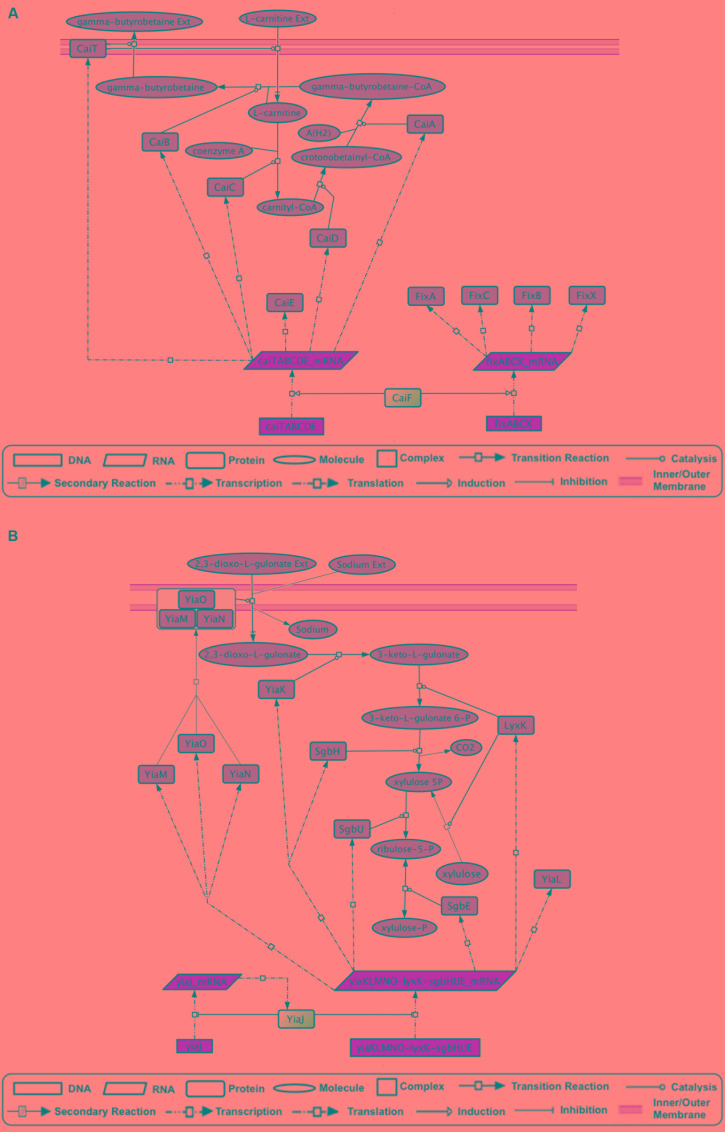
In the face of changes in their environment, bacteria adjust gene expression levels and produce appropriate responses. The individual layers of this process have been widely studied: the transcriptional regulatory network describes the regulatory interactions that produce changes in the metabolic network, both of which are coordinated by the signaling network, but the interplay between them has never been described in a systematic fashion. Here, we formalize the process of detection and processing of environmental information mediated by individual transcription factors (TFs), utilizing a concept termed genetic sensory response units (GENSOR units), which are composed of four components: (1) a signal, (2) signal transduction, (3) genetic switch, and (4) a response. We used experimentally validated data sets from two databases to assemble a GENSOR unit for each of the 189 local TFs of K-12 contained in the RegulonDB database. Further analysis suggested that feedback is a common occurrence in signal processing, and there is a gradient of functional complexity in the response mediated by each TF, as opposed to a one regulator/one pathway rule. Finally, we provide examples of other GENSOR unit applications, such as hypothesis generation, detailed description of cellular decision making, and elucidation of indirect regulatory mechanisms.
面对环境变化时,细菌会调整基因表达水平并做出适当反应。这一过程的各个层面已得到广泛研究:转录调控网络描述了导致代谢网络发生变化的调控相互作用,而这两者均由信号网络协调,但它们之间的相互作用从未以系统的方式被描述过。在此,我们利用一个称为遗传传感反应单元(GENSOR单元)的概念,将由单个转录因子(TF)介导的环境信息检测与处理过程形式化,该单元由四个部分组成:(1)一个信号,(2)信号转导,(3)遗传开关,以及(4)一个反应。我们使用来自两个数据库的经过实验验证的数据集,为RegulonDB数据库中包含的K-12的189个局部TF中的每一个组装了一个GENSOR单元。进一步分析表明,反馈在信号处理中很常见,并且每个TF介导的反应中存在功能复杂性梯度,这与一个调节因子/一条途径的规则相反。最后,我们提供了其他GENSOR单元应用的示例,例如假设生成、细胞决策的详细描述以及间接调控机制的阐明。