Yuan Dan, Li Wei, Hua Yingpeng, King Graham J, Xu Fangsen, Shi Lei
National Key Laboratory of Crop Genetic Improvement, Huazhong Agricultural UniversityWuhan, China.
Microelement Research Center/Key Laboratory of Arable Land Conservation (Middle and Lower Reaches of Yangtze River), Ministry of Agriculture, Huazhong Agricultural UniversityWuhan, China.
Front Plant Sci. 2017 Aug 2;8:1336. doi: 10.3389/fpls.2017.01336. eCollection 2017.
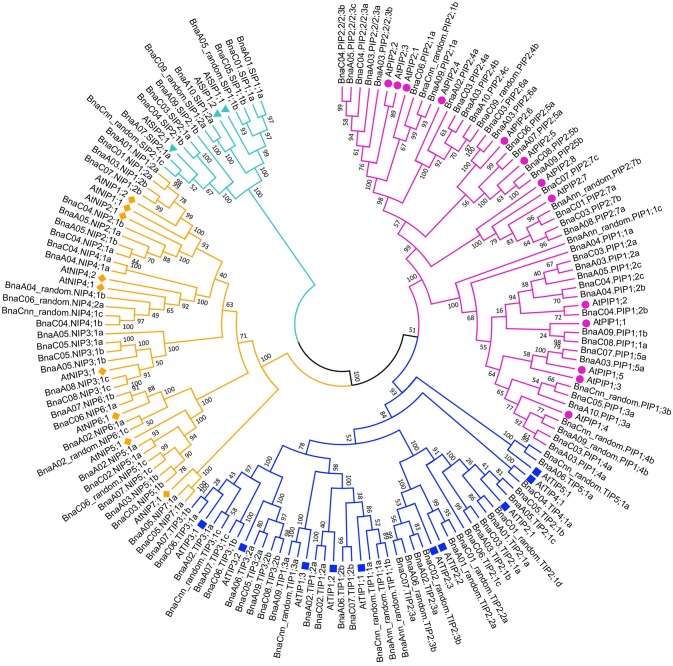
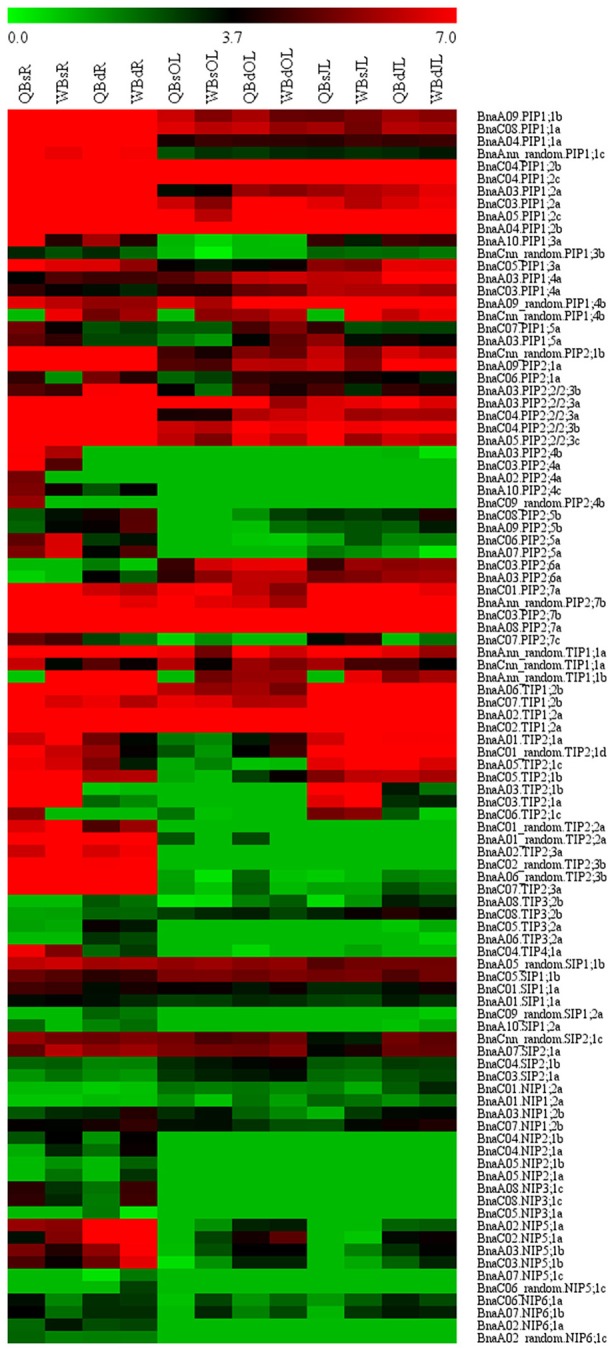
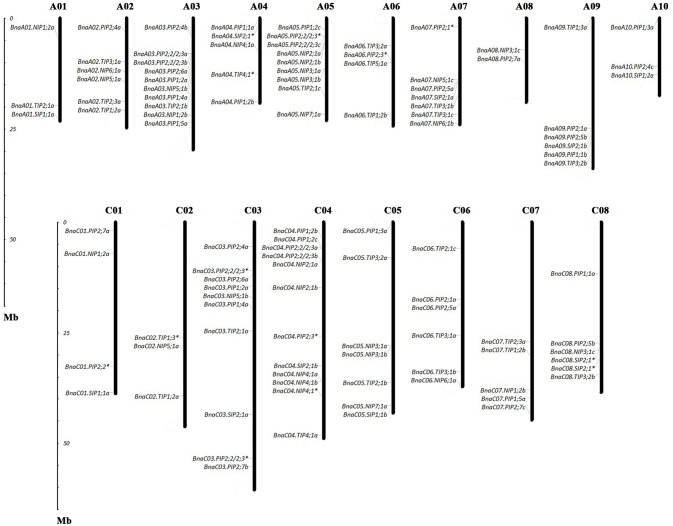
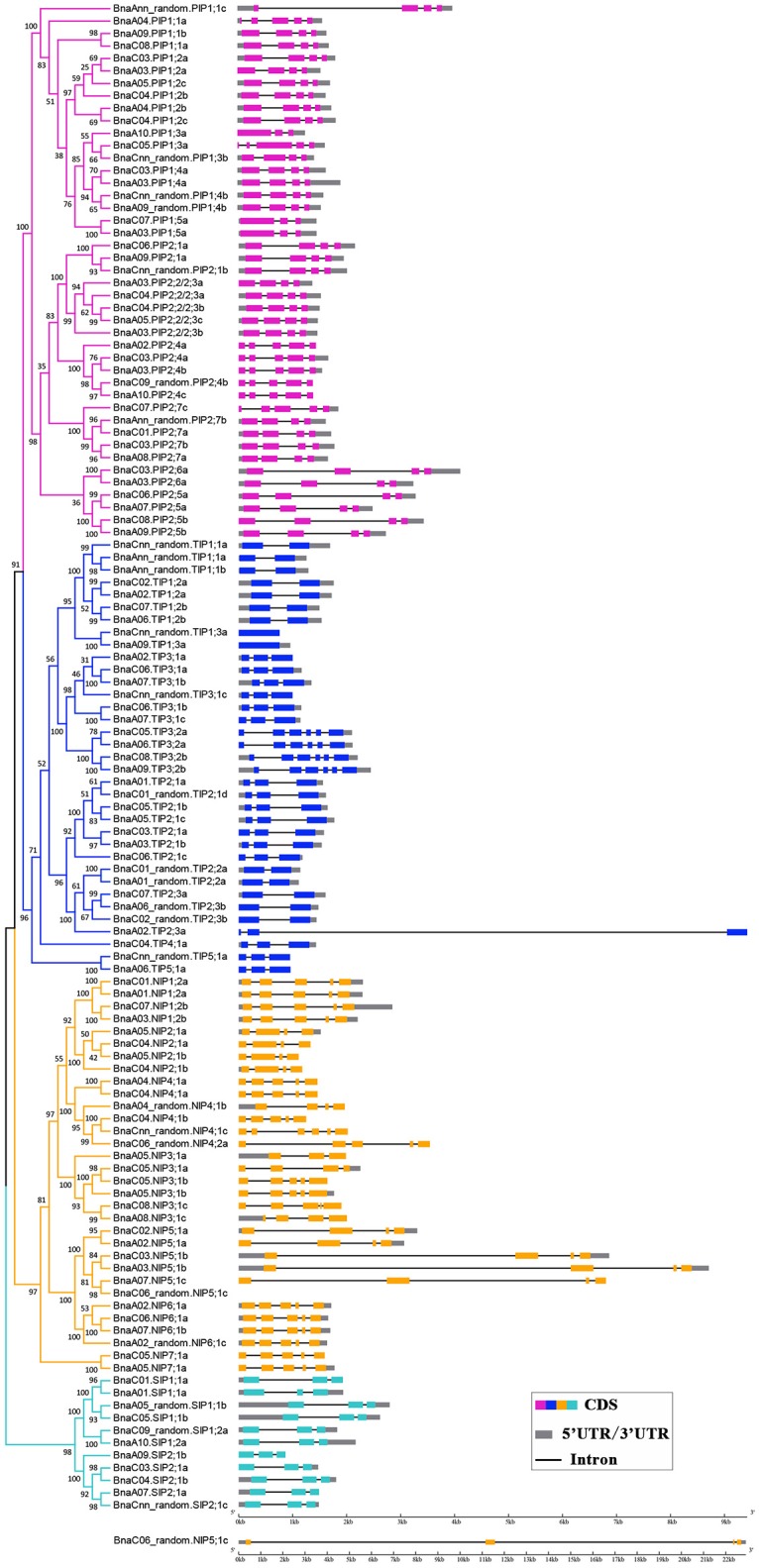
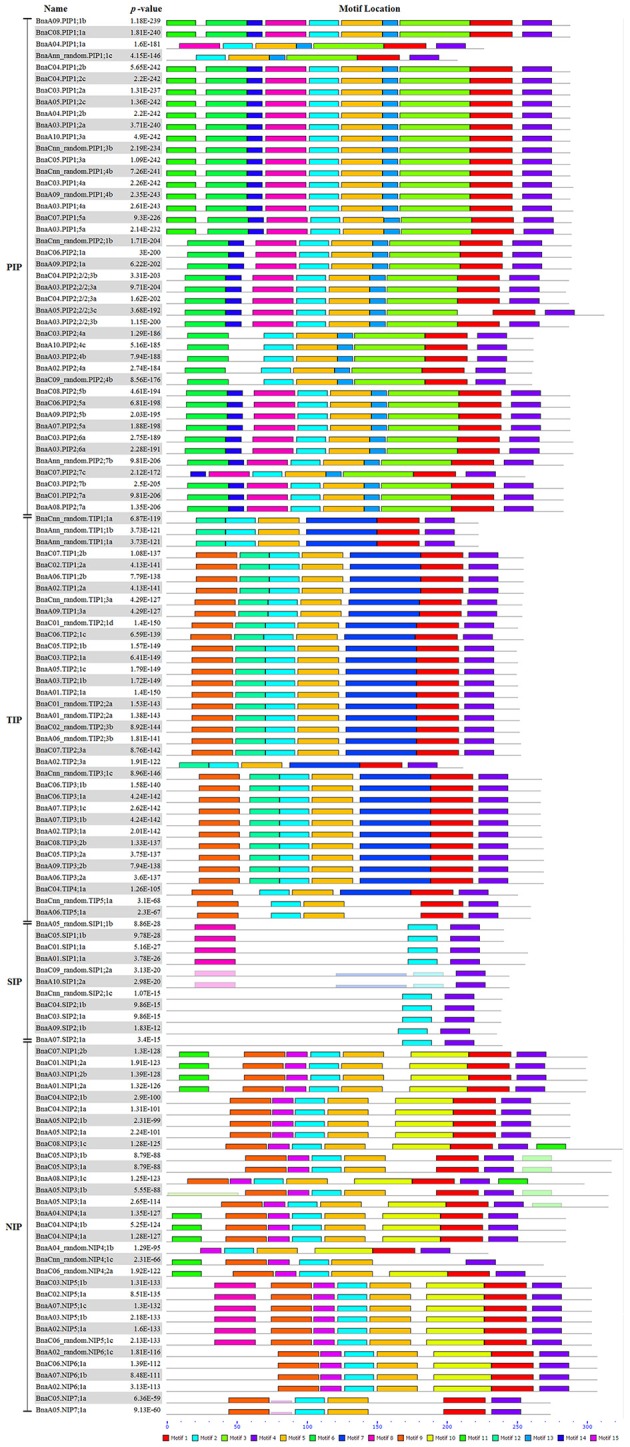
Aquaporins (AQPs) are an abundant protein family and play important roles to facilitate small neutral molecule transport across membranes. Oilseed rape ( L.) is an important oil crop in China and elsewhere in the world, and is very sensitive to low boron (B) stress. Several AQP family genes have been reported to be involved in B transport across plasma membranes in plants. In this study, a total of 121 full-length AQPs were identified and characterized in (AC genome), and could be classified into four sub-families, including 43 PIPs (plasma membrane intrinsic proteins), 35 TIPs (tonoplast intrinsic proteins), 32 NIPs (NOD26-like intrinsic proteins), and 11 SIPs (small basic intrinsic proteins). The gene characteristics of s were similar to those of s (A genome) and s (C genome) including the composition of each sub-family, gene structure, and substrate selectivity filters. The was the most complex AQP sub-family, reflecting the composition of substrate selectivity filter structures which affect the permeation of solution molecules. In this study, the seedlings of both B-efficient (QY10) and B-inefficient (W10) cultivars were treated with two boron (B) levels: deficient (0.25 μM B) and sufficient (25 μM B). The transcription of AQP genes in root (R), juvenile leaf (JL), and old leaf (OL) tissues of both cultivars was investigated under B deficient and sufficient conditions. Transcription of most s and s was significantly increased compared with other s in all the three tissues, especially in the roots, of both B-efficient and B-inefficient cultivars under both B conditions. With B deprivation, the expression of the majority of the s and s was down-regulated in the roots. However, the s were up-regulated. In addition, the .s, , and s (except for and ) exhibited obvious differences at low B between B-efficient and B-inefficient cultivars. These results will help us to understand boron homeostasis in .
水通道蛋白(AQPs)是一个丰富的蛋白质家族,在促进小分子中性物质跨膜运输方面发挥着重要作用。油菜(L.)是中国和世界其他地方重要的油料作物,对低硼(B)胁迫非常敏感。据报道,几个水通道蛋白家族基因参与植物中硼跨质膜的运输。在本研究中,在甘蓝型油菜(AC基因组)中总共鉴定并表征了121个全长水通道蛋白,它们可分为四个亚家族,包括43个质膜内在蛋白(PIPs)、35个液泡膜内在蛋白(TIPs)、32个NOD26样内在蛋白(NIPs)和11个小碱性内在蛋白(SIPs)。甘蓝型油菜的基因特征与白菜型油菜(A基因组)和黑芥(C基因组)相似,包括每个亚家族的组成、基因结构和底物选择性过滤器。PIP是最复杂的水通道蛋白亚家族,反映了影响溶液分子渗透的底物选择性过滤器结构的组成。在本研究中,硼高效(QY10)和硼低效(W10)品种的幼苗均用两种硼(B)水平处理:缺硼(0.25 μM B)和硼充足(25 μM B)。研究了两个品种在缺硼和硼充足条件下根(R)、幼叶(JL)和老叶(OL)组织中水通道蛋白基因的转录情况。在两种硼条件下,硼高效和硼低效品种的所有三个组织中,尤其是在根中,大多数PIP和TIP的转录与其他水通道蛋白相比显著增加。随着硼缺乏,大多数PIP和TIP在根中的表达下调。然而,NIP的表达上调。此外,PIP、TIP和NIP(除了PIP2;7和NIP5;1)在低硼条件下硼高效和硼低效品种之间表现出明显差异。这些结果将有助于我们了解甘蓝型油菜中的硼稳态。