Hua Yingpeng, Zhou Ting, Ding Guangda, Yang Qingyong, Shi Lei, Xu Fangsen
National Key Laboratory of Crop Genetic Improvement, Huazhong Agricultural University, Wuhan 430070, China Microelement Research Centre, Huazhong Agricultural University, Wuhan 430070, China.
Microelement Research Centre, Huazhong Agricultural University, Wuhan 430070, China.
J Exp Bot. 2016 Oct;67(19):5769-5784. doi: 10.1093/jxb/erw342. Epub 2016 Sep 17.
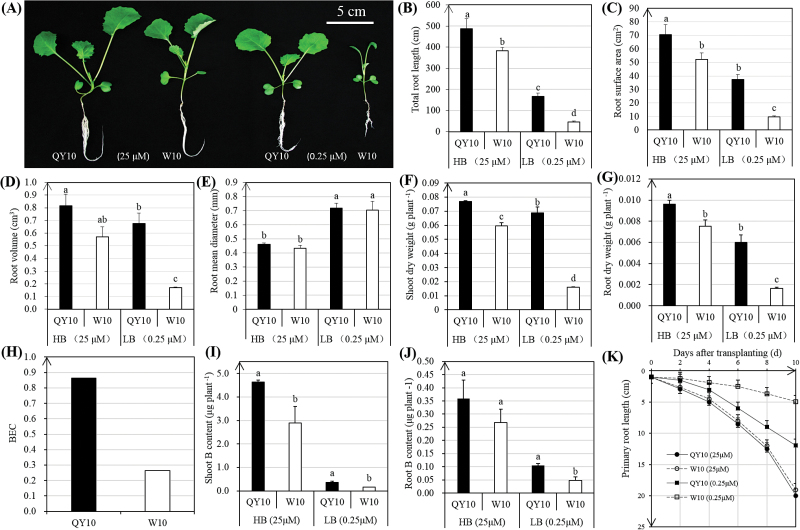
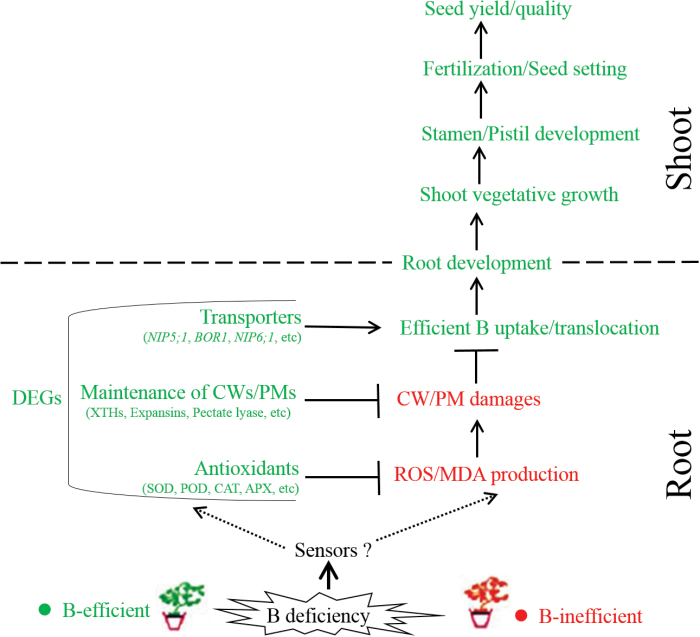
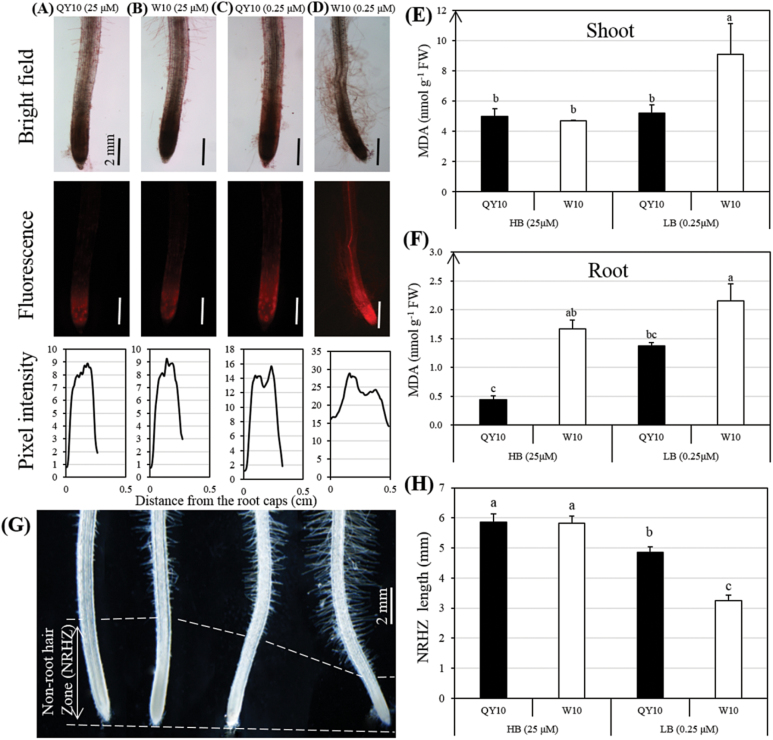
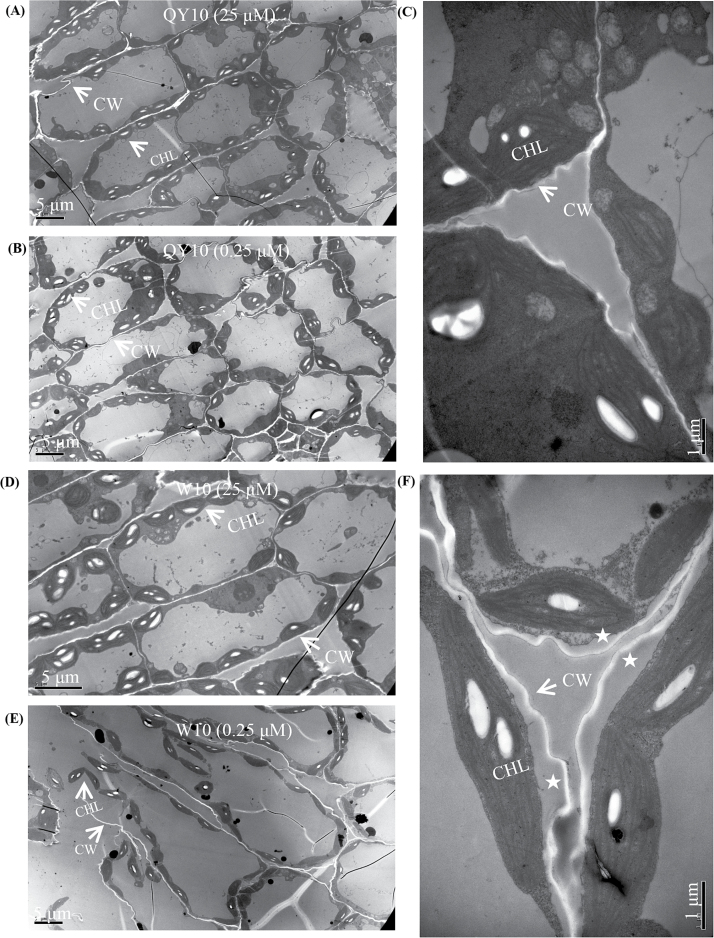
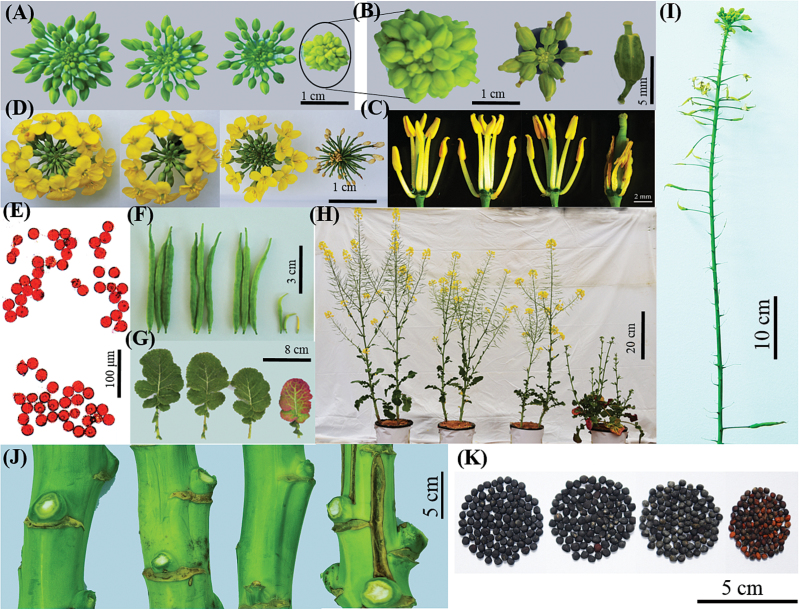
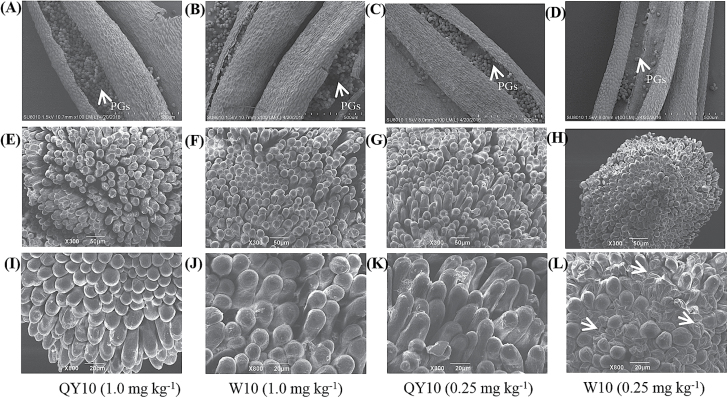
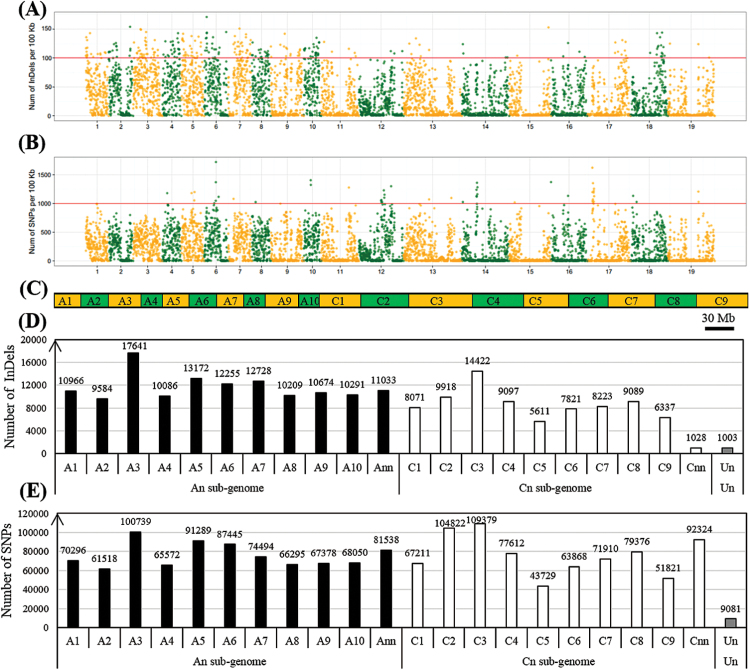
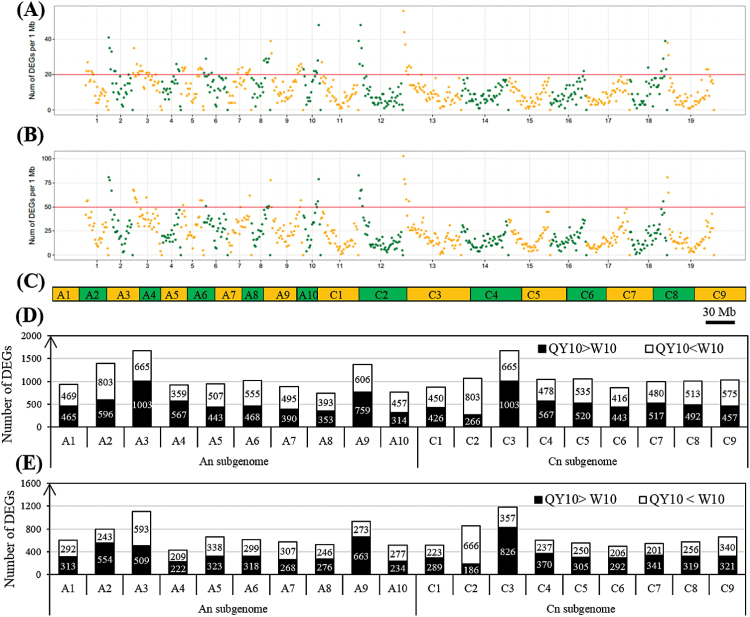
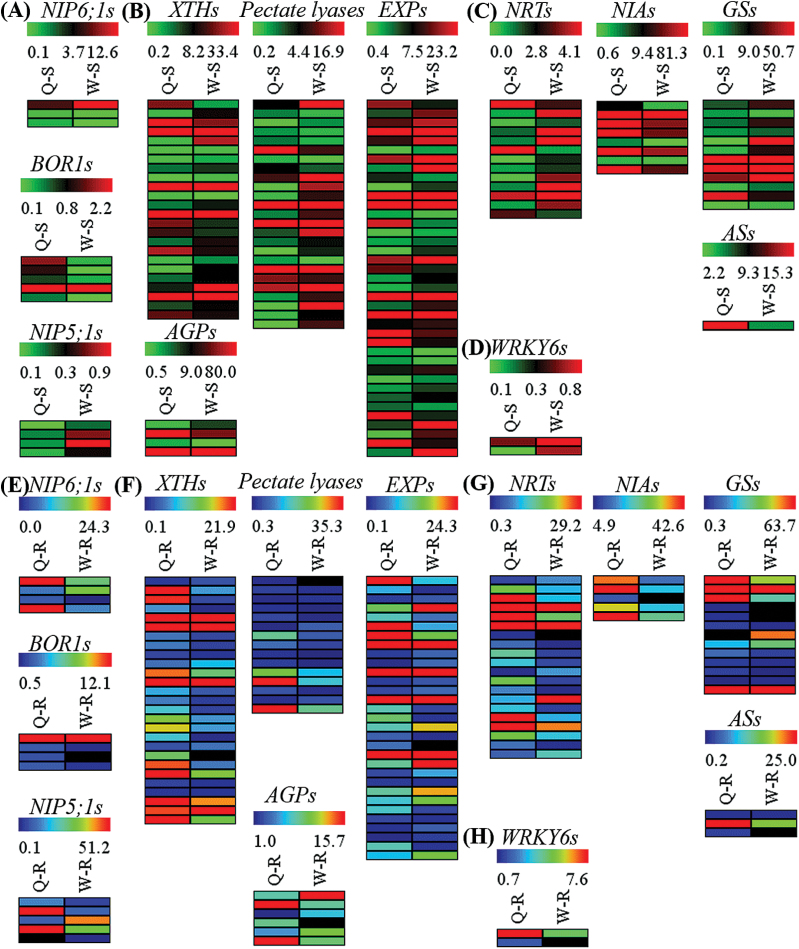
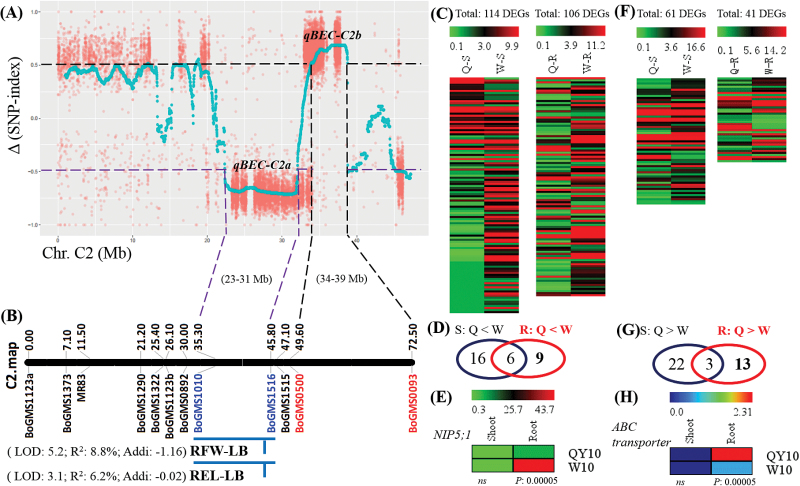
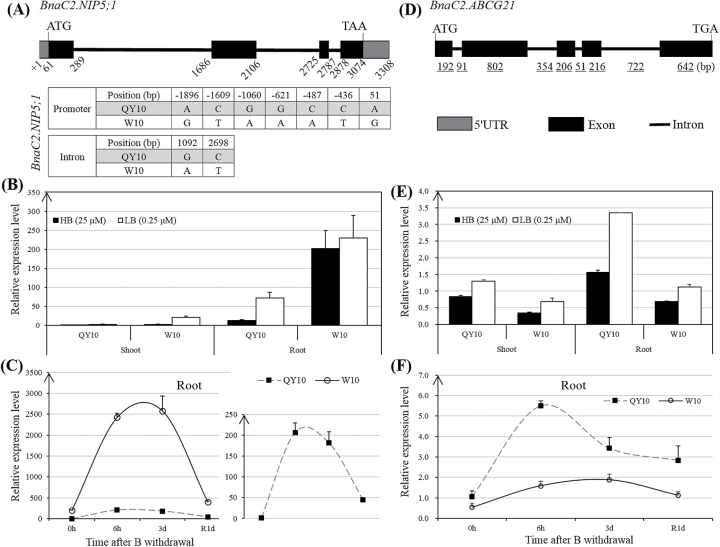
Allotetraploid rapeseed (Brassica napus L. AACC, 2n=4x=38) is highly susceptible to boron (B) deficiency, a widespread limiting factor that causes severe losses in seed yield. The genetic variation in the sensitivity to B deficiency found in rapeseed genotypes emphasizes the complex response architecture. In this research, a B-inefficient genotype, 'Westar 10' ('W10'), responded to B deficiencies during vegetative and reproductive development with an over-accumulation of reactive oxygen species, severe lipid peroxidation, evident plasmolysis, abnormal floral organogenesis, and widespread sterility compared to a B-efficient genotype, 'Qingyou 10' ('QY10'). Whole-genome re-sequencing (WGS) of 'QY10' and 'W10' revealed a total of 1 605 747 single nucleotide polymorphisms and 218 755 insertions/deletions unevenly distributed across the allotetraploid rapeseed genome (~1130Mb). Digital gene expression (DGE) profiling identified more genes related to B transporters, antioxidant enzymes, and the maintenance of cell walls and membranes with higher transcript levels in the roots of 'QY10' than in 'W10' under B deficiency. Furthermore, based on WGS and bulked segregant analysis of the doubled haploid (DH) line pools derived from 'QY10' and 'W10', two significant quantitative trait loci (QTLs) for B efficiency were characterized on chromosome C2, and DGE-assisted QTL-seq analyses then identified a nodulin 26-like intrinsic protein gene and an ATP-binding cassette (ABC) transporter gene as the corresponding candidates regulating B efficiency. This research facilitates a more comprehensive understanding of the differential physiological and transcriptional responses to B deficiency and abundant genetic diversity in rapeseed genotypes, and the DGE-assisted QTL-seq analyses provide novel insights regarding the rapid dissection of quantitative trait genes in plant species with complex genomes.
异源四倍体油菜(甘蓝型油菜L. AACC,2n = 4x = 38)对硼(B)缺乏高度敏感,硼缺乏是一种广泛存在的限制因素,会导致种子产量严重损失。油菜基因型中对硼缺乏敏感性的遗传变异强调了复杂的反应机制。在本研究中,与硼高效基因型“青油10号”(“QY10”)相比,硼低效基因型“Westar 10”(“W10”)在营养生长和生殖发育过程中对硼缺乏的反应是活性氧过度积累、严重的脂质过氧化、明显的质壁分离、异常的花器官发生以及广泛的不育。对“QY10”和“W10”进行全基因组重测序(WGS),共发现1605747个单核苷酸多态性和218755个插入/缺失,它们在异源四倍体油菜基因组(约1130Mb)中分布不均。数字基因表达(DGE)分析表明,在硼缺乏条件下,“QY10”根中与硼转运蛋白、抗氧化酶以及细胞壁和细胞膜维持相关的基因转录水平高于“W10”。此外,基于WGS以及对来自“QY10”和“W10”的双单倍体(DH)系群体进行的混合分离分析,在C2染色体上鉴定出两个控制硼效率的重要数量性状位点(QTL),随后DGE辅助的QTL-seq分析确定了一个类结节蛋白26内在蛋白基因和一个ATP结合盒(ABC)转运蛋白基因作为调控硼效率的相应候选基因。本研究有助于更全面地了解油菜基因型对硼缺乏的差异生理和转录反应以及丰富的遗传多样性,并且DGE辅助的QTL-seq分析为快速解析复杂基因组植物物种中的数量性状基因提供了新的见解。