Venkanna Deepak, Südfeld Christian, Baier Thomas, Homburg Sarah V, Patel Anant V, Wobbe Lutz, Kruse Olaf
Faculty of Biology, Center for Biotechnology (CeBiTec), Bielefeld UniversityBielefeld, Germany.
Faculty of Engineering and Mathematics, Fermentation and Formulation of Biologicals and Chemicals, Bielefeld University of Applied SciencesBielefeld, Germany.
Front Plant Sci. 2017 Aug 3;8:1347. doi: 10.3389/fpls.2017.01347. eCollection 2017.
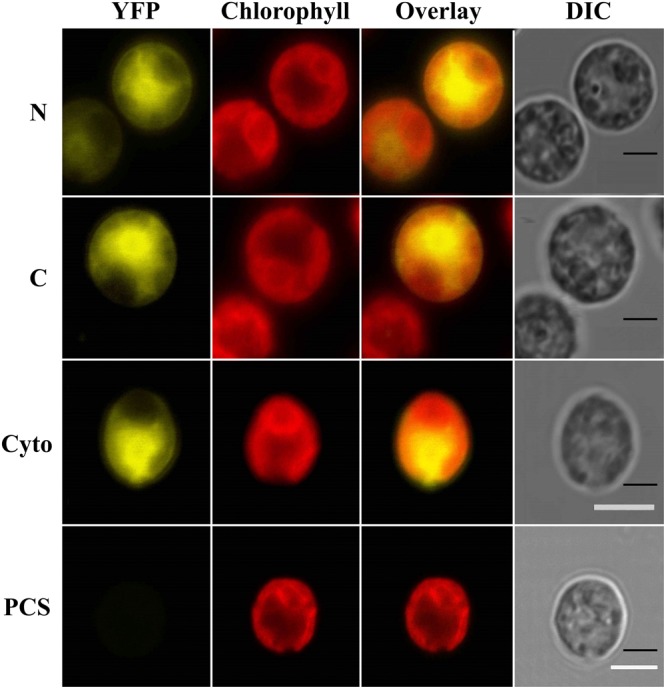
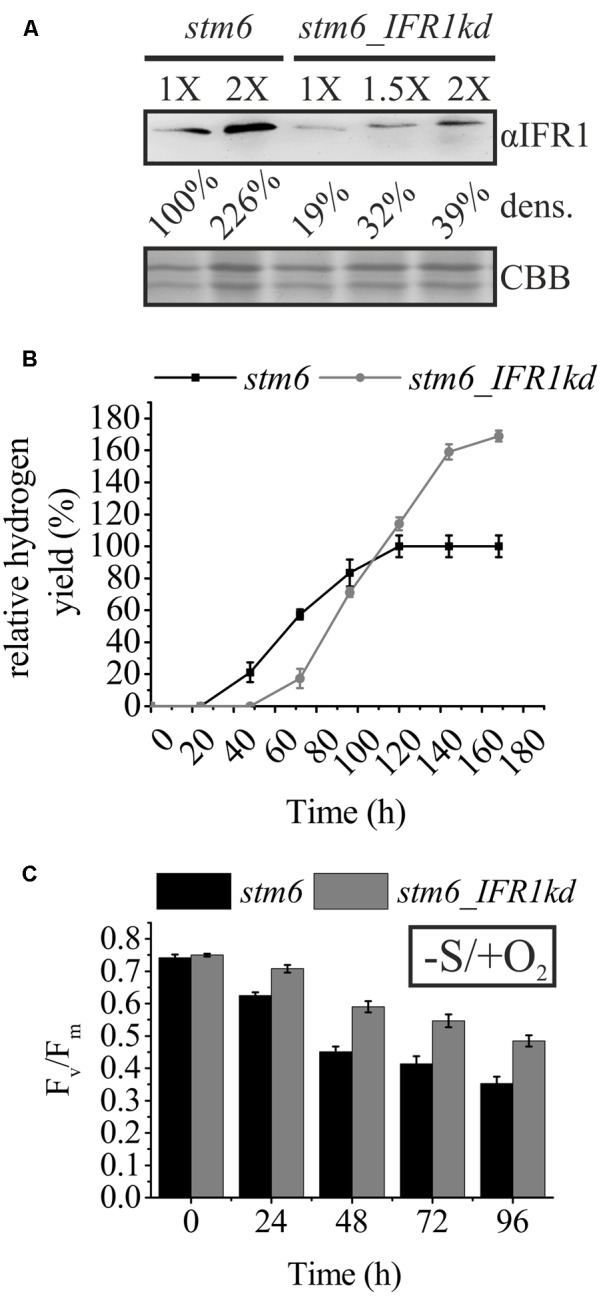
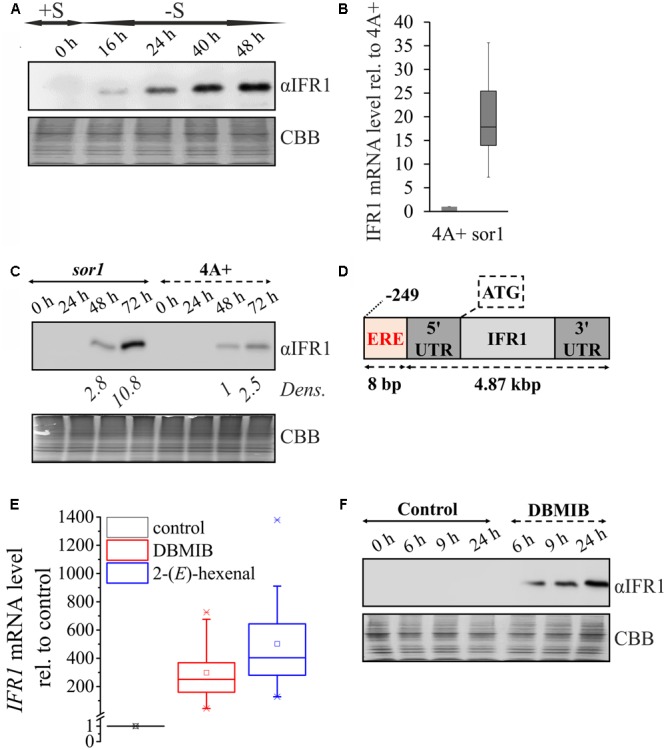
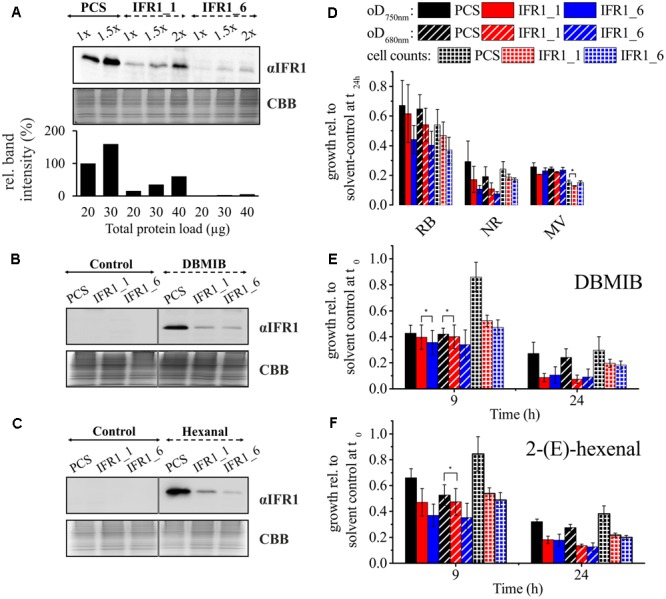
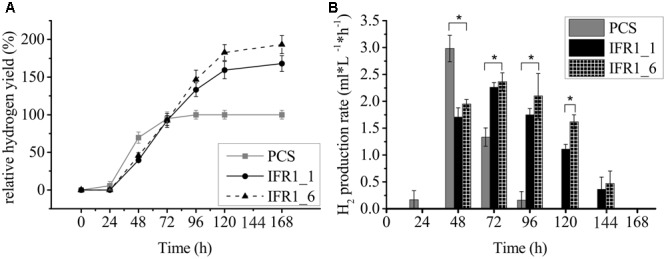
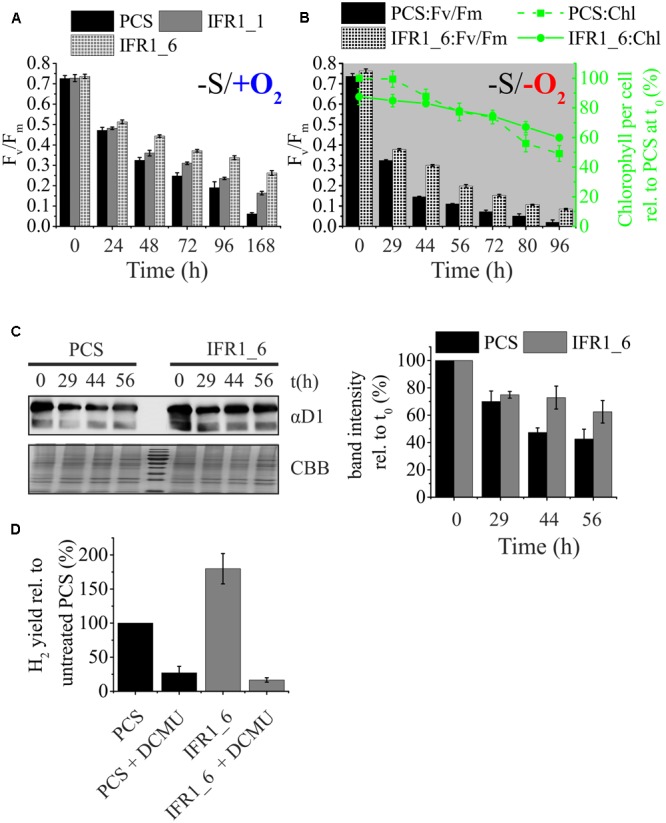
The protein superfamily of short-chain dehydrogenases/reductases (SDR), including members of the atypical type (aSDR), covers a huge range of catalyzed reactions and substrates. This superfamily also comprises isoflavone reductase-like (IRL) proteins, which are aSDRs highly homologous to isoflavone reductases from leguminous plants. The molecular function of IRLs in non-leguminous plants and green microalgae has not been identified as yet, but several lines of evidence point at their implication in reactive oxygen species homeostasis. The IRL protein IFR1 was identified in a previous study, analyzing the transcriptomic changes occurring during the acclimation to sulfur deprivation and anaerobiosis, a condition that triggers photobiological hydrogen production in this microalgae. Accumulation of the cytosolic IFR1 protein is induced by sulfur limitation as well as by the exposure of cells to reactive electrophile species (RES) such as reactive carbonyls. The latter has not been described for IRL proteins before. Over-accumulation of IFR1 in the singlet oxygen response 1 () mutant together with the presence of an electrophile response element, known to be required for SOR1-dependent gene activation as a response to RES, in the promoter of , indicate that IFR1 expression is controlled by the SOR1-dependent pathway. An implication of IFR1 into RES homeostasis, is further implied by a knock-down of , which results in a diminished tolerance toward RES. Intriguingly, knock-down has a positive effect on photosystem II (PSII) stability under sulfur-deprived conditions used to trigger photobiological hydrogen production, by reducing PSII-dependent oxygen evolution, in . Reduced PSII photoinhibition in knock-down strains prolongs the hydrogen production phase resulting in an almost doubled final hydrogen yield compared to the parental strain. Finally, knock-down could be successfully used to further increase hydrogen yields of the high hydrogen-producing mutant , demonstrating that is a promising target for genetic engineering approaches aiming at an increased hydrogen production capacity of cells.
短链脱氢酶/还原酶(SDR)蛋白超家族,包括非典型类型(aSDR)的成员,涵盖了广泛的催化反应和底物。这个超家族还包括类异黄酮还原酶样(IRL)蛋白,它们是与豆科植物中的异黄酮还原酶高度同源的aSDR。IRL在非豆科植物和绿色微藻中的分子功能尚未确定,但有几条证据表明它们与活性氧稳态有关。在之前的一项研究中鉴定出了IRL蛋白IFR1,该研究分析了在适应硫缺乏和厌氧条件(这种条件会触发这种微藻的光生物制氢)过程中发生的转录组变化。胞质IFR1蛋白的积累受到硫限制以及细胞暴露于活性亲电物质(RES)如活性羰基化合物的诱导。此前尚未有关于IRL蛋白的这种情况的描述。在单线态氧响应1()突变体中IFR1的过度积累,以及在其启动子中存在一个亲电响应元件(已知该元件是SOR1依赖的基因激活以响应RES所必需的),表明IFR1的表达受SOR1依赖的途径控制。敲低导致对RES的耐受性降低,这进一步暗示了IFR1参与RES稳态。有趣的是,在用于触发光生物制氢的硫缺乏条件下,敲低对光系统II(PSII)的稳定性有积极影响,通过减少中的PSII依赖的氧气释放。敲低菌株中PSII光抑制的降低延长了产氢阶段,与亲本菌株相比,最终产氢量几乎增加了一倍。最后,敲低可以成功地用于进一步提高高产氢突变体的产氢量,表明是旨在提高细胞产氢能力的基因工程方法的一个有前景的靶点。