Wiesner-Reinhold Melanie, Schreiner Monika, Baldermann Susanne, Schwarz Dietmar, Hanschen Franziska S, Kipp Anna P, Rowan Daryl D, Bentley-Hewitt Kerry L, McKenzie Marian J
Plant Quality and Food Security, Leibniz Institute of Vegetable and Ornamental CropsGrossbeeren, Germany.
Food Chemistry, Institute of Nutritional Science, University of PotsdamNuthethal, Germany.
Front Plant Sci. 2017 Aug 3;8:1365. doi: 10.3389/fpls.2017.01365. eCollection 2017.
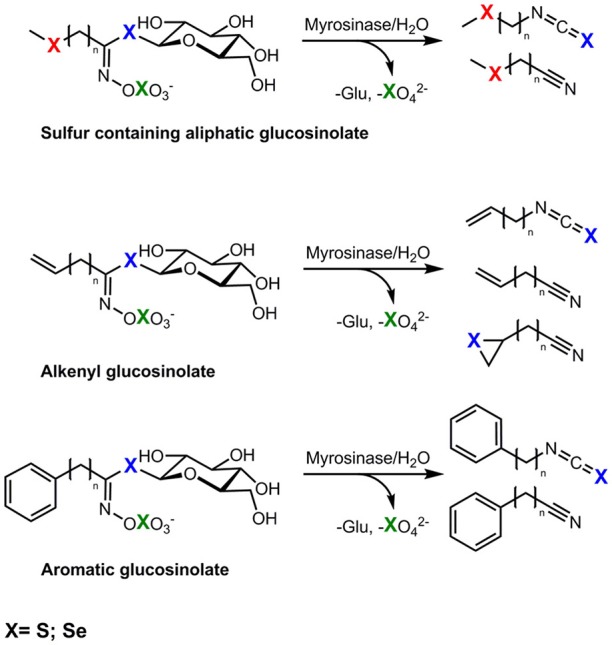
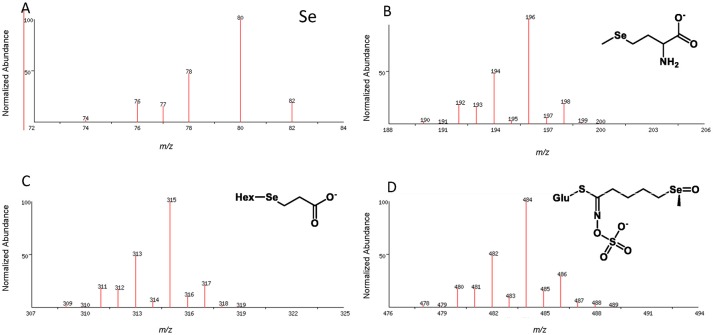
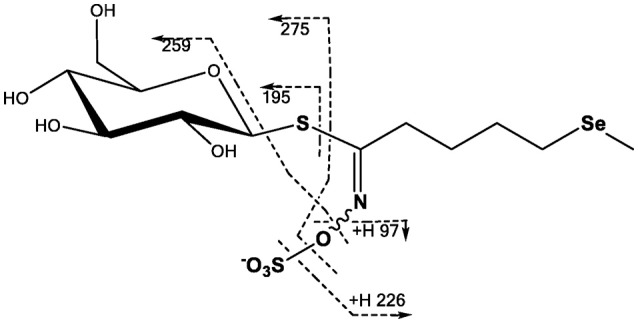
Selenium (Se) is an essential micronutrient for human health. Se deficiency affects hundreds of millions of people worldwide, particularly in developing countries, and there is increasing awareness that suboptimal supply of Se can also negatively affect human health. Selenium enters the diet primarily through the ingestion of plant and animal products. Although, plants are not dependent on Se they take it up from the soil through the sulphur (S) uptake and assimilation pathways. Therefore, geographic differences in the availability of soil Se and agricultural practices have a profound influence on the Se content of many foods, and there are increasing efforts to biofortify crop plants with Se. Plants from the Brassicales are of particular interest as they accumulate and synthesize Se into forms with additional health benefits, such as methylselenocysteine (MeSeCys). The Brassicaceae are also well-known to produce the glucosinolates; S-containing compounds with demonstrated human health value. Furthermore, the recent discovery of the selenoglucosinolates in the Brassicaceae raises questions regarding their potential bioefficacy. In this review we focus on Se uptake and metabolism in the Brassicaceae in the context of human health, particularly cancer prevention and immunity. We investigate the close relationship between Se and S metabolism in this plant family, with particular emphasis on the selenoglucosinolates, and consider the methodologies available for identifying and quantifying further novel Se-containing compounds in plants. Finally, we summarize the research of multiple groups investigating biofortification of the Brassicaceae and discuss which approaches might be most successful for supplying Se deficient populations in the future.
硒(Se)是人体健康必需的微量营养素。全球数亿人受到硒缺乏的影响,特别是在发展中国家,而且人们越来越意识到硒供应不足也会对人类健康产生负面影响。硒主要通过摄入植物和动物产品进入饮食。虽然植物并不依赖硒,但它们通过硫(S)的吸收和同化途径从土壤中吸收硒。因此,土壤硒的可利用性和农业实践的地理差异对许多食物的硒含量有深远影响,并且越来越多地致力于用硒对作物进行生物强化。十字花目植物特别受关注,因为它们能积累硒并将其合成具有额外健康益处的形式,如甲基硒代半胱氨酸(MeSeCys)。十字花科植物也因能产生硫代葡萄糖苷而闻名;硫代葡萄糖苷是具有已证实的人类健康价值的含硫化合物。此外,十字花科植物中硒代硫代葡萄糖苷的最新发现引发了关于其潜在生物功效的问题。在本综述中,我们在人类健康,特别是癌症预防和免疫的背景下,关注十字花科植物中硒的吸收和代谢。我们研究了这个植物科中硒和硫代谢之间的密切关系,特别强调了硒代硫代葡萄糖苷,并考虑了可用于鉴定和定量植物中进一步新型含硒化合物的方法。最后,我们总结了多个研究小组对十字花科植物生物强化的研究,并讨论了哪些方法在未来为缺硒人群提供硒方面可能最成功。