Gienapp Phillip, Laine Veronika N, Mateman A C, van Oers Kees, Visser Marcel E
Department of Animal Ecology, Netherlands Institute of Ecology (NIOO-KNAW)Wageningen, Netherlands.
Front Genet. 2017 Aug 4;8:102. doi: 10.3389/fgene.2017.00102. eCollection 2017.
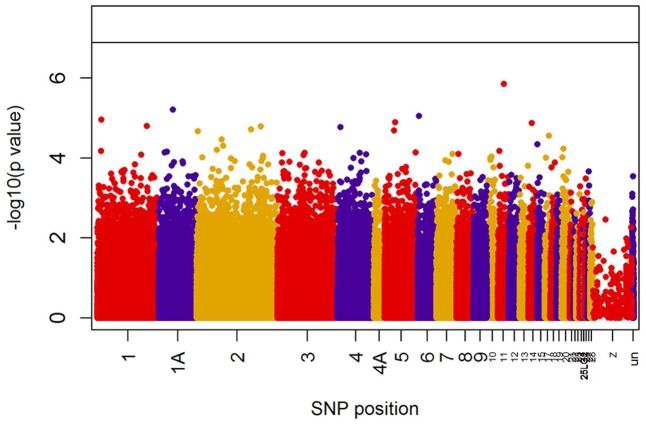
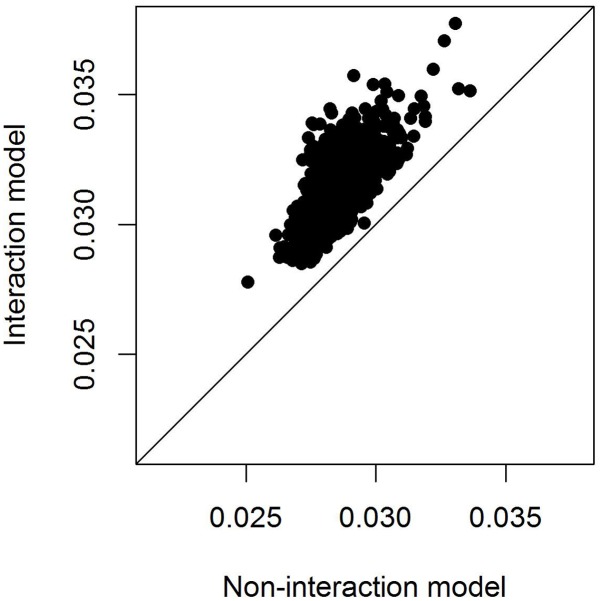
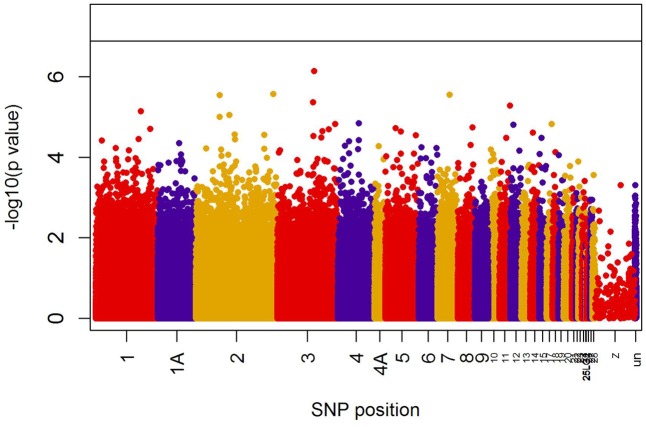
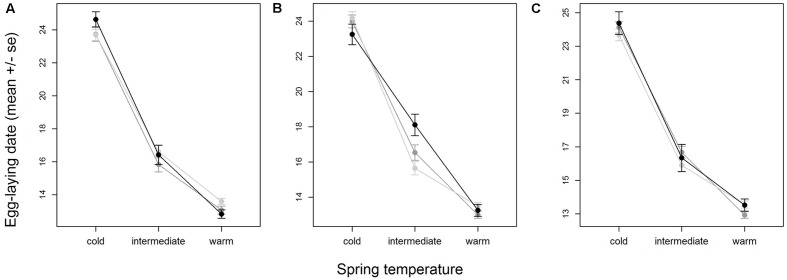
Understanding how genes shape phenotypes is essential to assess the evolutionary potential of a trait. Identifying the genes underlying quantitative behavioral or life-history traits has, however, proven to be a major challenge. The majority of these traits are phenotypically plastic and different parts of the genome can be involved in shaping the trait under different environmental conditions. These variable genotype-phenotype associations could be one explanation for the limited success of genome-wide association studies in such traits. We here use avian seasonal timing of breeding, a trait that is highly plastic in response to spring temperature, to explore effects of such genotype-by-environment interactions in genome-wide association studies. We genotyped 2045 great tit females for 384081 single nucleotide polymorphisms (SNPs) and recorded their egg-laying dates in the wild. When testing for associations between SNPs and egg-laying dates, no SNP reached genome-wide significance. We then explored whether SNP effects were modified by annual spring temperature by formally testing for an interaction between SNP effect and temperature. The models including the SNPtemperature interaction performed consistently better although no SNP reached genome-wide significance. Our results suggest that the effects of genes shaping seasonal timing depended on annual spring temperature. Such environment-dependent effects are expected for any phenotypically plastic trait. Taking these effects into account will thus improve the success of detecting genes involved in phenotypically plastic traits, thereby leading to a better understanding of their evolutionary potential.
了解基因如何塑造表型对于评估一个性状的进化潜力至关重要。然而,识别定量行为或生活史性状背后的基因已被证明是一项重大挑战。这些性状中的大多数在表型上具有可塑性,并且基因组的不同部分可能在不同环境条件下参与塑造该性状。这些可变的基因型-表型关联可能是全基因组关联研究在这类性状上取得有限成功的一个原因。我们在此利用鸟类繁殖的季节性时间安排这一性状(该性状对春季温度具有高度可塑性),来探索这种基因型与环境相互作用在全基因组关联研究中的影响。我们对2045只大山雀雌性个体进行了384081个单核苷酸多态性(SNP)的基因分型,并记录了它们在野外的产卵日期。在测试SNP与产卵日期之间的关联时,没有一个SNP达到全基因组显著性。然后,我们通过正式测试SNP效应与温度之间的相互作用,来探索SNP效应是否会受到年度春季温度的影响。尽管没有一个SNP达到全基因组显著性,但包含SNP-温度相互作用的模型表现始终更好。我们的结果表明,塑造季节性时间安排的基因效应取决于年度春季温度。对于任何表型可塑性性状,预计都会有这种环境依赖性效应。因此,考虑这些效应将提高检测涉及表型可塑性性状的基因的成功率,从而更好地理解它们的进化潜力。