Pretorius Chanel J, Tugizimana Fidele, Steenkamp Paul A, Piater Lizelle A, Dubery Ian A
Research Centre for Plant Metabolomics, Department of Biochemistry, University of Johannesburg, P.O. Box 524, Auckland Park, Johannesburg 2006, South Africa.
Metabolites. 2021 Mar 12;11(3):165. doi: 10.3390/metabo11030165.
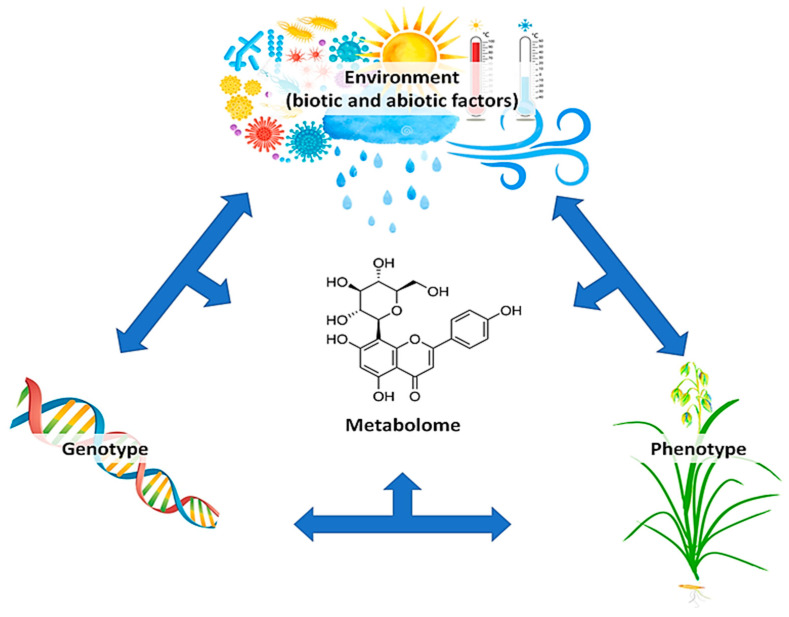
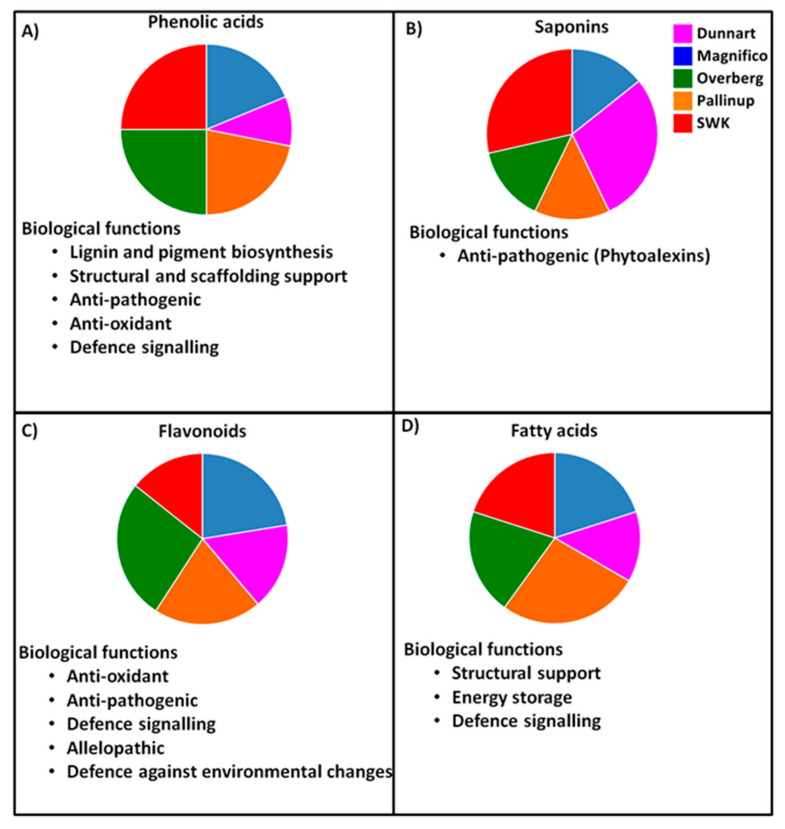
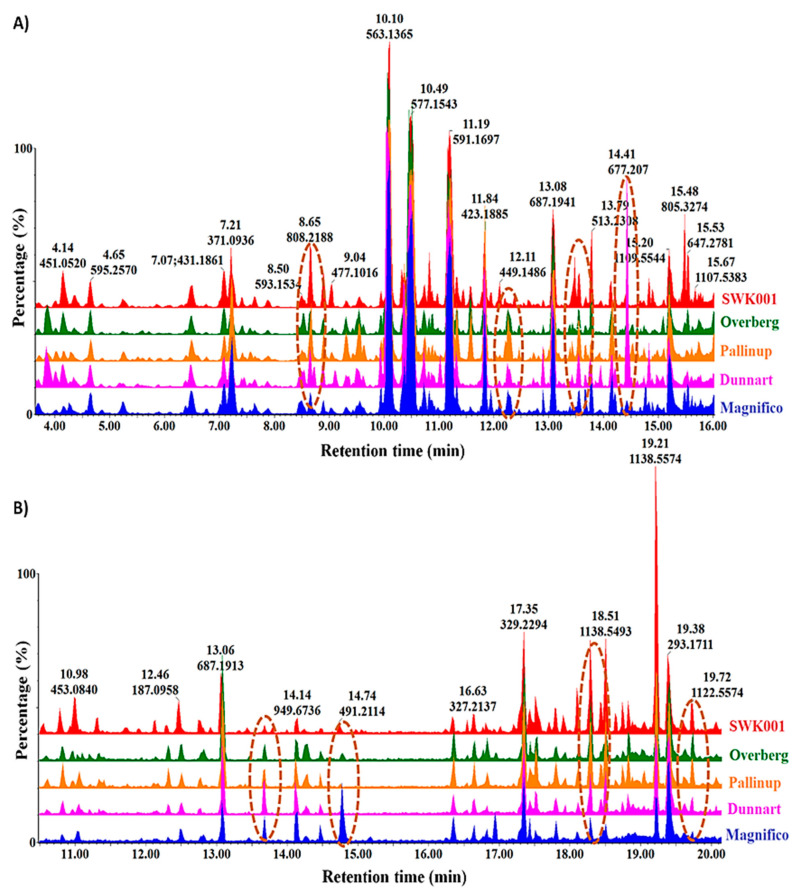
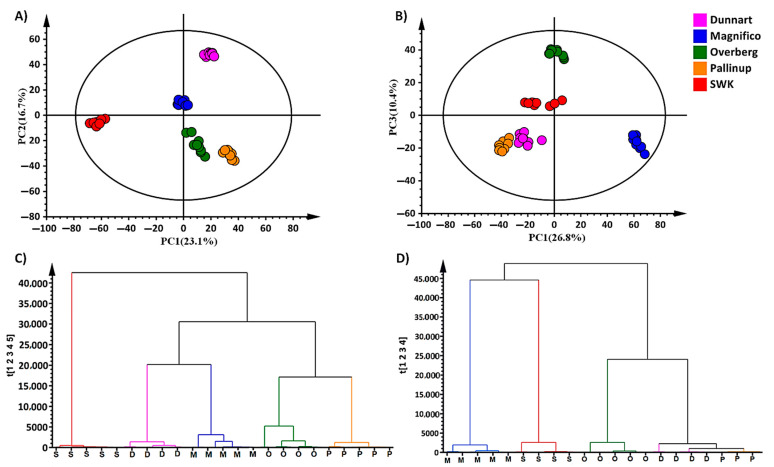
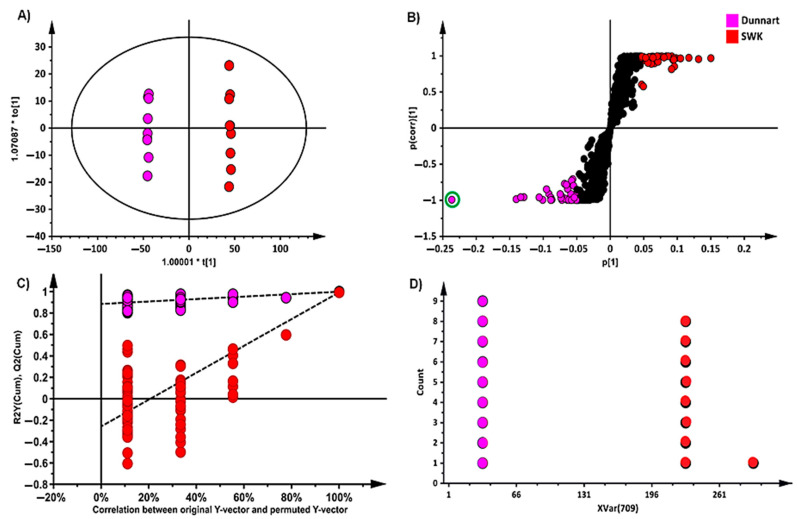
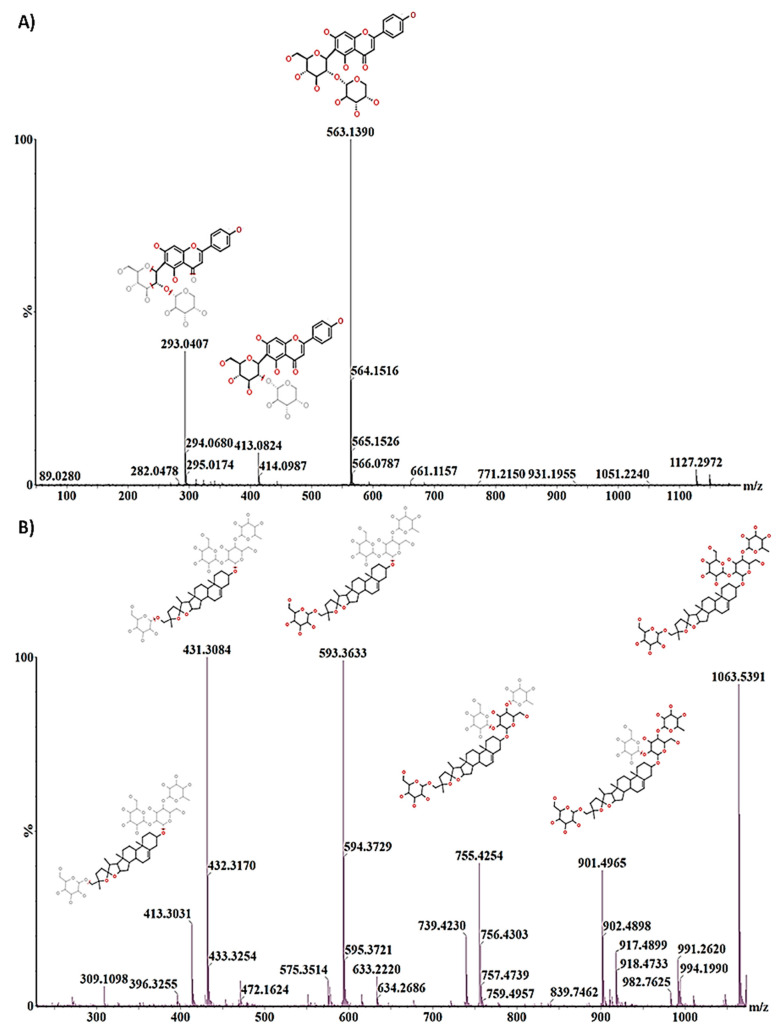
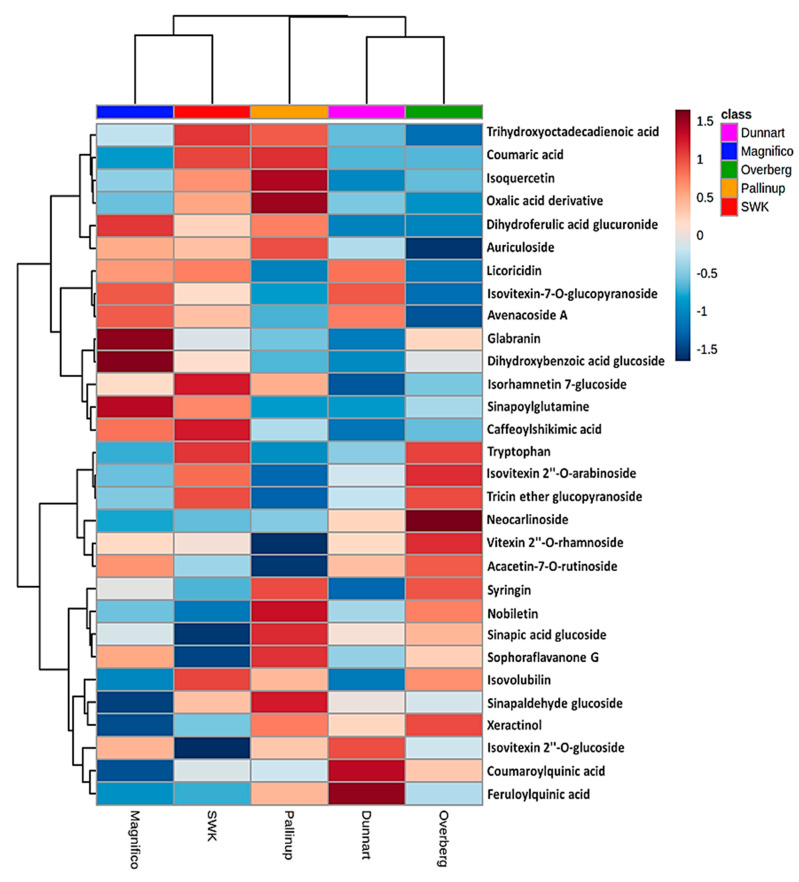
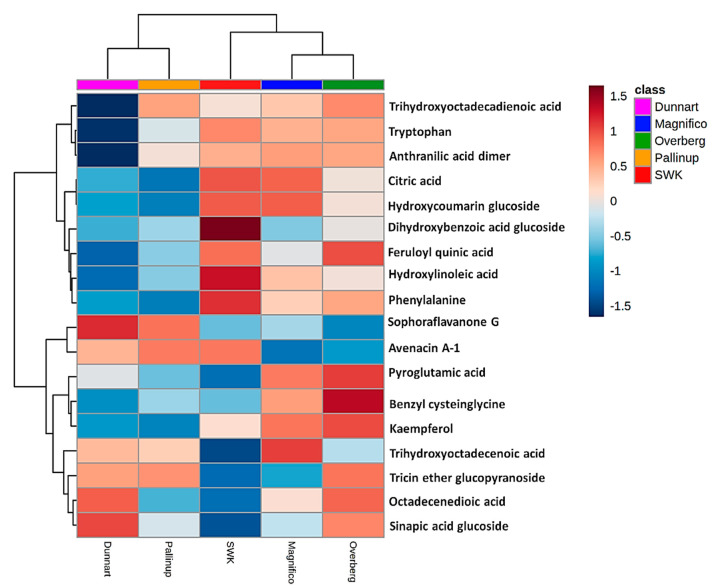
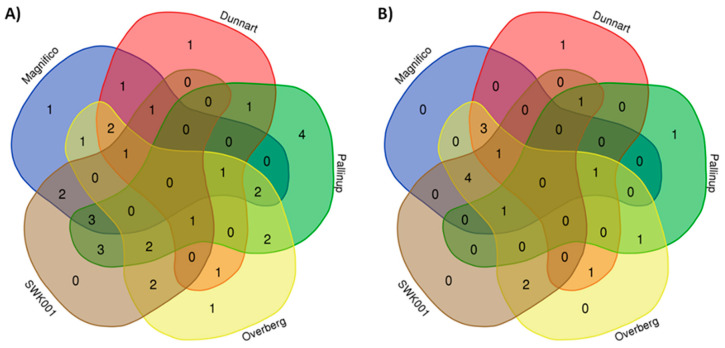
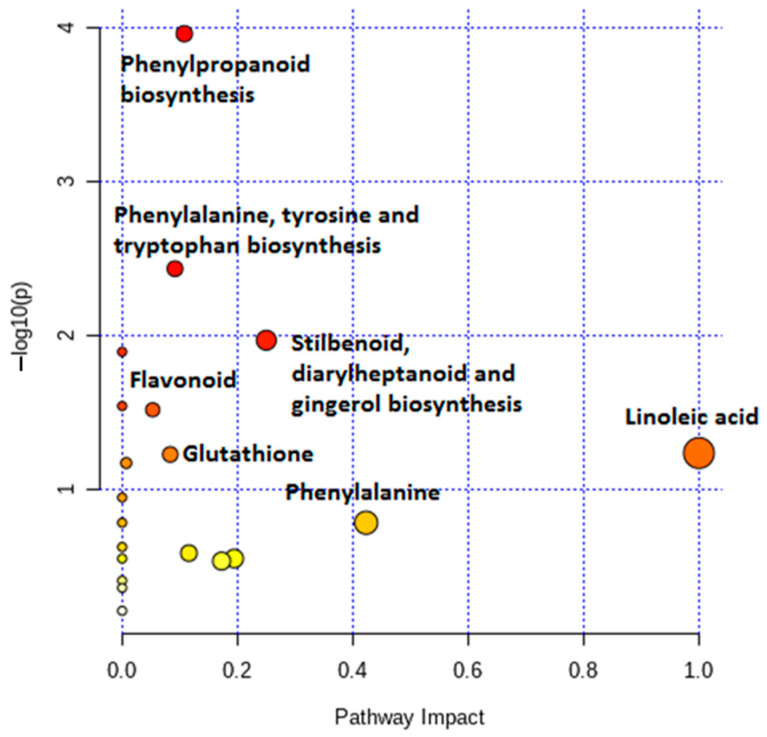
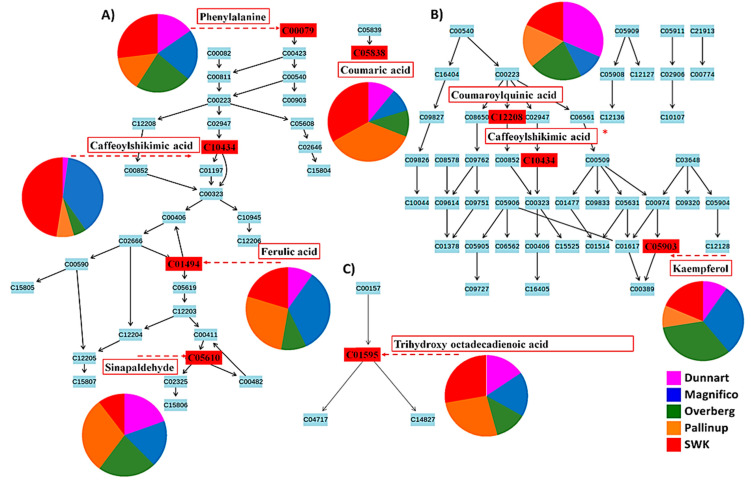
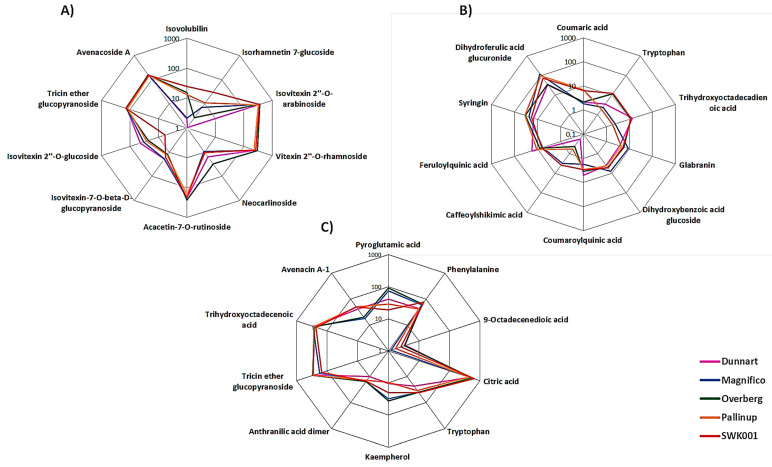
The first step in crop introduction-or breeding programmes-requires cultivar identification and characterisation. Rapid identification methods would therefore greatly improve registration, breeding, seed, trade and inspection processes. Metabolomics has proven to be indispensable in interrogating cellular biochemistry and phenotyping. Furthermore, metabolic fingerprints are chemical maps that can provide detailed insights into the molecular composition of a biological system under consideration. Here, metabolomics was applied to unravel differential metabolic profiles of various oat () cultivars (Magnifico, Dunnart, Pallinup, Overberg and SWK001) and to identify signatory biomarkers for cultivar identification. The respective cultivars were grown under controlled conditions up to the 3-week maturity stage, and leaves and roots were harvested for each cultivar. Metabolites were extracted using 80% methanol, and extracts were analysed on an ultra-high performance liquid chromatography (UHPLC) system coupled to a quadrupole time-of-flight (qTOF) high-definition mass spectrometer analytical platform. The generated data were processed and analysed using multivariate statistical methods. Principal component analysis (PCA) models were computed for both leaf and root data, with PCA score plots indicating cultivar-related clustering of the samples and pointing to underlying differential metabolic profiles of these cultivars. Further multivariate analyses were performed to profile differential signatory markers, which included carboxylic acids, amino acids, fatty acids, phenolic compounds (hydroxycinnamic and hydroxybenzoic acids, and associated derivatives) and flavonoids, among the respective cultivars. Based on the key signatory metabolic markers, the cultivars were successfully distinguished from one another in profiles derived from both leaves and roots. The study demonstrates that metabolomics can be used as a rapid phenotyping tool for cultivar differentiation.
作物引进或育种计划的第一步需要对品种进行鉴定和特征描述。因此,快速鉴定方法将极大地改善登记、育种、种子、贸易和检验流程。代谢组学已被证明在研究细胞生物化学和表型分析中不可或缺。此外,代谢指纹图谱是化学图谱,可以提供对所考虑生物系统分子组成的详细见解。在此,代谢组学被用于揭示各种燕麦()品种(Magnifico、Dunnart、Pallinup、Overberg和SWK001)的差异代谢谱,并识别用于品种鉴定的标志性生物标志物。将各个品种在可控条件下种植至3周成熟阶段,然后对每个品种收获叶片和根系。使用80%甲醇提取代谢物,并在与四极杆飞行时间(qTOF)高清质谱仪分析平台联用的超高效液相色谱(UHPLC)系统上对提取物进行分析。使用多元统计方法对生成的数据进行处理和分析。为叶片和根系数据计算主成分分析(PCA)模型,PCA得分图表明样品的品种相关聚类,并指出这些品种潜在的差异代谢谱。进行了进一步的多变量分析以分析差异标志性标志物,这些标志物包括羧酸、氨基酸、脂肪酸、酚类化合物(羟基肉桂酸和羟基苯甲酸及其相关衍生物)和黄酮类化合物,存在于各个品种中。基于关键的标志性代谢标志物,在来自叶片和根系的图谱中成功区分了各个品种。该研究表明,代谢组学可作为一种快速的表型分析工具用于品种区分。