Department of Animal Ecology, Netherlands Institute of Ecology (NIOO-KNAW), P.O. Box 50, 6700 AB, Wageningen, The Netherlands.
Department of Biological Sciences, Simon Fraser University, Burnaby, Canada.
BMC Genomics. 2019 Sep 2;20(1):693. doi: 10.1186/s12864-019-6043-0.
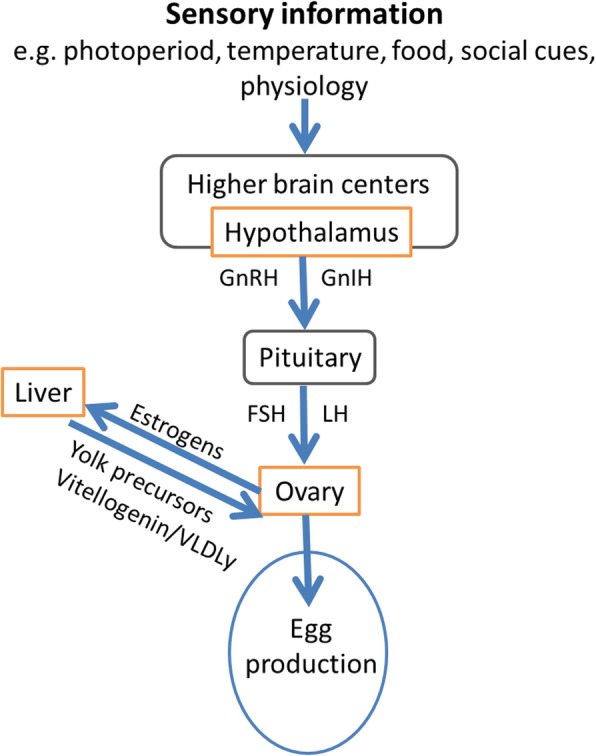
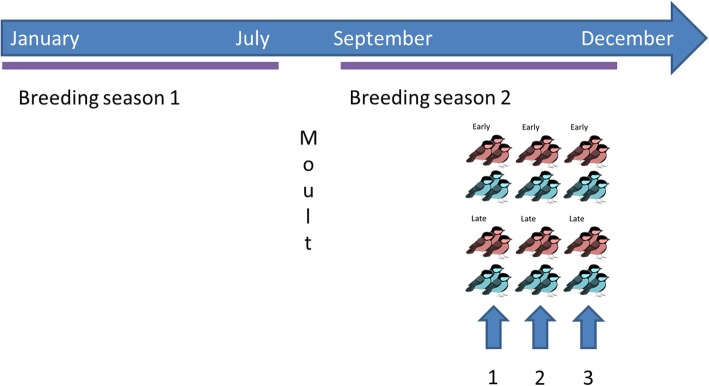
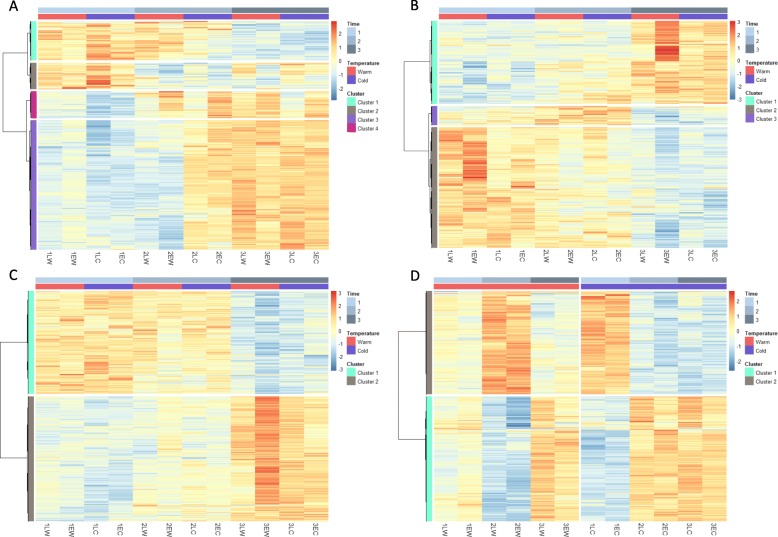
Seasonal timing of breeding is a life history trait with major fitness consequences but the genetic basis of the physiological mechanism underlying it, and how gene expression is affected by date and temperature, is not well known. In order to study this, we measured patterns of gene expression over different time points in three different tissues of the hypothalamic-pituitary-gonadal-liver axis, and investigated specifically how temperature affects this axis during breeding. We studied female great tits (Parus major) from lines artificially selected for early and late timing of breeding that were housed in two contrasting temperature environments in climate-controlled aviaries. We collected hypothalamus, liver and ovary samples at three different time points (before and after onset of egg-laying). For each tissue, we sequenced whole transcriptomes of 12 pools (n = 3 females) to analyse gene expression.
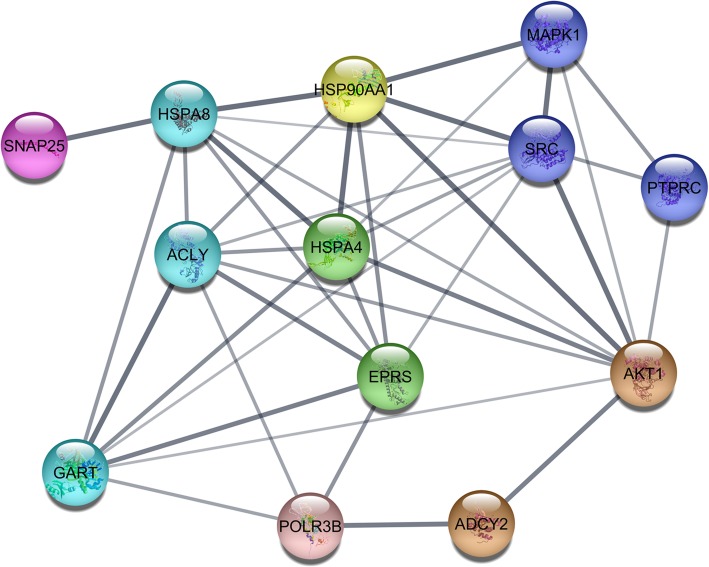
Birds from the selection lines differed in expression especially for one gene with clear reproductive functions, zona pellucida glycoprotein 4 (ZP4), which has also been shown to be under selection in these lines. Genes were differentially expressed at different time points in all tissues and most of the differentially expressed genes between the two temperature treatments were found in the liver. We identified a set of hub genes from all the tissues which showed high association to hormonal functions, suggesting that they have a core function in timing of breeding. We also found ample differentially expressed genes with largely unknown functions in birds.
We found differentially expressed genes associated with selection line and temperature treatment. Interestingly, the latter mainly in the liver suggesting that temperature effects on egg-laying date may happen down-stream in the physiological pathway. These findings, as well as our datasets, will further the knowledge of the mechanisms of tissue-specific avian seasonality in the future.
繁殖的季节性是一个具有重要适应意义的生活史特征,但控制其生理机制的遗传基础,以及基因表达如何受到日期和温度的影响,尚不清楚。为了研究这一点,我们测量了下丘脑-垂体-性腺-肝轴三个不同组织中不同时间点的基因表达模式,并特别研究了温度在繁殖期间如何影响这个轴。我们研究了来自人工选择早繁殖和晚繁殖的黑线姬鼠(Parus major),这些黑线姬鼠被安置在气候控制的鸟类栖息地中的两种对照温度环境中。我们在三个不同时间点(产卵前和产卵后)采集下丘脑、肝脏和卵巢样本。对于每个组织,我们对 12 个样本池(n=3 只雌鸟)进行了全转录组测序,以分析基因表达。
选择线的鸟类在表达上存在差异,尤其是一个具有明显生殖功能的基因,透明带糖蛋白 4(ZP4),该基因也在这些线中受到选择。所有组织中不同时间点的基因都有差异表达,并且在两个温度处理之间差异表达的大多数基因都在肝脏中发现。我们从所有组织中确定了一组枢纽基因,这些基因与激素功能高度相关,表明它们在繁殖时间上具有核心功能。我们还发现了大量具有未知功能的差异表达基因。
我们发现了与选择线和温度处理相关的差异表达基因。有趣的是,后者主要在肝脏中,这表明温度对产卵日期的影响可能发生在生理途径的下游。这些发现以及我们的数据集将进一步提高未来对鸟类组织特异性季节性机制的认识。