Wang Xiaoqing, Salvachúa Davinia, Sànchez I Nogué Violeta, Michener William E, Bratis Adam D, Dorgan John R, Beckham Gregg T
National Bioenergy Center, National Renewable Energy Laboratory, Golden, CO 80401 USA.
Chemical and Biological Engineering Department, Colorado School of Mines, Golden, CO 80401 USA.
Biotechnol Biofuels. 2017 Aug 17;10:200. doi: 10.1186/s13068-017-0884-z. eCollection 2017.
The production of value-added chemicals alongside biofuels from lignocellulosic hydrolysates is critical for developing economically viable biorefineries. Here, the production of propionic acid (PA), a potential building block for C3-based chemicals, from corn stover hydrolysate is investigated using the native PA-producing bacterium .
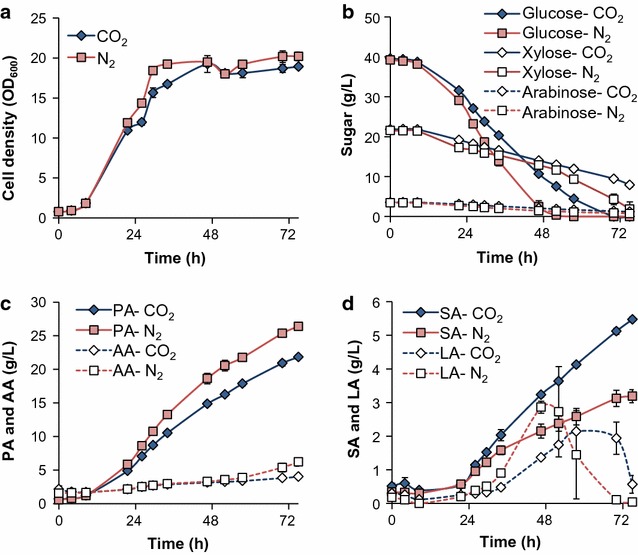
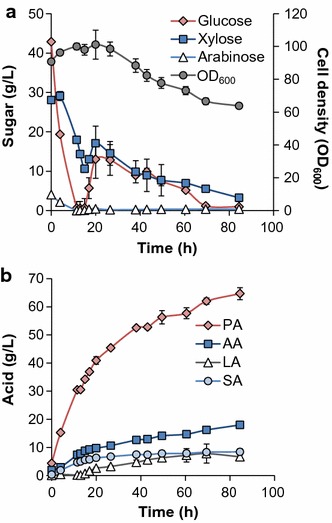
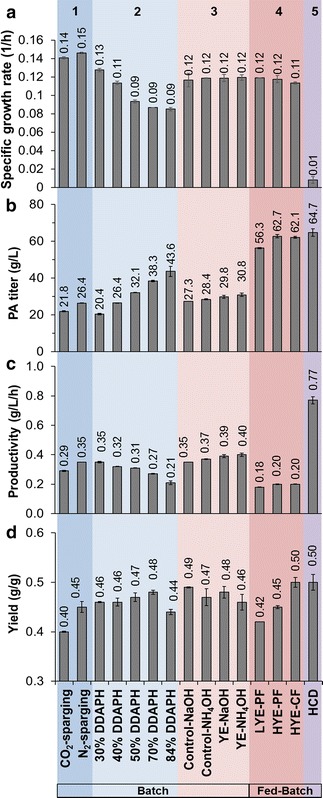
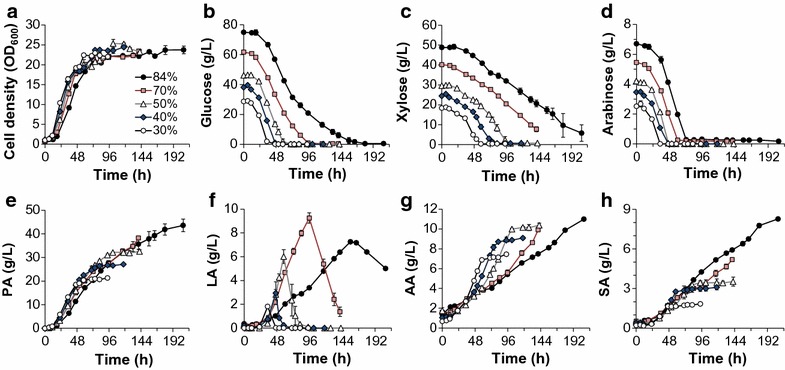
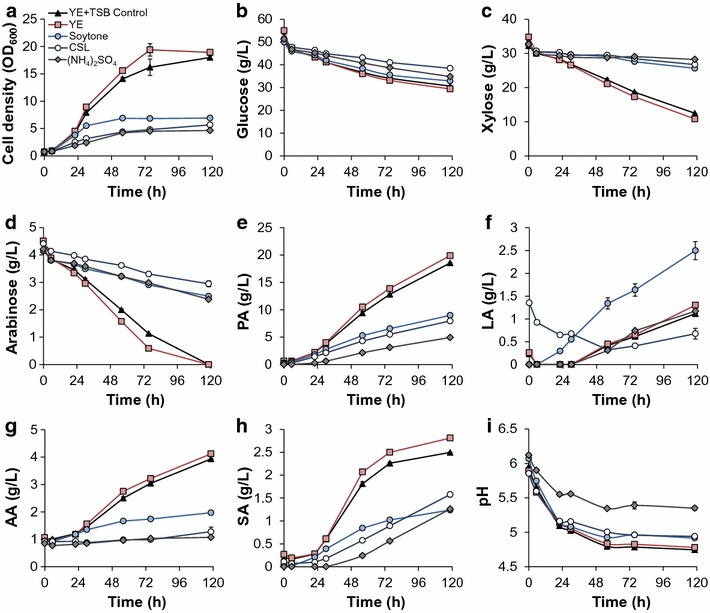
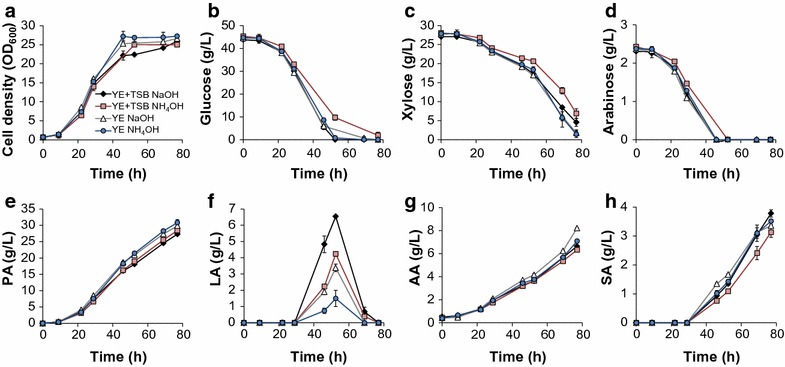
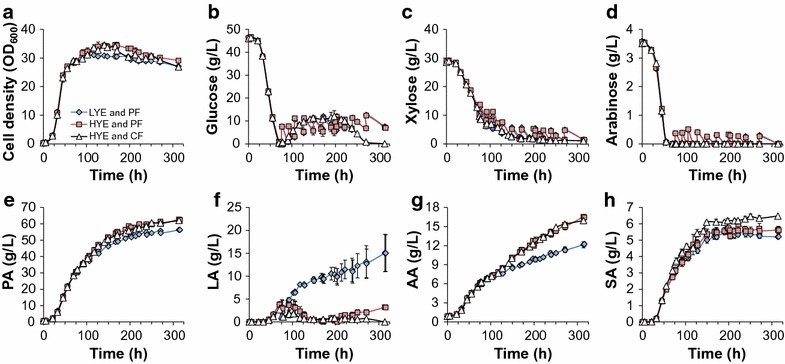
A wide range of culture conditions and process parameters were examined and experimentally optimized to maximize titer, rate, and yield of PA. The effect of gas sparging during fermentation was first examined, and N was found to exhibit improved performance over CO. Subsequently, the effects of different hydrolysate concentrations, nitrogen sources, and neutralization agents were investigated. One of the best combinations found during batch experiments used yeast extract (YE) as the primary nitrogen source and NHOH for pH control. This combination enabled PA titers of 30.8 g/L with a productivity of 0.40 g/L h from 76.8 g/L biomass sugars, while successfully minimizing lactic acid production. Due to the economic significance of downstream separations, increasing titers using fed-batch fermentation was examined by changing both feeding media and strategy. Continuous feeding of hydrolysate was found to be superior to pulsed feeding and combined with high YE concentrations increased PA titers to 62.7 g/L and improved the simultaneous utilization of different biomass sugars. Additionally, applying high YE supplementation maintains the lactic acid concentration below 4 g/L for the duration of the fermentation. Finally, with the aim of increasing productivity, high cell density fed-batch fermentations were conducted. PA titers increased to 64.7 g/L with a productivity of 2.35 g/L h for the batch stage and 0.77 g/L h for the overall process.
These results highlight the importance of media and fermentation strategy to improve PA production. Overall, this work demonstrates the feasibility of producing PA from corn stover hydrolysate.
从木质纤维素水解产物中同时生产生物燃料和增值化学品对于发展经济可行的生物精炼厂至关重要。在此,使用天然产丙酸细菌研究了从玉米秸秆水解产物中生产丙酸(PA),丙酸是基于C3的化学品的潜在基础原料。
研究并通过实验优化了广泛的培养条件和工艺参数,以最大化PA的滴度、速率和产量。首先研究了发酵过程中气体鼓泡的影响,发现N比CO表现出更好的性能。随后,研究了不同水解产物浓度、氮源和中和剂的影响。在分批实验中发现的最佳组合之一是使用酵母提取物(YE)作为主要氮源,并用NHOH控制pH值。这种组合能够从76.8 g/L的生物质糖中获得30.8 g/L的PA滴度,生产率为0.40 g/L·h,同时成功地将乳酸产量降至最低。由于下游分离的经济意义,通过改变进料培养基和策略研究了补料分批发酵提高滴度的方法。发现连续进料水解产物优于脉冲进料,并且与高YE浓度相结合可将PA滴度提高到62.7 g/L,并改善了不同生物质糖的同时利用。此外,在发酵过程中添加高浓度的YE可使乳酸浓度保持在4 g/L以下。最后,为了提高生产率,进行了高细胞密度补料分批发酵。分批阶段的PA滴度提高到64.7 g/L,生产率为2.35 g/L·h,整个过程的生产率为0.77 g/L·h。
这些结果突出了培养基和发酵策略对提高PA产量的重要性。总体而言,这项工作证明了从玉米秸秆水解产物中生产PA的可行性。