Department of Food Biotechnology and Microbiology, Institute of Food Sciences, Warsaw University of Life Sciences-SGGW, Nowoursynowska 159 C, 02-776 Warsaw, Poland.
Molecules. 2021 Jun 29;26(13):3965. doi: 10.3390/molecules26133965.
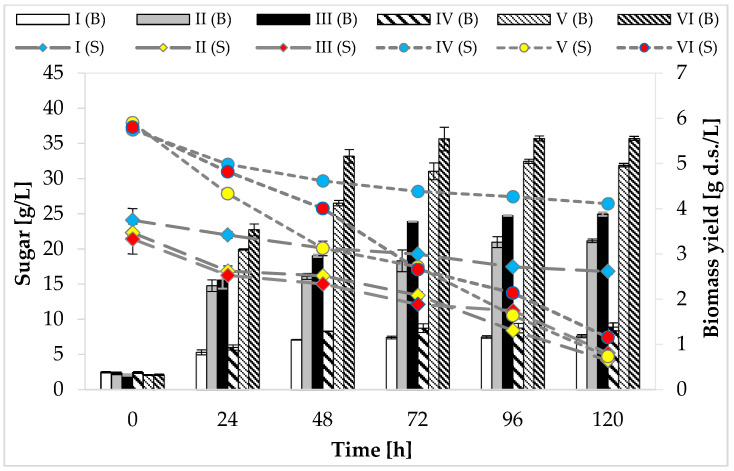
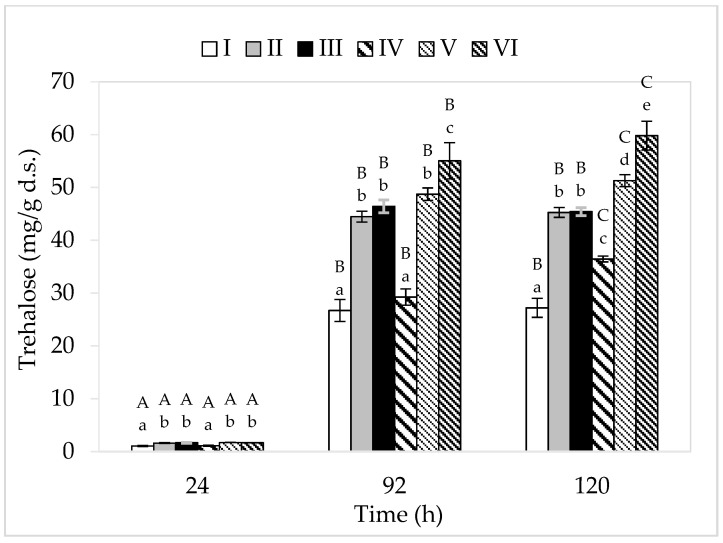
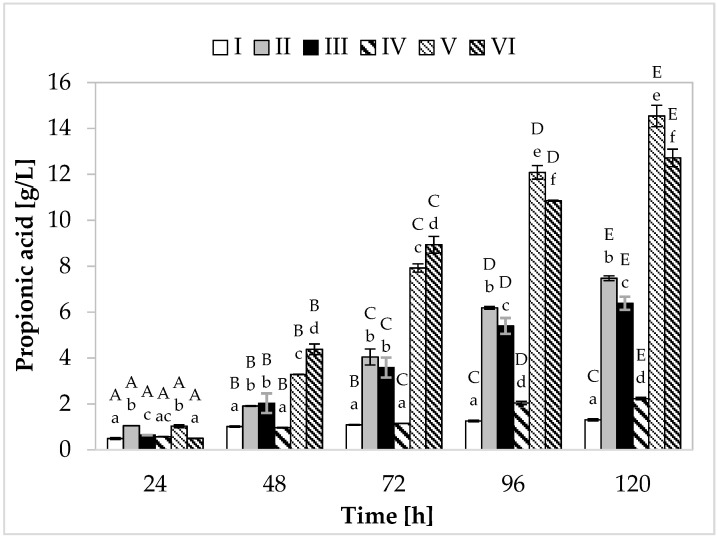
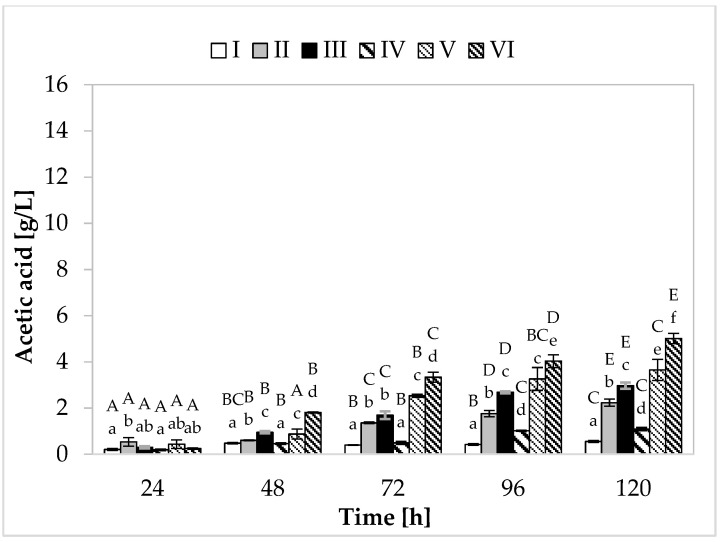
Propionic acid bacteria are the source of many metabolites, e.g., propionic acid and trehalose. Compared to microbiological synthesis, the production of these metabolites by petrochemical means or enzymatic conversion is more profitable. The components of microbiological media account for a large part of the costs associated with propionic fermentation, due to the high nutritional requirements of . This problem can be overcome by formulating a medium based on the by-products of technological processes, which can act as nutritional sources and at the same time replace expensive laboratory preparations (e.g., peptone and yeast extract). The metabolic activity of was investigated in two different breeding environments: in a medium containing peptone, yeast extract, and biotin, and in a waste-based medium consisting of only apple pomace and potato wastewater. The highest production of propionic acid amounting to 14.54 g/L was obtained in the medium containing apple pomace and pure laboratory supplements with a yield of 0.44 g/g. Importantly, the acid production parameters in the waste medium reached almost the same level (12.71 g/L, 0.42 g/g) as the medium containing pure supplements. Acetic acid synthesis was more efficient in the waste medium; it was also characterized by a higher level of accumulated trehalose (59.8 mg/g d.s.). Thus, the obtained results show that bacteria exhibited relatively high metabolic activity in an environment with apple pomace used as a carbon source and potato wastewater used as a nitrogen source. This method of propioniate production could be cheaper and more sustainable than the chemical manner.
丙酸菌是许多代谢产物的来源,例如丙酸和海藻糖。与微生物合成相比,通过石油化工手段或酶转化生产这些代谢产物更有利可图。由于 对营养的高要求,微生物培养基的成分占丙酸发酵相关成本的很大一部分。这个问题可以通过基于生物技术过程的副产物来制定培养基来解决,这些副产物可以作为营养源,同时替代昂贵的实验室制剂(例如蛋白胨和酵母提取物)。研究了 在两种不同的培养环境中的代谢活性:一种含有蛋白胨、酵母提取物和生物素的培养基,和一种仅由苹果渣和土豆废水组成的基于废物的培养基。在含有苹果渣和纯实验室补充剂的培养基中获得了最高的丙酸产量,达到 14.54 g/L,产率为 0.44 g/g。重要的是,废培养基中的产酸参数达到了几乎与含有纯补充剂的培养基相同的水平(12.71 g/L,0.42 g/g)。在废培养基中,乙酸的合成效率更高;它还具有更高水平的积累海藻糖(59.8 mg/g d.s.)。因此,研究结果表明,在以苹果渣为碳源、土豆废水为氮源的环境中, 细菌表现出相对较高的代谢活性。这种丙酸生产方法可能比化学方法更便宜、更可持续。