Zhang Xuefeng, Yan Qiangu, Leng Weiqi, Li Jinghao, Zhang Jilei, Cai Zhiyong, Hassan El Barbary
Department of Sustainable Bioproducts, Mississippi State University 1, Starkville, MS 39759, USA.
USA Department of Agriculture, Forest Service, Forest Products Laboratory, Madison, WI 53726, USA.
Materials (Basel). 2017 Aug 21;10(8):975. doi: 10.3390/ma10080975.
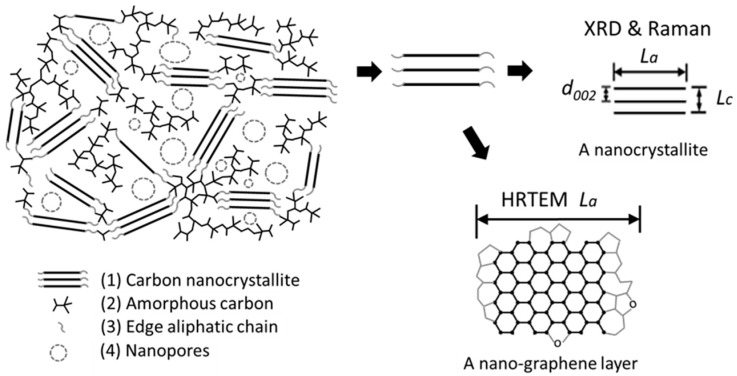
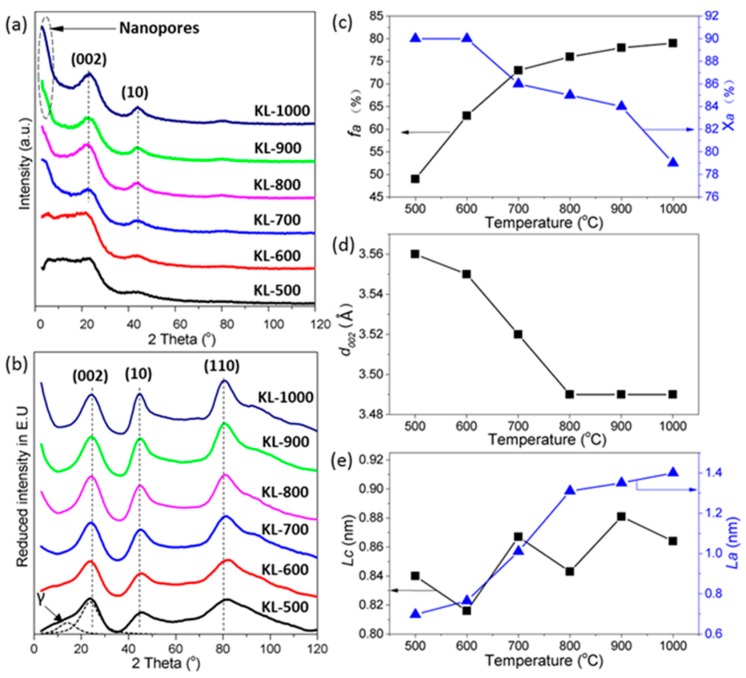
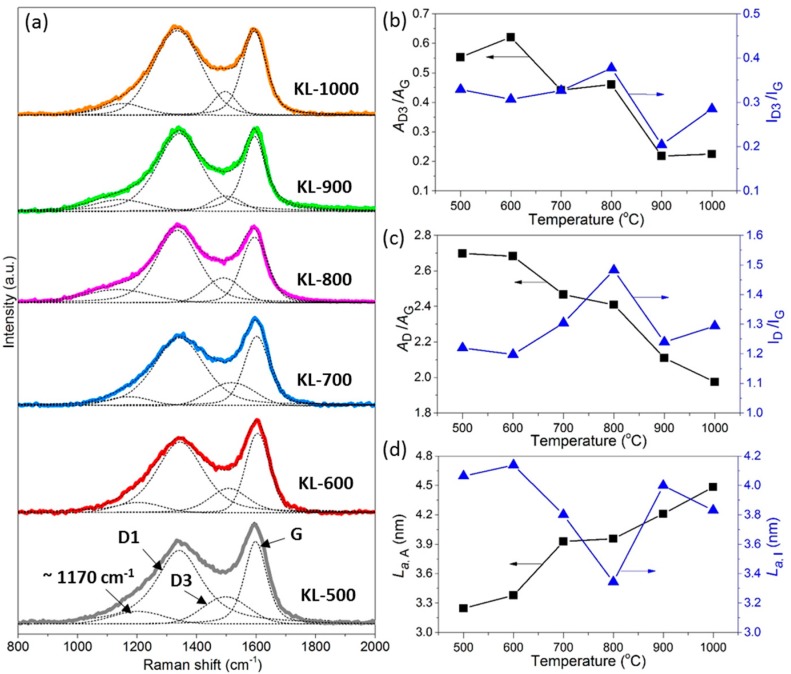
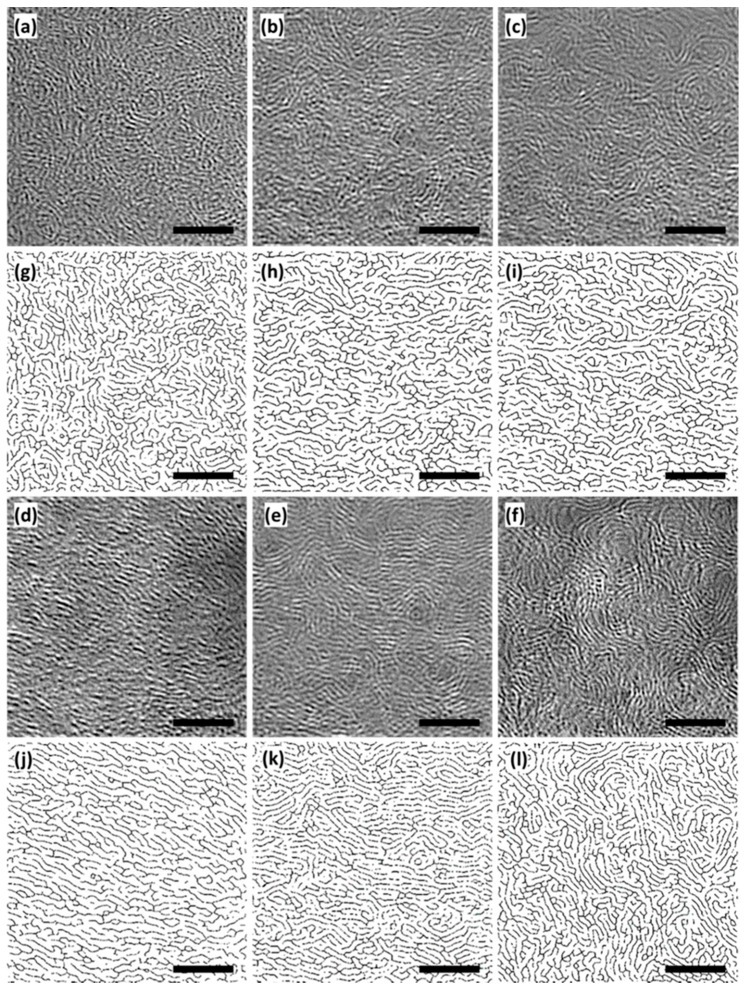
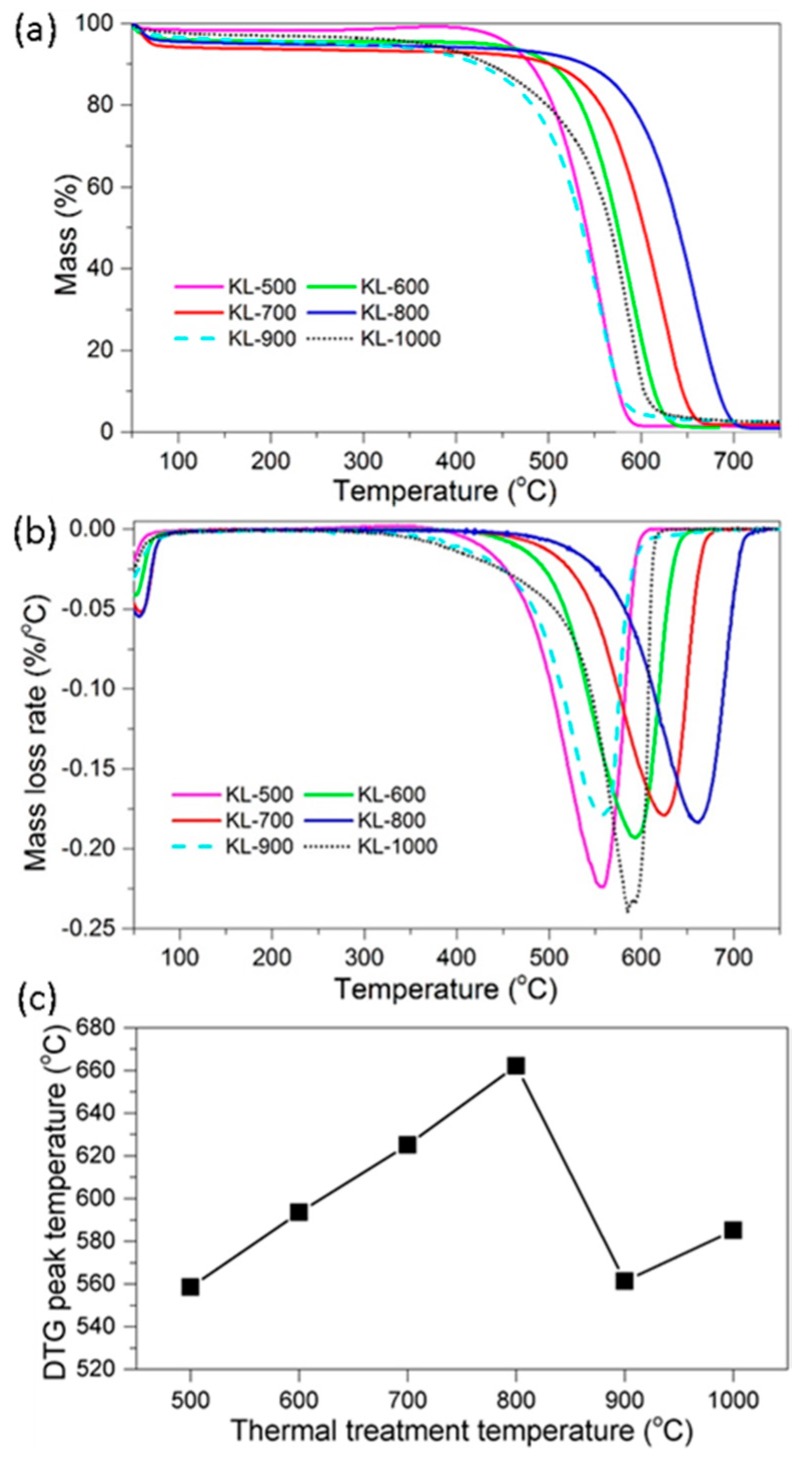
Kraft lignin (KL) was thermally treated at 500 to 1000 °C in an inert atmosphere. Carbon nanostructure parameters of thermally treated KL in terms of amorphous carbon fraction, aromaticity, and carbon nanocrystallites lateral size (), thickness (), and interlayer space () were analyzed quantitatively using X-ray diffraction, Raman spectroscopy, and high-resolution transmission electron microscopy. Experimental results indicated that increasing temperature reduced amorphous carbon but increased aromaticity in thermally treated KL materials. The value of thermally treated KL materials averaged 0.85 nm and did not change with temperature. The value decreased from 3.56 Å at 500 °C to 3.49 Å at 1000 °C. The value increased from 0.7 to 1.4 nm as temperature increased from 500 to 1000 °C. A nanostructure model was proposed to describe thermally treated KL under 1000 °C. The thermal stability of heat treated KL increased with temperature rising from 500 to 800 °C.
木素磺酸盐(KL)在惰性气氛中于500至1000°C进行热处理。使用X射线衍射、拉曼光谱和高分辨率透射电子显微镜对热处理后的KL的碳纳米结构参数进行了定量分析,这些参数包括非晶碳分数、芳香性以及碳纳米微晶的横向尺寸()、厚度()和层间距()。实验结果表明,温度升高会降低热处理后KL材料中的非晶碳含量,但会增加其芳香性。热处理后KL材料的 值平均为0.85 nm,且不随温度变化。 值从500°C时的3.56 Å降至1000°C时的3.49 Å。随着温度从500°C升高至1000°C, 值从0.7 nm增加至1.4 nm。提出了一个纳米结构模型来描述1000°C以下的热处理KL。随着温度从500°C升高至800°C,热处理KL的热稳定性增加。