Snarr Ronald L, Hallmark Ashleigh V, Casey Jason C, Esco Michael R
College of Health and Kinesiology, Georgia Southern University, Statesboro, GA USA.
Department of Kinesiology, The University of Alabama, Tuscaloosa, AL USA.
J Hum Kinet. 2017 Aug 1;58:5-13. doi: 10.1515/hukin-2017-0068. eCollection 2017 Sep.
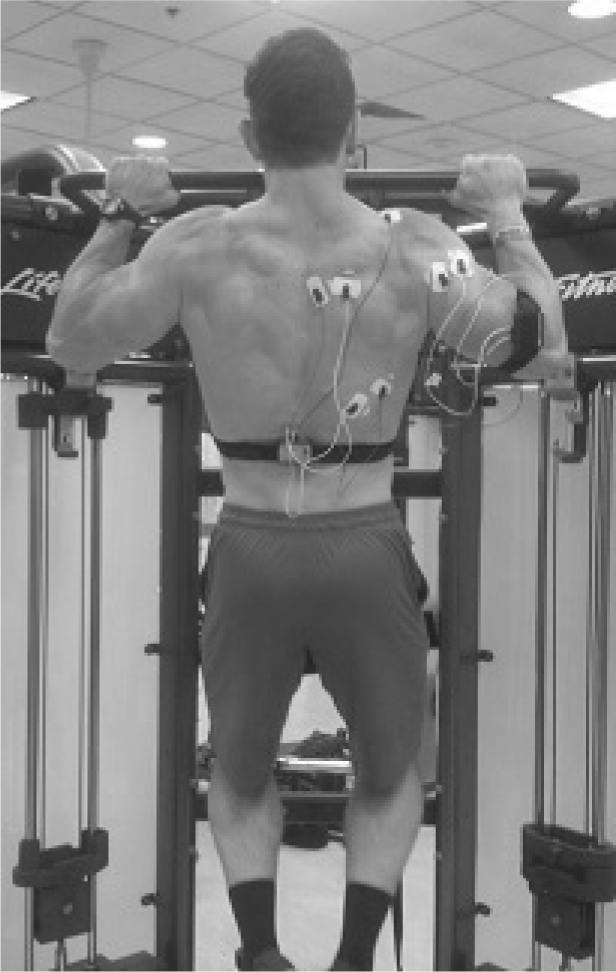
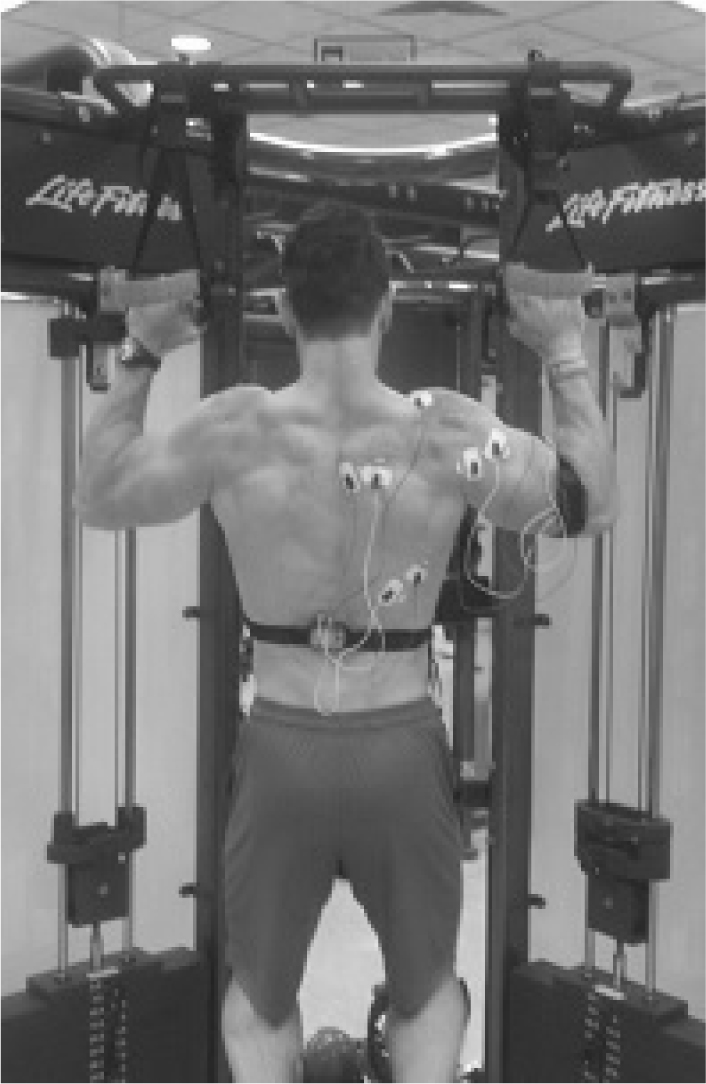
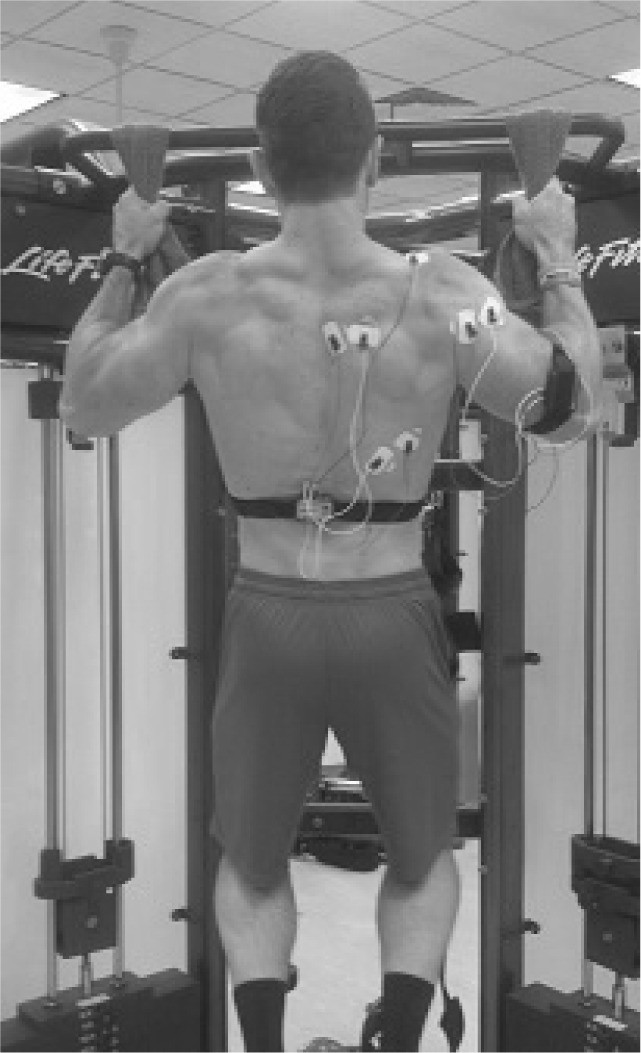
Strengthening muscles of the back may have various implications for improving functions of daily living, aiding in the transfer of power in throwing, and assist in injury prevention of the shoulder complex. While several versions of the pull-up exist, there is currently no literature comparing their differences. The purpose of this investigation was to compare the electromyographical activity of the latissimus dorsi, posterior deltoid, middle trapezius, and biceps brachii while performing three variations of the pull-up. Resistance-trained men and women (n =15, age = 24.87 ± 6.52 years) participated in this study by performing traditional pull-ups, suspension device pull-ups, and towel pull-ups in a randomized fashion. Each pull-up was performed for three repetitions with a 1.5 bi-acromial grip-width for each participant. Normalized (%MVC) electromyographical values were recorded for each muscle group during each pull-up variation. No significant differences existed within the latissimus dorsi, biceps brachii or posterior deltoid between any of the exercises. For the middle trapezius, towel pull-ups provided significantly lower muscle activity than the traditional pull-up, while no differences between suspension pull-ups and the other variations occurred. In conclusion, only one muscular difference existed between the exercise variations and all versions examined provided electromyographical values, determined by current literature, to invoke a sufficient stimulus to promote increases in muscle strength and hypertrophy. Although further research is needed, practitioners can be confident when programming any of the movement variations examined when attempting to elicit adaptations of muscular strength and hypertrophy.
加强背部肌肉可能对改善日常生活功能、助力投掷动作中的力量传递以及预防肩部复合体损伤具有多种意义。虽然引体向上有多种形式,但目前尚无文献比较它们之间的差异。本研究的目的是比较在进行三种不同形式的引体向上时,背阔肌、后三角肌、中斜方肌和肱二头肌的肌电图活动。经过抗阻训练的男性和女性(n = 15,年龄 = 24.87 ± 6.52岁)以随机方式进行传统引体向上、悬吊装置引体向上和毛巾引体向上,参与了本研究。每位参与者每个引体向上动作重复三次,双手间距为双肩峰宽的1.5倍。在每种引体向上变体过程中,记录每个肌肉群的标准化(%MVC)肌电图值。在任何一项练习中,背阔肌、肱二头肌或后三角肌之间均无显著差异。对于中斜方肌,毛巾引体向上的肌肉活动明显低于传统引体向上,而悬吊引体向上与其他变体之间没有差异。总之,这些练习变体之间仅存在一处肌肉差异,并且所有测试的变体所提供的肌电图值,根据当前文献判断,都能引发足够的刺激以促进肌肉力量增加和肥大。尽管还需要进一步研究,但从业者在设计任何一种所测试的动作变体来引发肌肉力量和肥大适应时,可以充满信心。