Walsh Kevin, Haggerty J Matthew, Doane Michael P, Hansen John J, Morris Megan M, Moreira Ana Paula B, de Oliveira Louisi, Leomil Luciana, Garcia Gizele D, Thompson Fabiano, Dinsdale Elizabeth A
Department of Biology, San Diego State University, San Diego, CA, United States of America.
Instituto de Biologia, Universidade Federal do Rio de Janeiro, Rio de Janeiro, Brazil.
PeerJ. 2017 Aug 15;5:e3666. doi: 10.7717/peerj.3666. eCollection 2017.
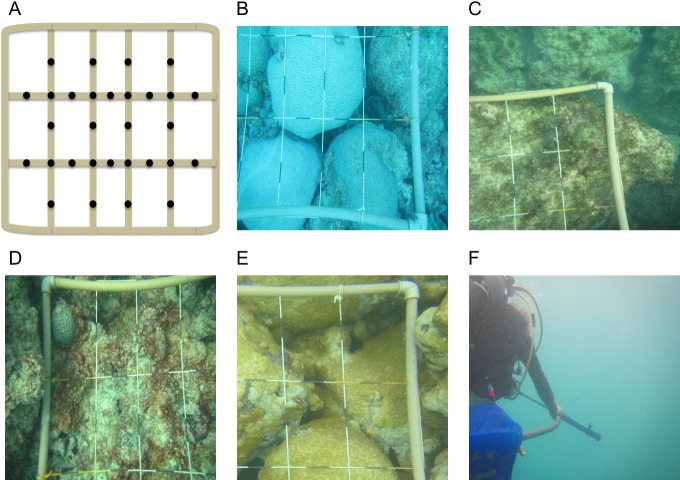
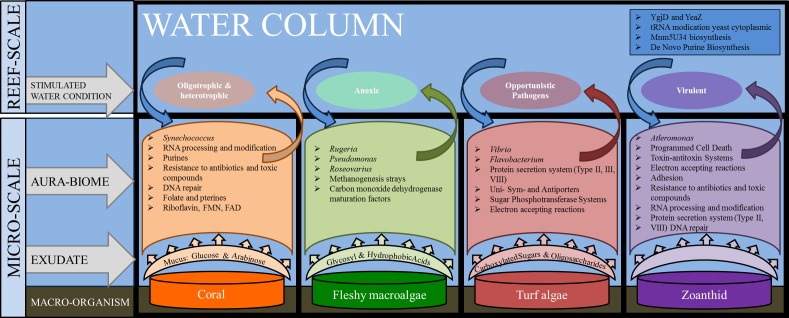
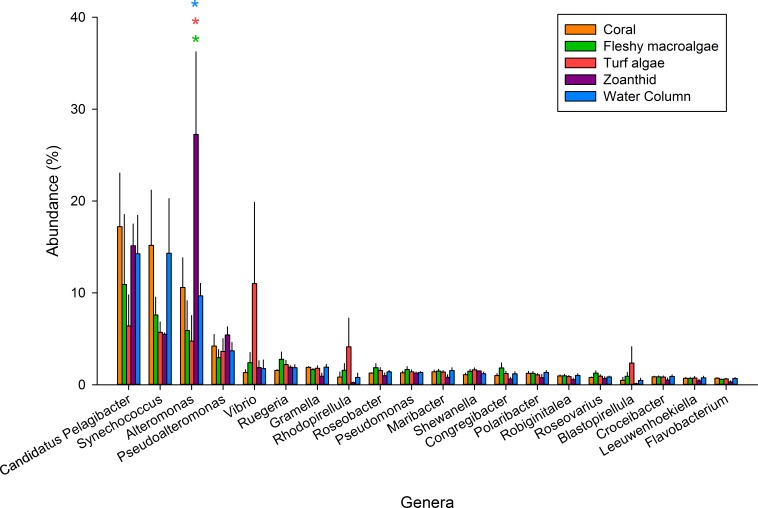
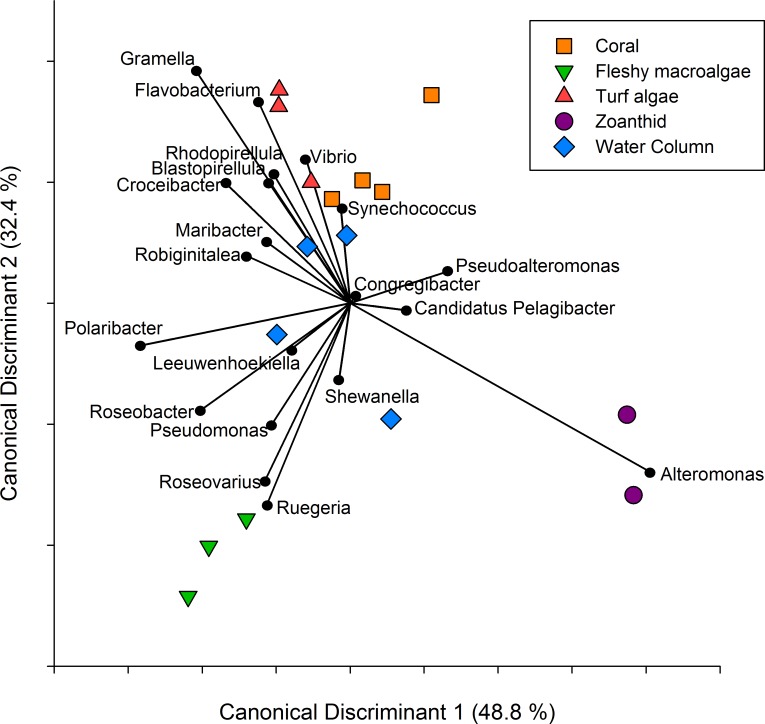
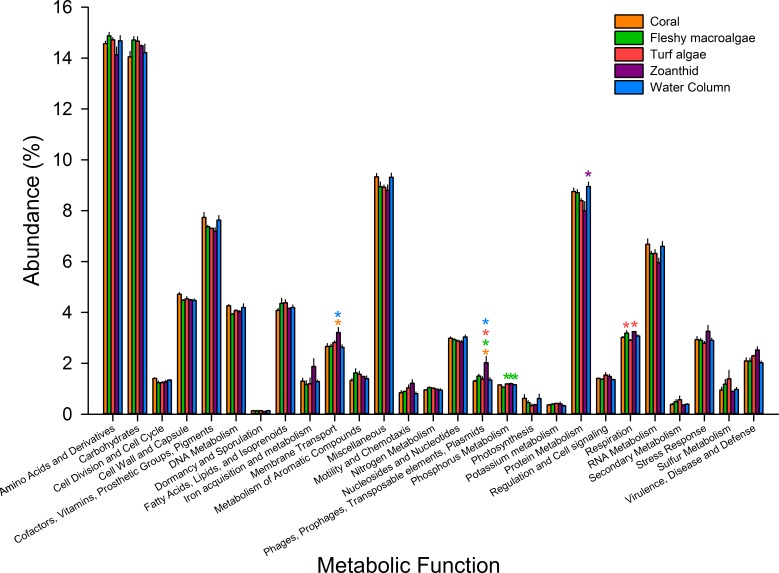
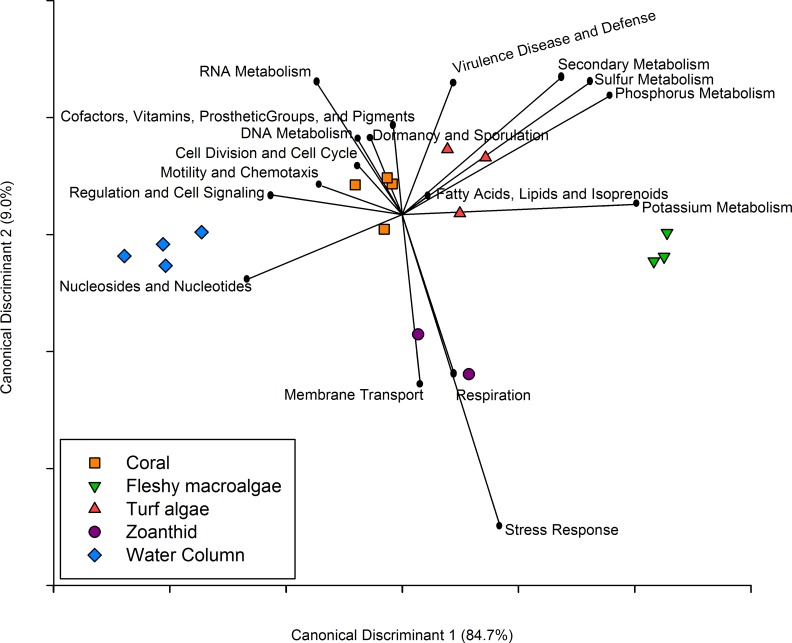
As coral reef habitats decline worldwide, some reefs are transitioning from coral- to algal-dominated benthos with the exact cause for this shift remaining elusive. Increases in the abundance of microbes in the water column has been correlated with an increase in coral disease and reduction in coral cover. Here we investigated how multiple reef organisms influence microbial communities in the surrounding water column. Our study consisted of a field assessment of microbial communities above replicate patches dominated by a single macro-organism. Metagenomes were constructed from 20 L of water above distinct macro-organisms, including (1) the coral , (2) fleshy macroalgae (, and ), (3) turf algae, and (4) the zoanthid and were compared to the water microbes collected 3 m above the reef. Microbial genera and functional potential were annotated using MG-RAST and showed that the dominant benthic macro-organisms influence the taxa and functions of microbes in the water column surrounding them, developing a specific "aura-biome". The coral aura-biome reflected the open water column, and was associated with and functions suggesting oligotrophic growth, while the fleshy macroalgae aura-biome was associated with , and microbial functions suggesting low oxygen conditions. The turf algae aura-biome was associated with and functions suggesting pathogenic activity, while zoanthids were associated with and functions suggesting a stressful environment. Because each benthic organism has a distinct aura-biome, a change in benthic cover will change the microbial community of the water, which may lead to either the stimulation or suppression of the recruitment of benthic organisms.
随着全球珊瑚礁栖息地的减少,一些珊瑚礁正从以珊瑚为主的底栖生物向以藻类为主的底栖生物转变,而这种转变的确切原因仍不清楚。水柱中微生物数量的增加与珊瑚疾病的增加和珊瑚覆盖率的降低有关。在这里,我们研究了多种珊瑚礁生物如何影响周围水柱中的微生物群落。我们的研究包括对由单一大型生物主导的重复斑块上方的微生物群落进行实地评估。从不同大型生物上方20升水中构建宏基因组,包括(1)珊瑚,(2)肉质大型藻类(、和),(3)草皮藻,以及(4)群体海葵,并与在珊瑚礁上方3米处收集的水微生物进行比较。使用MG-RAST对微生物属和功能潜力进行注释,结果表明,占主导地位的底栖大型生物会影响其周围水柱中微生物的分类群和功能,从而形成特定的“光环生物群落”。珊瑚光环生物群落反映了开放水柱,与和功能相关,表明为贫营养生长,而肉质大型藻类光环生物群落与、和微生物功能相关,表明为低氧条件。草皮藻光环生物群落与和功能相关,表明具有致病活性,而群体海葵与和功能相关,表明环境压力较大。由于每种底栖生物都有独特的光环生物群落,底栖生物覆盖的变化将改变水体中的微生物群落,这可能会导致底栖生物的补充受到刺激或抑制。