Helms Anjel M, De Moraes Consuelo M, Tröger Armin, Alborn Hans T, Francke Wittko, Tooker John F, Mescher Mark C
Center for Chemical Ecology, Department of Entomology, Pennsylvania State University, University Park, PA, 16802, USA.
Department of Environmental Systems Science, ETH Zürich, 8092, Zürich, Switzerland.
Nat Commun. 2017 Aug 24;8(1):337. doi: 10.1038/s41467-017-00335-8.
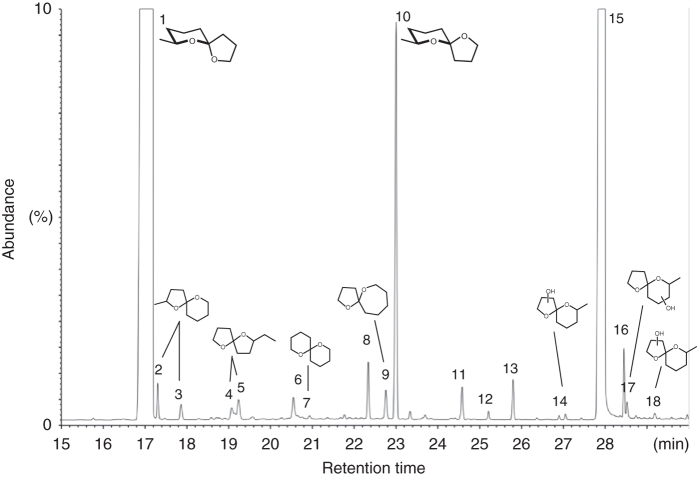
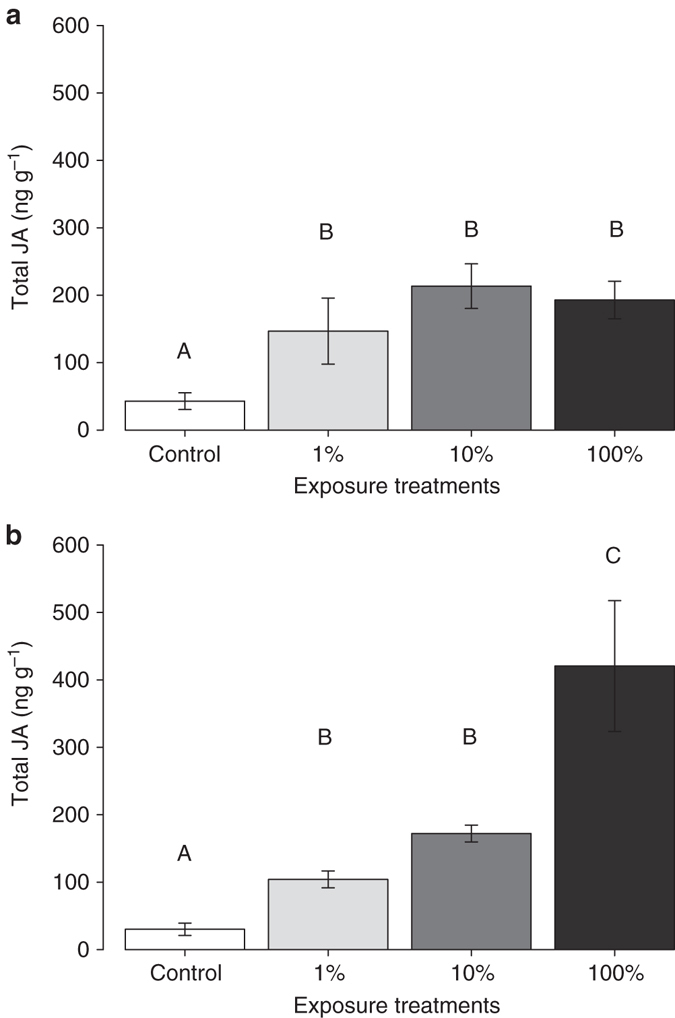
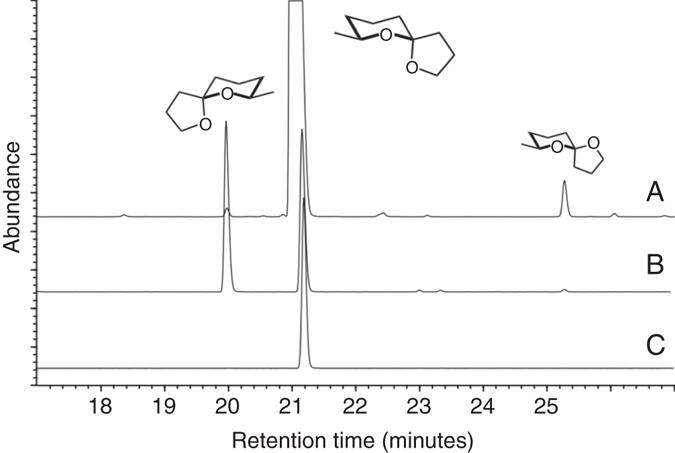
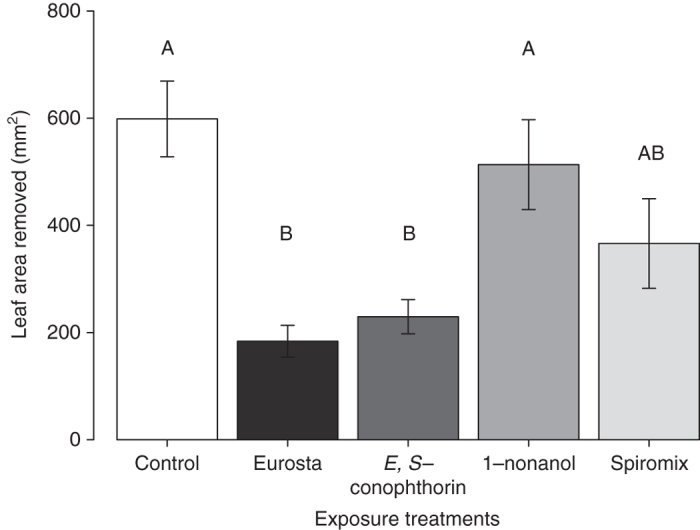
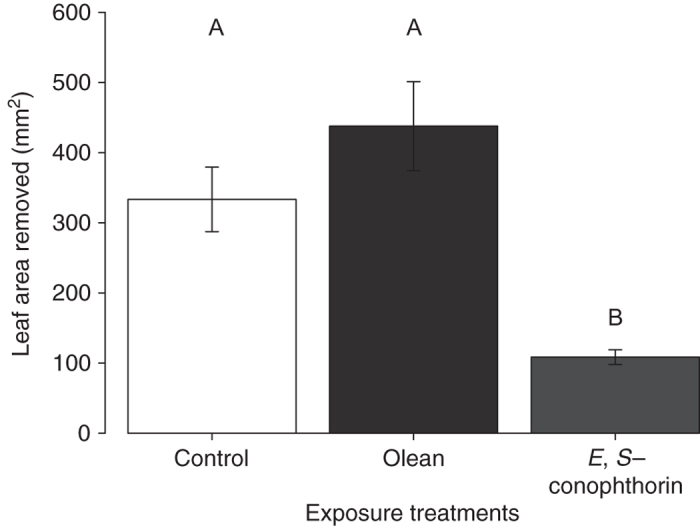
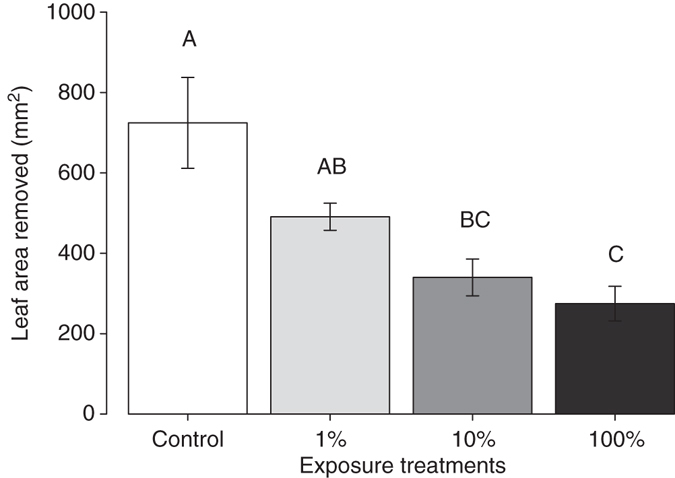
It is increasingly clear that plants perceive and respond to olfactory cues. Yet, knowledge about the specificity and sensitivity of such perception remains limited. We previously documented priming of anti-herbivore defenses in tall goldenrod plants (Solidago altissima) by volatile emissions from a specialist herbivore, the goldenrod gall fly (Eurosta solidaginis). Here, we explore the specific chemical cues mediating this interaction. We report that E,S-conophthorin, the most abundant component of the emission of male flies, elicits a priming response equivalent to that observed for the overall blend. Furthermore, while the strength of priming is dose dependent, plants respond even to very low concentrations of E,S-conophthorin relative to typical fly emissions. Evaluation of other blend components yields results consistent with the hypothesis that priming in this interaction is mediated by a single compound. These findings provide insights into the perceptual capabilities underlying plant defense priming in response to olfactory cues.Plants are able to prime anti-herbivore defenses in response to olfactory cues of insect pests. Here, Helms et al. identify the insect pheromone E,S-conophthorin produced by the goldenrod gall fly as the specific chemical component that elicits this priming response in goldenrod plants.
越来越明显的是,植物能够感知并对嗅觉线索做出反应。然而,关于这种感知的特异性和敏感性的知识仍然有限。我们之前记录了专食性食草动物——菊瘿蚊(Eurosta solidaginis)的挥发性排放物对高一枝黄花(Solidago altissima)的抗食草动物防御的启动作用。在这里,我们探究介导这种相互作用的特定化学线索。我们报告称,E,S-锥蝽素,即雄蝇排放物中最丰富的成分,引发的启动反应与观察到的整体混合物引发的反应相当。此外,虽然启动强度是剂量依赖性的,但相对于典型的蝇类排放物,植物对极低浓度的E,S-锥蝽素也有反应。对其他混合物成分的评估结果与这样的假设一致,即这种相互作用中的启动是由单一化合物介导的。这些发现为植物防御启动过程中对嗅觉线索做出反应的感知能力提供了见解。植物能够根据害虫的嗅觉线索启动抗食草动物防御。在这里,赫尔姆斯等人确定菊瘿蚊产生的昆虫信息素E,S-锥蝽素是在一枝黄花植物中引发这种启动反应的特定化学成分。