Neuroscience and Ophthalmology Research Group, Institute of Inflammation and Ageing, School of Clinical and Experimental Medicine, College of Medical and Dental Sciences, University of Birmingham, Edgbaston, B15 2TT, Birmingham, UK.
National Institute for Health Research Surgical Reconstruction and Microbiology Research Centre, Queen Elizabeth Hospital, Edgbaston, B15 2TH, Birmingham, UK.
Sci Rep. 2017 Aug 23;7(1):9189. doi: 10.1038/s41598-017-09587-2.
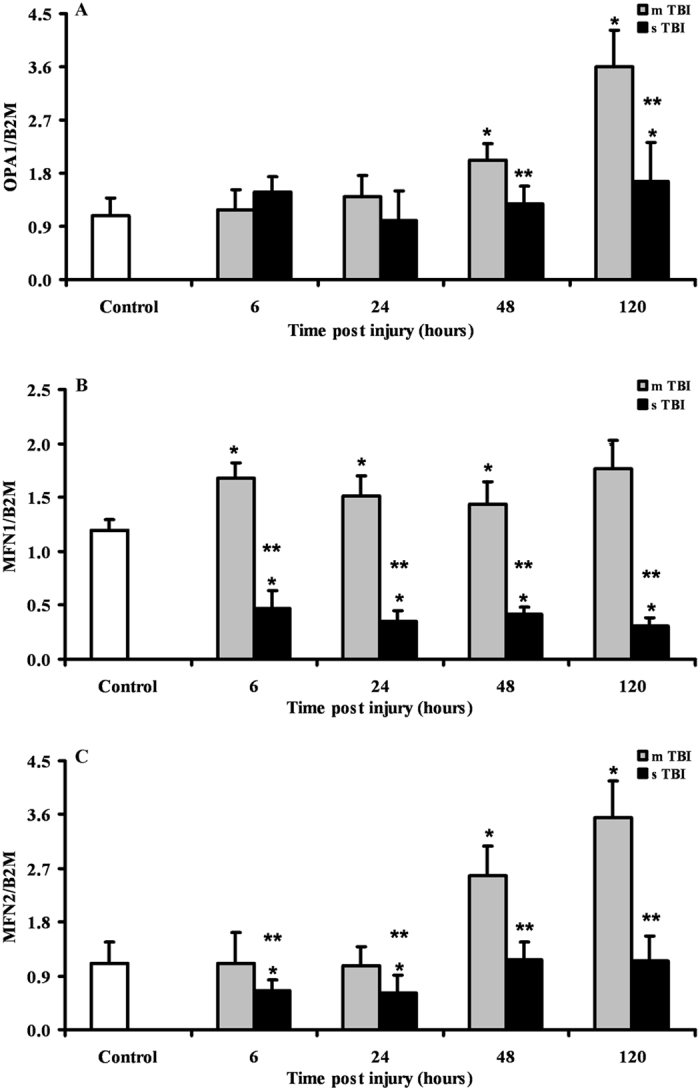
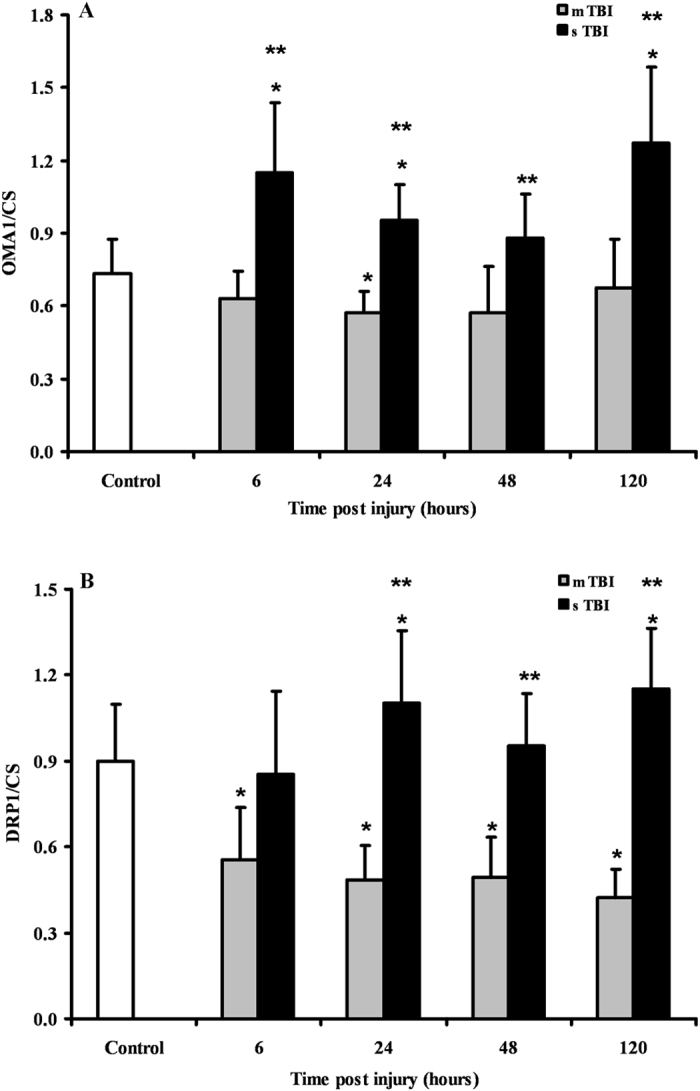
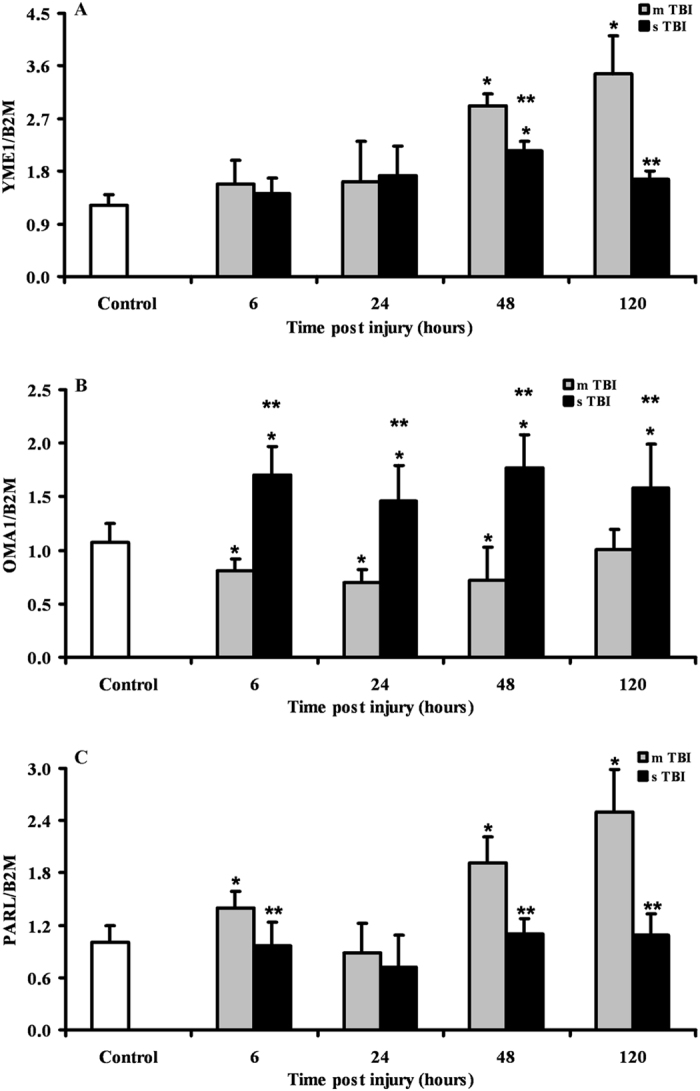
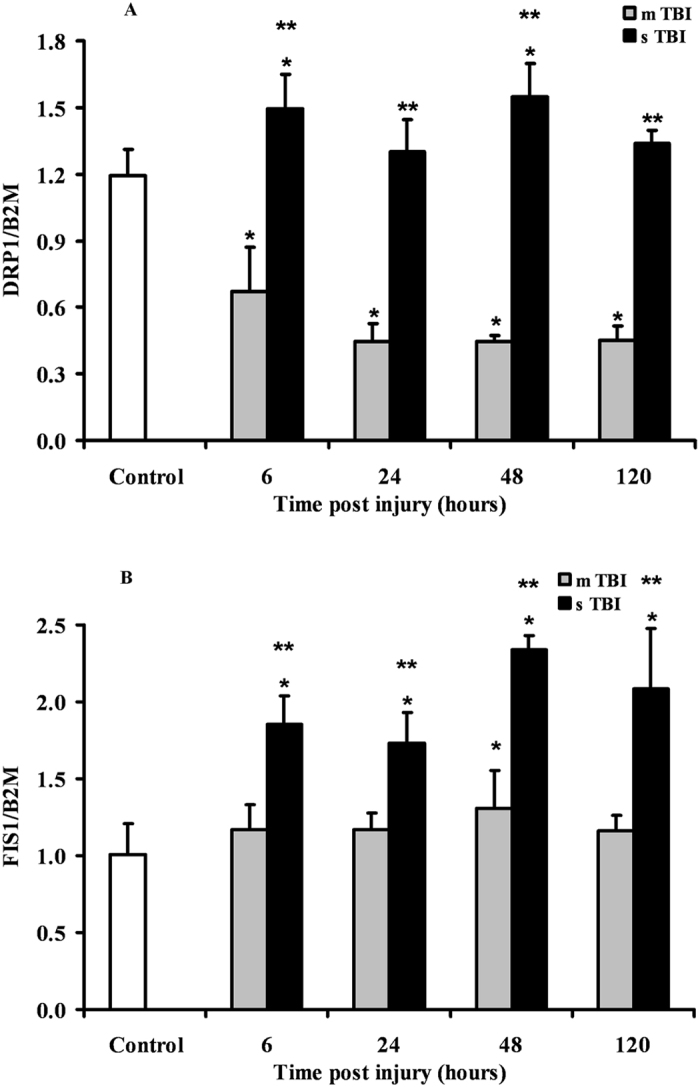
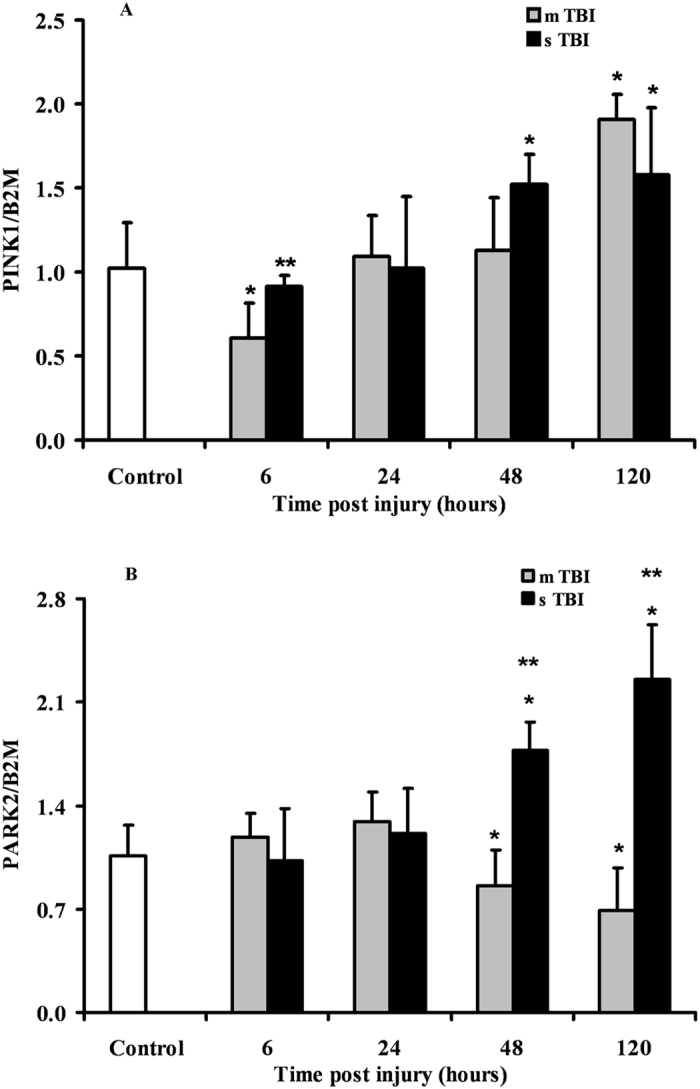
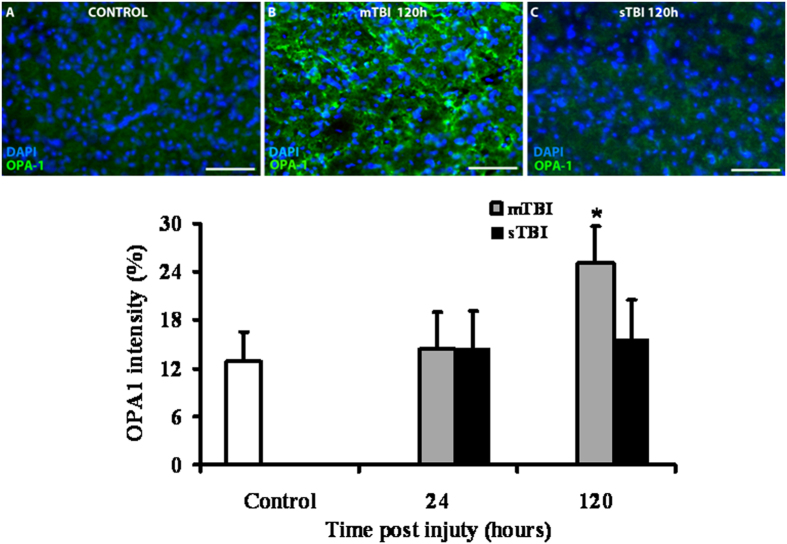
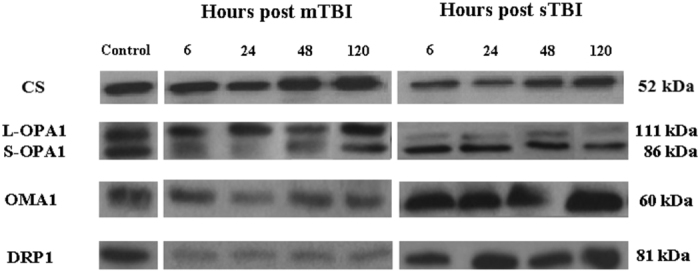
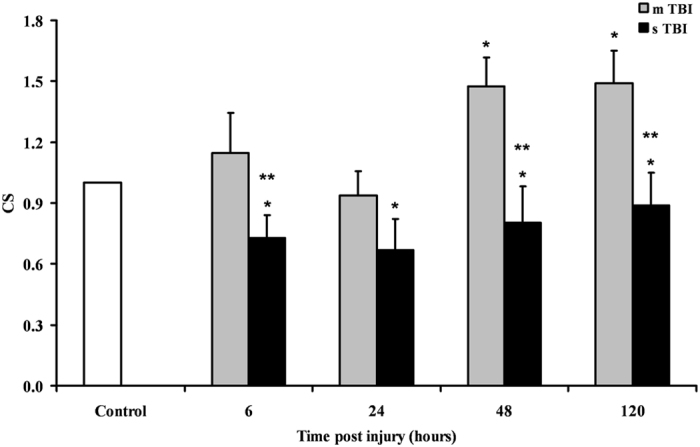
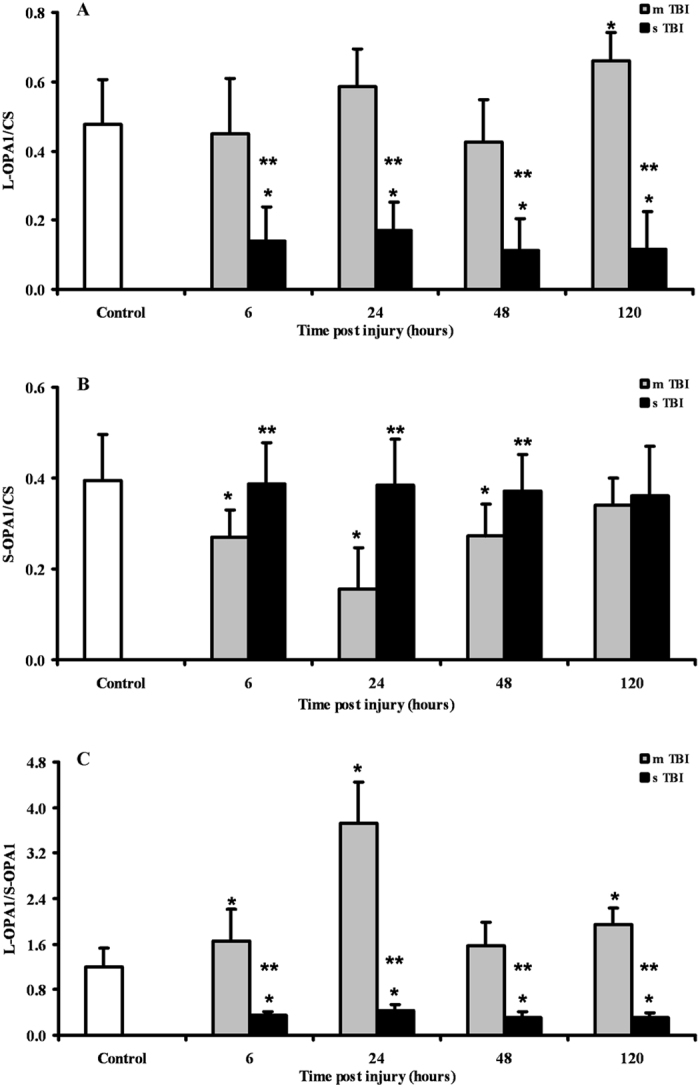
Mitochondrial dynamics are regulated by a complex system of proteins representing the mitochondrial quality control (MQC). MQC balances antagonistic forces of fusion and fission determining mitochondrial and cell fates. In several neurological disorders, dysfunctional mitochondria show significant changes in gene and protein expression of the MQC and contribute to the pathophysiological mechanisms of cell damage. In this study, we evaluated the main gene and protein expression involved in the MQC in rats receiving traumatic brain injury (TBI) of different severities. At 6, 24, 48 and 120 hours after mild TBI (mTBI) or severe TBI (sTBI), gene and protein expressions of fusion and fission were measured in brain tissue homogenates. Compared to intact brain controls, results showed that genes and proteins inducing fusion or fission were upregulated and downregulated, respectively, in mTBI, but downregulated and upregulated, respectively, in sTBI. In particular, OPA1, regulating inner membrane dynamics, cristae remodelling, oxidative phosphorylation, was post-translationally cleaved generating differential amounts of long and short OPA1 in mTBI and sTBI. Corroborated by data referring to citrate synthase, these results confirm the transitory (mTBI) or permanent (sTBI) mitochondrial dysfunction, enhancing MQC importance to maintain cell functions and indicating in OPA1 an attractive potential therapeutic target for TBI.
线粒体动力学受代表线粒体质量控制 (MQC) 的蛋白质的复杂系统调节。MQC 平衡融合和裂变的拮抗力量,决定线粒体和细胞命运。在几种神经退行性疾病中,功能失调的线粒体在 MQC 的基因和蛋白质表达方面表现出显著变化,并导致细胞损伤的病理生理机制。在这项研究中,我们评估了接受不同严重程度创伤性脑损伤 (TBI) 的大鼠中与 MQC 相关的主要基因和蛋白质表达。在轻度 TBI (mTBI) 或重度 TBI (sTBI) 后 6、24、48 和 120 小时,测量脑组织匀浆中的融合和裂变的基因和蛋白质表达。与完整大脑对照相比,结果表明,在 mTBI 中,诱导融合或裂变的基因和蛋白质分别上调和下调,但在 sTBI 中分别下调和上调。特别是,OPA1 调节内膜动力学、嵴重塑、氧化磷酸化,在后翻译水平被切割,产生长和短 OPA1 的不同量,在 mTBI 和 sTBI 中。与柠檬酸合酶的数据相呼应,这些结果证实了线粒体的短暂(mTBI)或永久(sTBI)功能障碍,增强了 MQC 对维持细胞功能的重要性,并表明 OPA1 是 TBI 的一个有吸引力的潜在治疗靶点。