Department of Laboratory Medicine, Children's and Women's Health, Faculty of Medicine and Health Sciences, NTNU - Norwegian University of Science and Technology, Postboks 8905, 7491, Trondheim, Norway.
Department of Chemistry, Biotechnology and Food Science, NMBU - Norway University of Life Sciences, Ås, Norway.
Microbiome. 2017 Aug 24;5(1):107. doi: 10.1186/s40168-017-0319-x.
The fungi in the gastrointestinal tract, the gut mycobiota, are now recognised as a significant part of the gut microbiota, and they may be important to human health. In contrast to the adult gut mycobiota, the establishment of the early gut mycobiota has never been described, and there is little knowledge about the fungal transfer from mother to offspring.
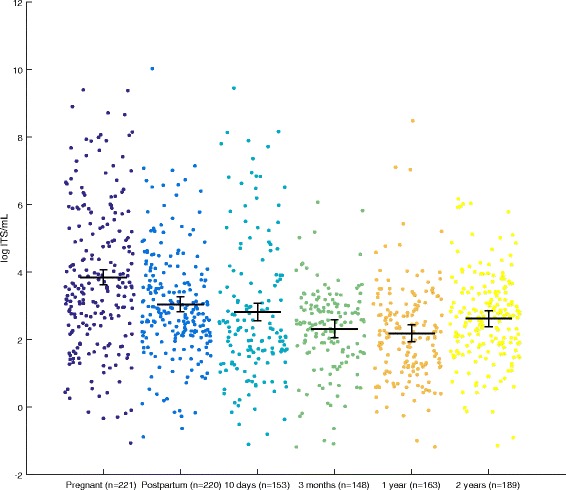
In a prospective cohort, we followed 298 pairs of healthy mothers and offspring from 36 weeks of gestation until 2 years of age (1516 samples) and explored the gut mycobiota in maternal and offspring samples. Half of the pregnant mothers were randomised into drinking probiotic milk during and after pregnancy. The probiotic bacteria included Lactobacillus rhamnosus GG (LGG), Bifidobacterium animalis subsp. lactis Bb-12 and Lactobacillus acidophilus La-5. We quantified the fungal abundance of all the samples using qPCR of the fungal internal transcribed spacer (ITS)1 segment, and we sequenced the 18S rRNA gene ITS1 region of 90 high-quantity samples using the MiSeq platform (Illumina).
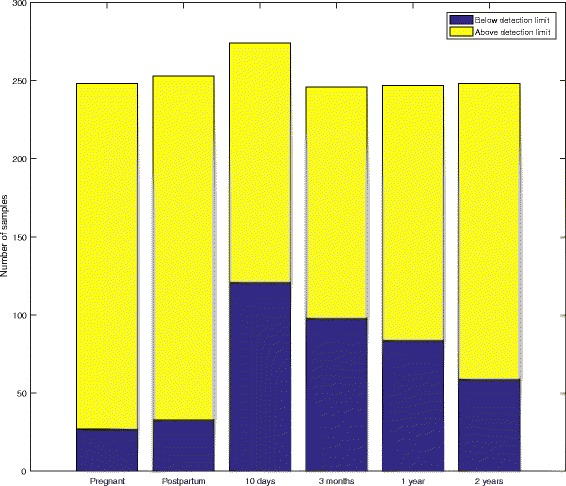
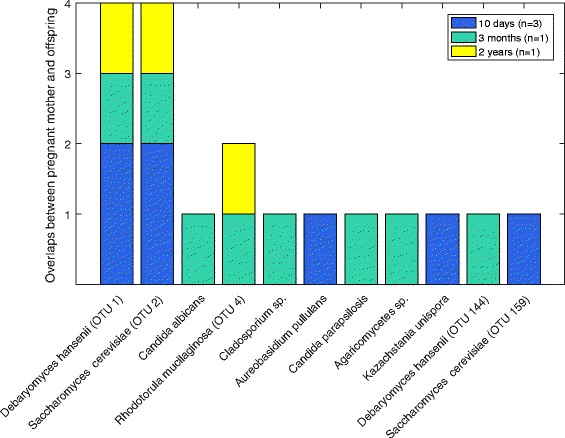
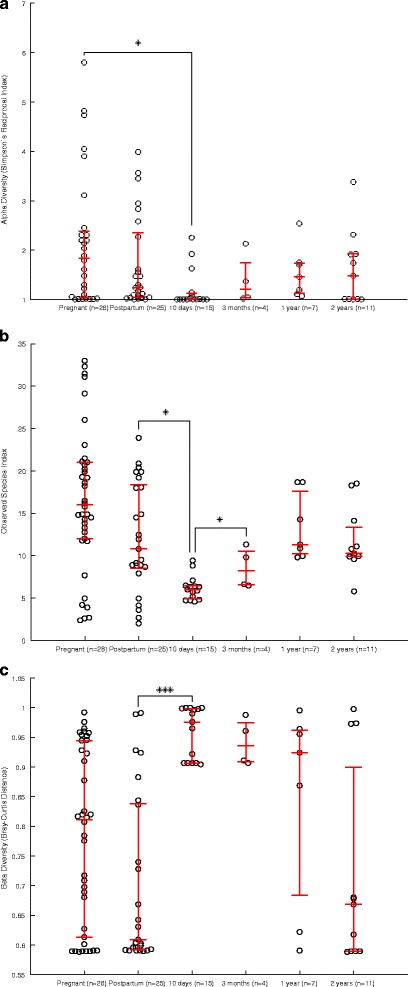
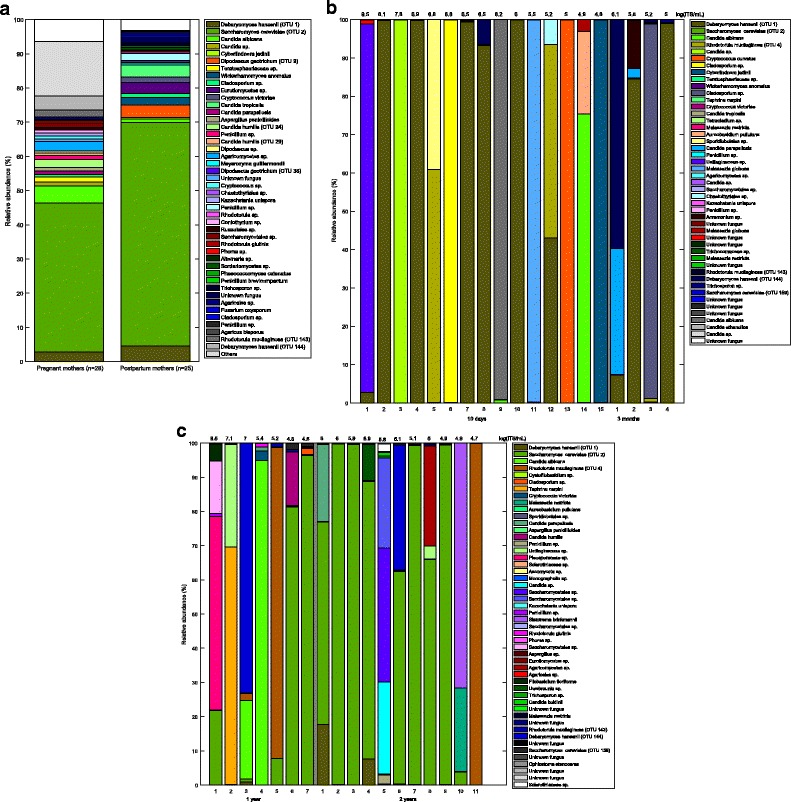
The gut mycobiota was detected in most of the mothers and the majority of the offspring. The offspring showed increased odds of having detectable faecal fungal DNA if the mother had detectable fungal DNA as well (OR = 1.54, p = 0.04). The fungal alpha diversity in the offspring gut increased from its lowest at 10 days after birth, which was the earliest sampling point. The fungal diversity and fungal species showed a succession towards the maternal mycobiota as the child aged, with Debaryomyces hansenii being the most abundant species during breast-feeding and Saccharomyces cerevisiae as the most abundant after weaning. Probiotic consumption increased the gut mycobiota abundance in pregnant mothers (p = 0.01).
This study provides the first insight into the early fungal establishment and the succession of fungal species in the gut mycobiota. The results support the idea that the fungal host phenotype is transferred from mother to offspring.
Clinicaltrials.gov NCT00159523.
肠道真菌,即肠道菌群,现已被认为是肠道微生物群的重要组成部分,可能对人类健康很重要。与成人肠道菌群不同,早期肠道菌群的建立从未被描述过,而且我们对真菌从母亲到后代的转移知之甚少。
在一项前瞻性队列研究中,我们对 298 对健康的母婴从妊娠 36 周持续到 2 岁(1516 个样本)进行了随访,并在母婴样本中探索了肠道菌群。一半的孕妇在怀孕期间和之后随机饮用益生菌牛奶。益生菌细菌包括鼠李糖乳杆菌 GG(LGG)、动物双歧杆菌亚种 lactis Bb-12 和嗜酸乳杆菌 La-5。我们使用真菌内部转录间隔区(ITS)1 片段的 qPCR 定量所有样本中的真菌丰度,并使用 MiSeq 平台(Illumina)对 90 个高数量样本的 18S rRNA 基因 ITS1 区进行测序。
大多数母亲和大多数后代的肠道中都检测到了菌群。如果母亲的粪便中检测到真菌 DNA,那么婴儿的粪便中有真菌 DNA 的几率会增加(OR=1.54,p=0.04)。从出生后 10 天的最早采样点开始,婴儿肠道中的真菌α多样性增加。随着孩子年龄的增长,真菌多样性和真菌种类朝着母体菌群的方向发展,汉逊德巴利酵母是哺乳期最丰富的物种,而酿酒酵母是断奶后最丰富的物种。益生菌的摄入增加了孕妇肠道菌群的丰度(p=0.01)。
本研究首次深入了解了肠道菌群中早期真菌的建立和真菌物种的演替。结果支持真菌宿主表型从母亲转移到后代的观点。
Clinicaltrials.gov NCT00159523。