Sanyang Bakary, Dabrowska Magdalena B, Amenyogbe Nelly, Camara Bully, Beloum Nathalie, Jammeh Mariama, Bojang Dodou, Goodall Jack, Mohammed Nuredin, Sesay Abdul Karim, Roca Anna, de Silva Thushan I
Medical Research Council Unit The Gambia at The London School of Hygiene and Tropical Medicine, Banjul, The Gambia.
Division of Clinical Medicine, School of Medicine and Population Health, The University of Sheffield, Sheffield, UK.
Nat Commun. 2025 Aug 9;16(1):7356. doi: 10.1038/s41467-025-62142-w.
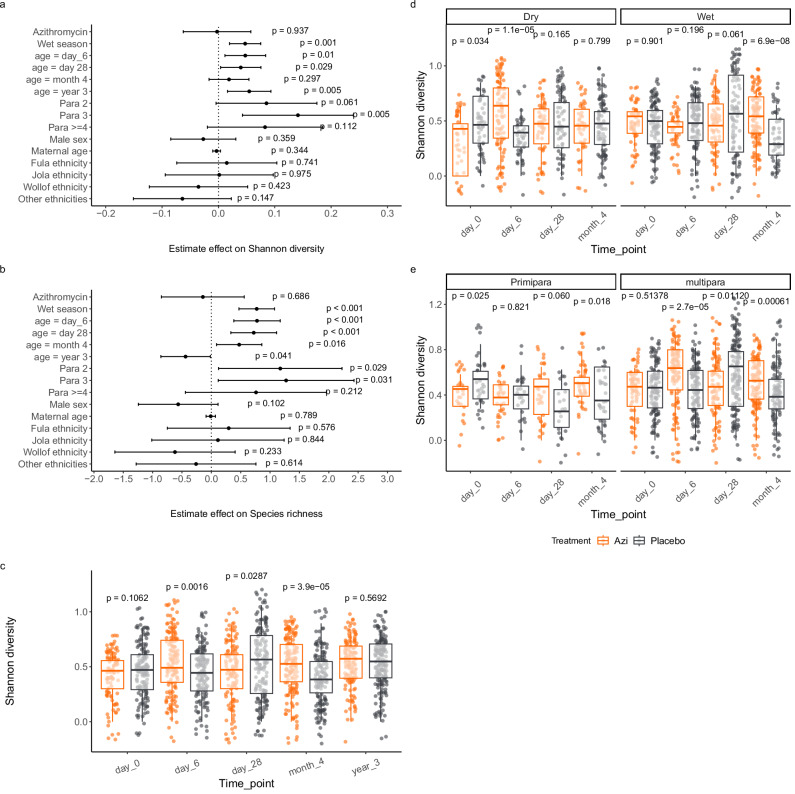
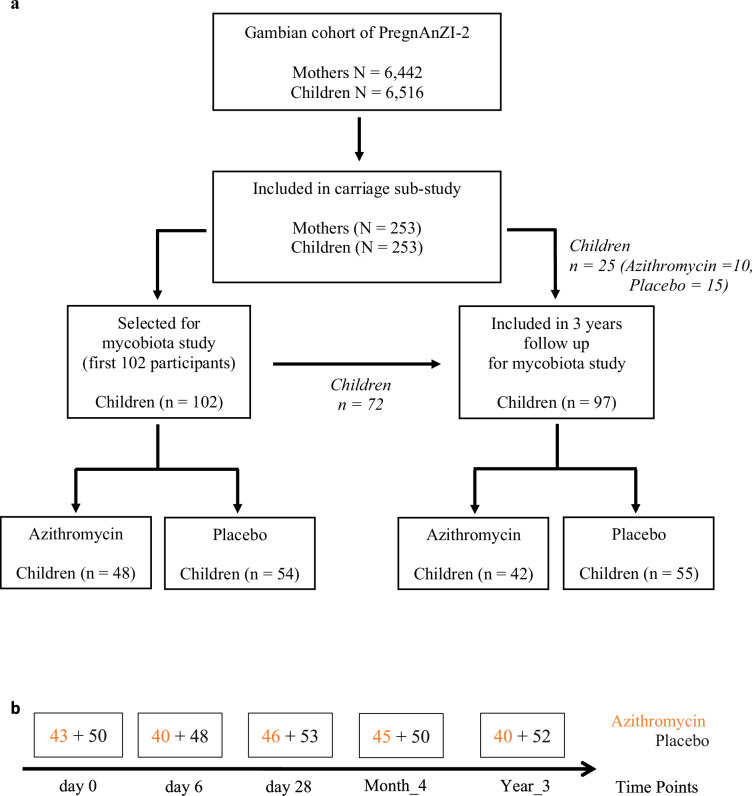
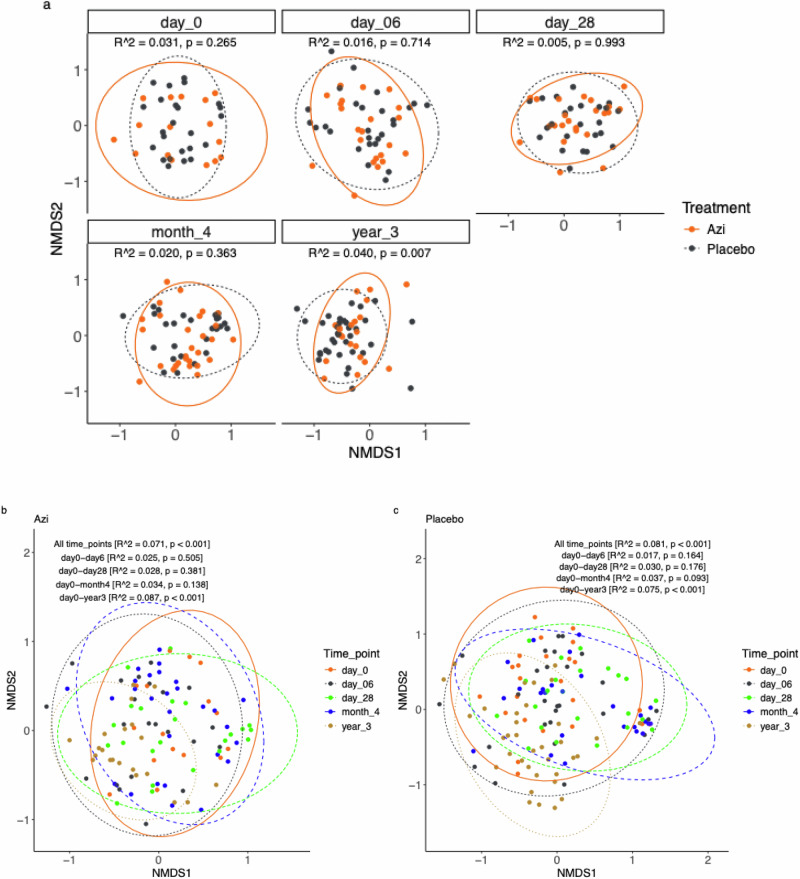
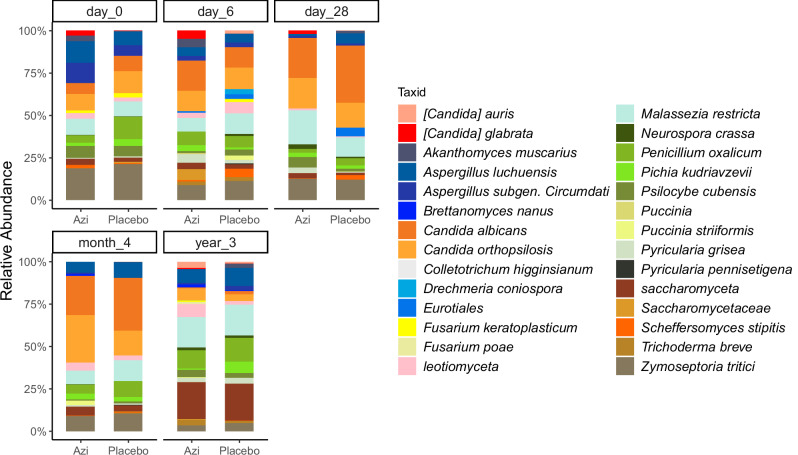
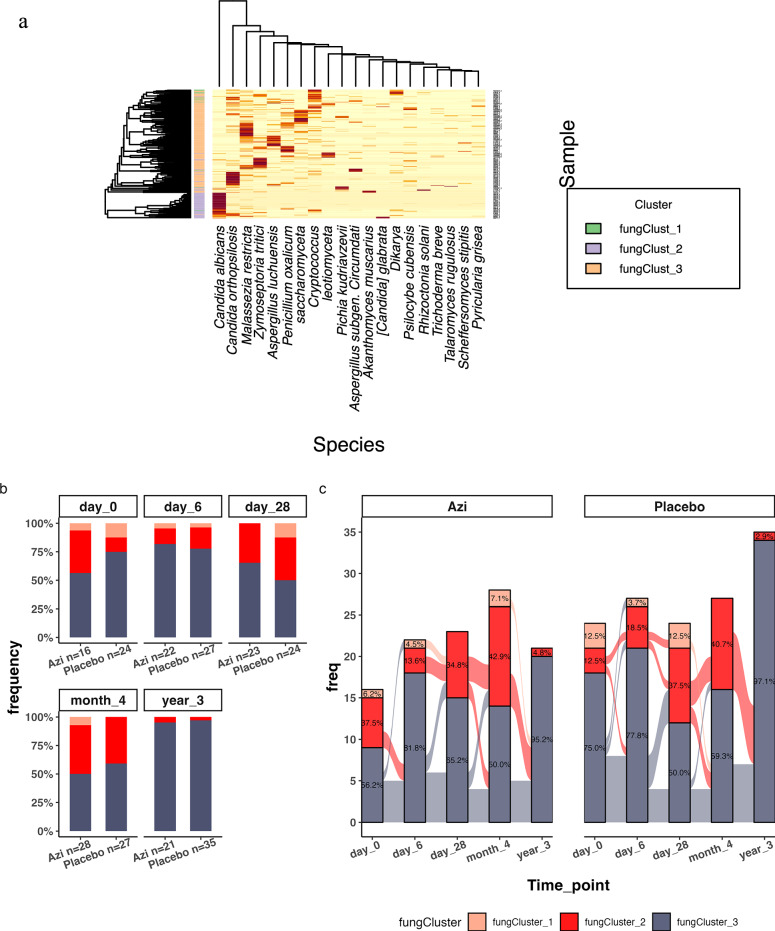
Intrapartum azithromycin prophylaxis reduced maternal infections but showed no effect on neonatal sepsis and mortality. Although antibiotic exposure may indirectly alter the mycobiota (community of fungi that live in a given environment), there is no data available on how intrapartum azithromycin impacts gut mycobiota development. We hereby assess the impact of intrapartum azithromycin on gut mycobiota development from birth to the age of three years, by ITS2 gene profiling of rectal samples from 102 healthy Gambian infants selected from a double-blind randomized placebo-controlled clinical trial (PregnAnZI-2 - ClinicalTrials.org NCT03199547). In the trial, women received 2 g oral azithromycin or placebo (1:1) during labour with the intension of assessing effect on neonatal sepsis or mortality. Secondary objectives included effects on bacterial carriage and resistance, puerperal infections, and infant growth. Our analysis show that season and parity were key factors that influenced gut mycobiota development. Intrapartum azithromycin increased the abundance of Candida orthopsilosis but only in the wet season and did not show different effects by sex of the child. These data suggest that season and parity can be key factors influencing gut mycobiota development and may inform strategies for a wider implementation of intrapartum azithromycin intervention.
产时阿奇霉素预防可减少产妇感染,但对新生儿败血症和死亡率无影响。尽管抗生素暴露可能间接改变真菌群(生活在特定环境中的真菌群落),但关于产时阿奇霉素如何影响肠道真菌群发育尚无可用数据。我们在此通过对102名健康冈比亚婴儿的直肠样本进行ITS2基因分析,评估产时阿奇霉素对从出生到三岁的肠道真菌群发育的影响,这些婴儿选自一项双盲随机安慰剂对照临床试验(PregnAnZI-2 - ClinicalTrials.org NCT03199547)。在该试验中,女性在分娩期间接受2克口服阿奇霉素或安慰剂(1:1),旨在评估对新生儿败血症或死亡率的影响。次要目标包括对细菌携带和耐药性、产褥期感染以及婴儿生长的影响。我们的分析表明,季节和产次是影响肠道真菌群发育的关键因素。产时阿奇霉素增加了近平滑念珠菌的丰度,但仅在雨季如此,且对不同性别的儿童没有显示出不同影响。这些数据表明,季节和产次可能是影响肠道真菌群发育的关键因素,并可能为更广泛实施产时阿奇霉素干预的策略提供参考。