Fousova Michaela, Vojtech Dalibor, Jablonska Eva, Fojt Jaroslav, Lipov Jan
Department of Metals and Corrosion Engineering, University of Chemistry and Technology Prague, Technicka 5, 166 28 Prague 6, Czech Republic.
Department of Biochemistry and Microbiology, University of Chemistry and Technology Prague, Technicka 5, 166 28 Prague 6, Czech Republic.
Materials (Basel). 2017 Aug 24;10(9):987. doi: 10.3390/ma10090987.
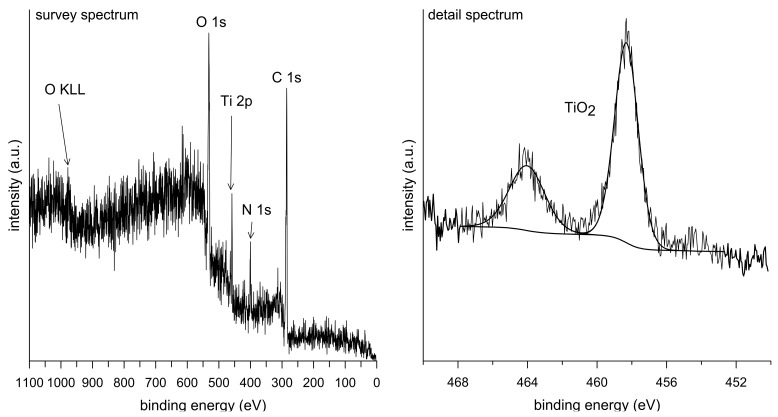
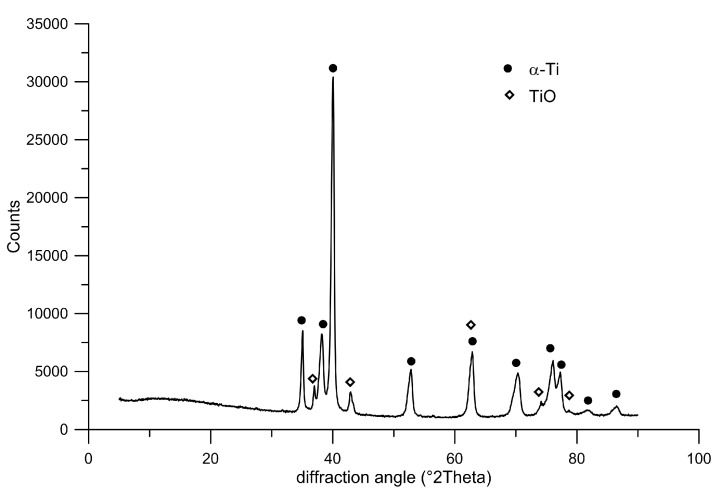
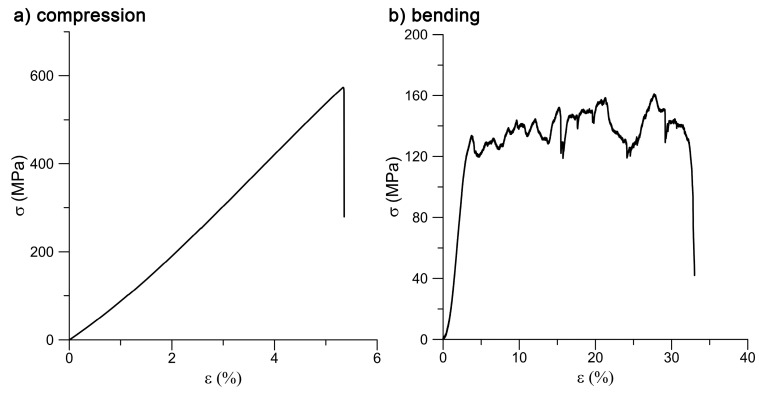
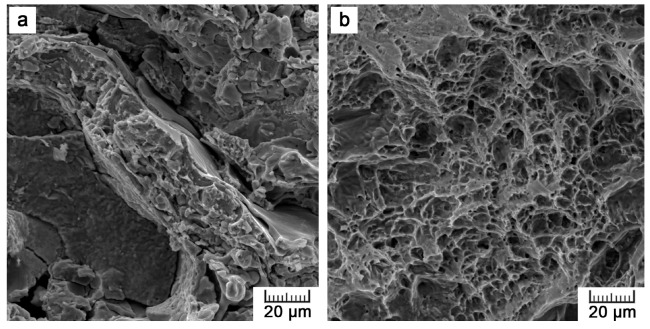
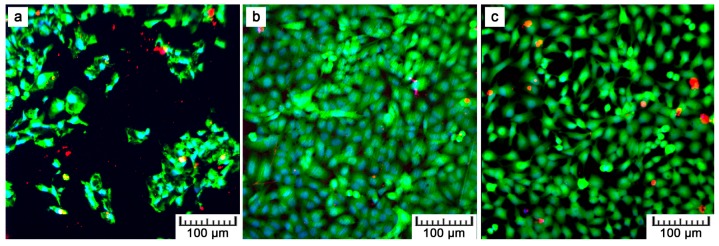
Thermal plasma spray is a common, well-established technology used in various application fields. Nevertheless, in our work, this technology was employed in a completely new way; for the preparation of bulk titanium. The aim was to produce titanium with properties similar to human bone to be used for bone augmentations. Titanium rods sprayed on a thin substrate wire exerted a porosity of about 15%, which yielded a significant decrease of Young's modulus to the bone range and provided rugged topography for enhanced biological fixation. For the first verification of the suitability of the selected approach, tests of the mechanical properties in terms of compression, bending, and impact were carried out, the surface was characterized, and its compatibility with bone cells was studied. While preserving a high enough compressive strength of 628 MPa, the elastic modulus reached 11.6 GPa, thus preventing a stress-shielding effect, a generally known problem of implantable metals. U-2 OS and Saos-2 cells derived from bone osteosarcoma grown on the plasma-sprayed surface showed good viability.
热等离子体喷涂是一种常见的、成熟的技术,应用于各个领域。然而,在我们的工作中,这项技术以一种全新的方式被应用;用于制备块状钛。目的是生产出具有与人体骨骼相似性能的钛,用于骨增量手术。喷涂在细基底线上的钛棒孔隙率约为15%,这使得杨氏模量显著降低至骨范围,并提供了粗糙的表面形貌以增强生物固定。为了首次验证所选方法的适用性,进行了压缩、弯曲和冲击方面的力学性能测试,对表面进行了表征,并研究了其与骨细胞的相容性。在保持足够高的628 MPa抗压强度的同时,弹性模量达到11.6 GPa,从而避免了应力屏蔽效应,这是可植入金属普遍存在的问题。在等离子体喷涂表面生长的源自骨肉瘤的U-2 OS和Saos-2细胞显示出良好的活力。