Beghini Francesco, Pasolli Edoardo, Truong Tin Duy, Putignani Lorenza, Cacciò Simone M, Segata Nicola
Centre for Integrative Biology, University of Trento, Trento, Italy.
Units of Parasitology and Human Microbiome, Bambino Gesù Children's Hospital and Research Institute, Rome, Italy.
ISME J. 2017 Dec;11(12):2848-2863. doi: 10.1038/ismej.2017.139. Epub 2017 Aug 22.
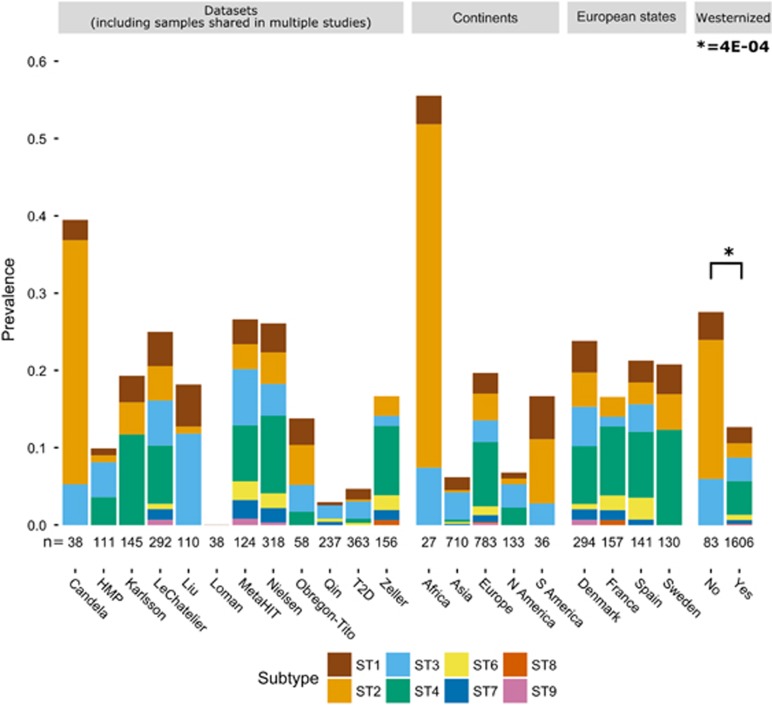
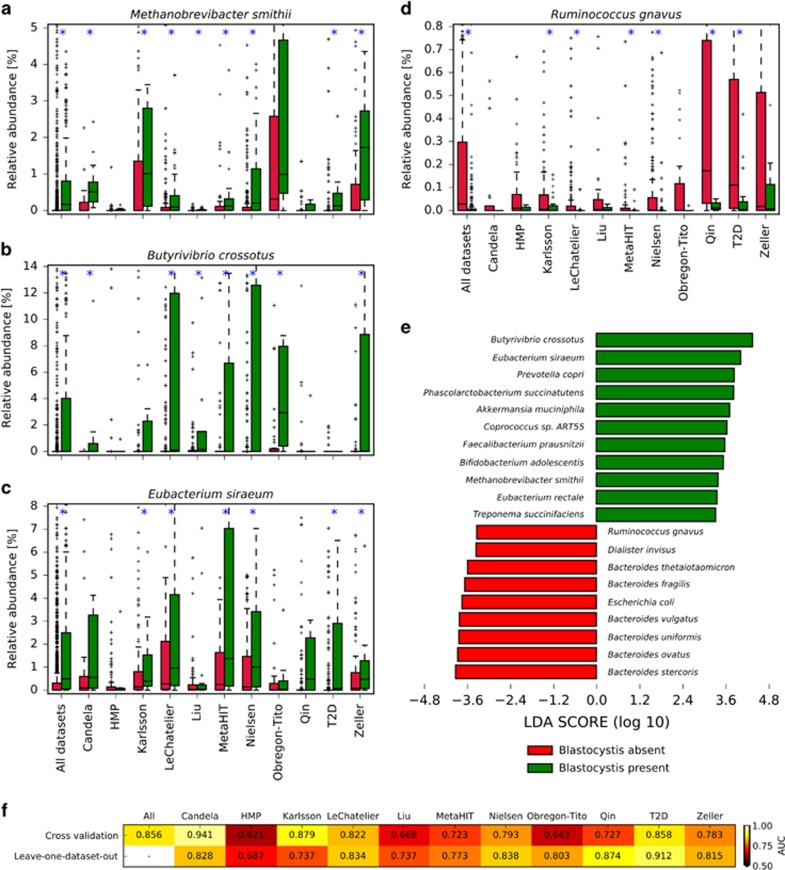
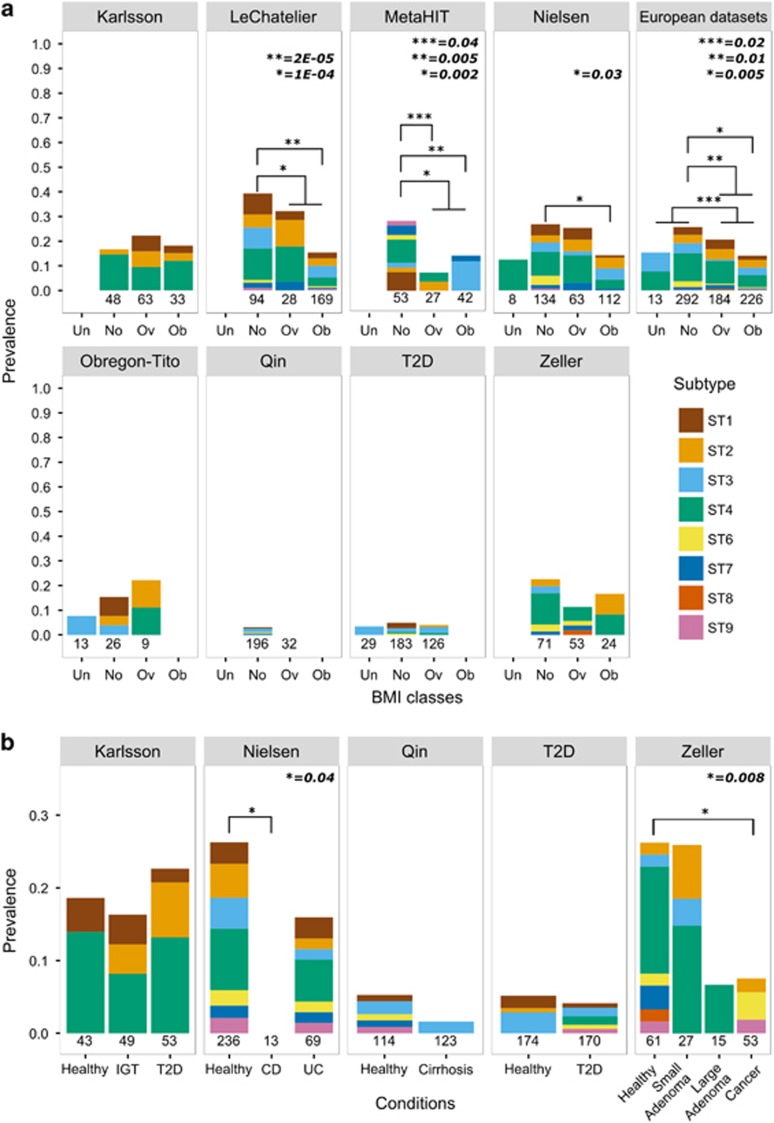
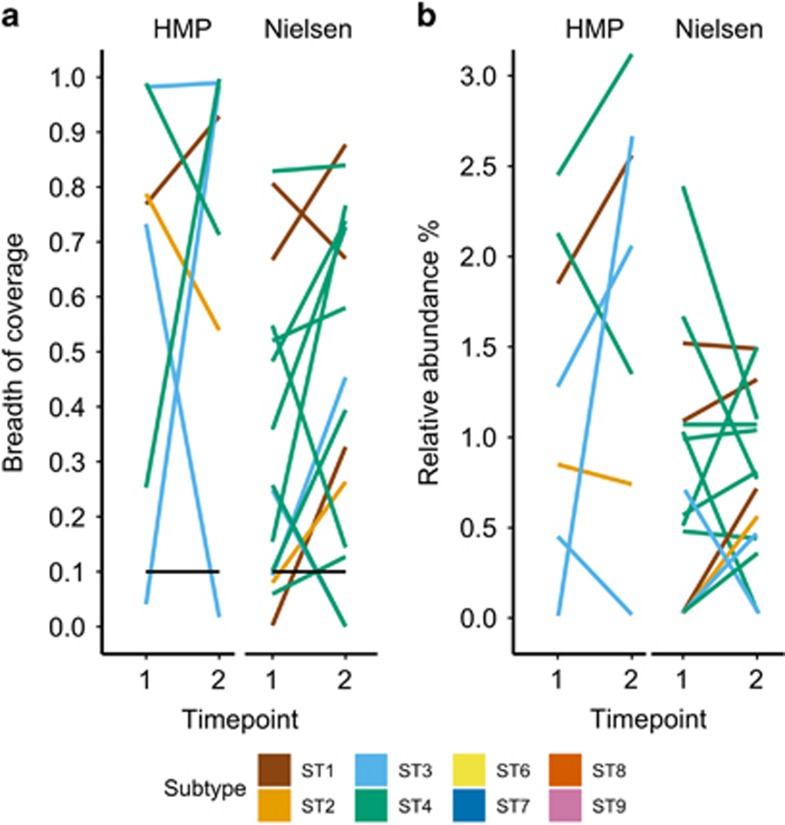
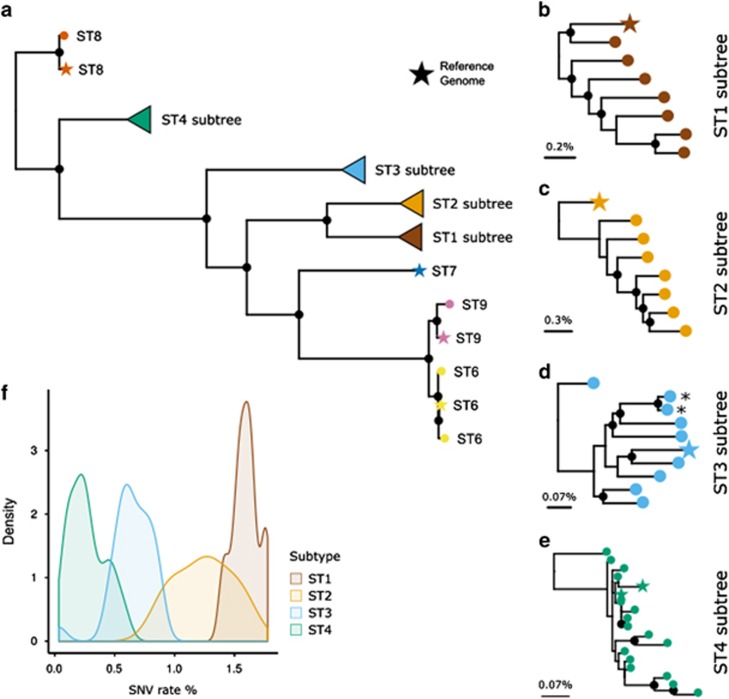
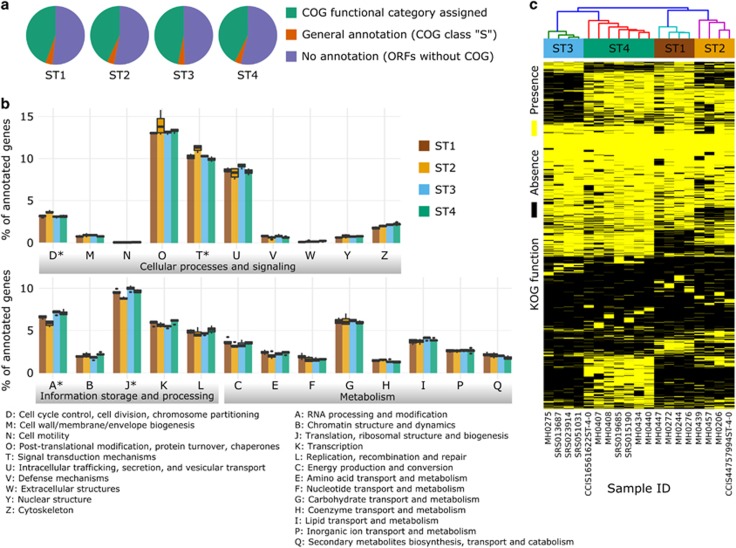
The influence of unicellular eukaryotic microorganisms on human gut health and disease is still largely unexplored. Blastocystis spp. commonly colonize the gut, but its clinical significance and ecological role are currently unsettled. We have developed a high-sensitivity bioinformatic pipeline to detect Blastocystis subtypes (STs) from shotgun metagenomics, and applied it to 12 large data sets, comprising 1689 subjects of different geographic origin, disease status and lifestyle. We confirmed and extended previous observations on the high prevalence the microrganism in the population (14.9%), its non-random and ST-specific distribution, and its ability to cause persistent (asymptomatic) colonization. These findings, along with the higher prevalence observed in non-westernized individuals, the lack of positive association with any of the disease considered, and decreased presence in individuals with dysbiosis associated with colorectal cancer and Crohn's disease, strongly suggest that Blastocystis is a component of the healthy gut microbiome. Further, we found an inverse association between body mass index and Blastocystis, and strong co-occurrence with archaeal organisms (Methanobrevibacter smithii) and several bacterial species. The association of specific microbial community structures with Blastocystis was confirmed by the high predictability (up to 0.91 area under the curve) of the microorganism colonization based on the species-level composition of the microbiome. Finally, we reconstructed and functionally profiled 43 new draft Blastocystis genomes and discovered a higher intra subtype variability of ST1 and ST2 compared with ST3 and ST4. Altogether, we provide an in-depth epidemiologic, ecological, and genomic analysis of Blastocystis, and show how metagenomics can be crucial to advance population genomics of human parasites.
单细胞真核微生物对人类肠道健康和疾病的影响在很大程度上仍未得到充分探索。芽囊原虫属通常寄生于肠道,但目前其临床意义和生态作用尚不确定。我们开发了一种高灵敏度的生物信息学流程,用于从鸟枪法宏基因组学中检测芽囊原虫亚型(STs),并将其应用于12个大型数据集,这些数据集包含1689名来自不同地理区域、疾病状态和生活方式的受试者。我们证实并扩展了先前关于该微生物在人群中的高流行率(14.9%)、其非随机和ST特异性分布以及其导致持续性(无症状)定植的能力的观察结果。这些发现,连同在非西方化个体中观察到的更高流行率、与所考虑的任何疾病均无正相关以及在与结直肠癌和克罗恩病相关的生态失调个体中出现频率降低,强烈表明芽囊原虫是健康肠道微生物群的一个组成部分。此外,我们发现体重指数与芽囊原虫之间存在负相关,并且与古菌(史氏甲烷短杆菌)和几种细菌物种强烈共存。基于微生物群的物种水平组成,该微生物定植的高预测性(曲线下面积高达0.91)证实了特定微生物群落结构与芽囊原虫之间的关联。最后,我们重建了43个新的芽囊原虫基因组草图并对其进行了功能分析,发现与ST3和ST4相比,ST1和ST2的亚型内变异性更高。总之,我们提供了对芽囊原虫的深入流行病学、生态学和基因组分析,并展示了宏基因组学如何对推进人类寄生虫的群体基因组学至关重要。