Speers Corey, Zhao Shuang G, Chandler Ben, Liu Meilan, Wilder-Romans Kari, Olsen Eric, Nyati Shyam, Ritter Cassandra, Alluri Prasanna G, Kothari Vishal, Hayes Daniel F, Lawrence Theodore S, Spratt Daniel E, Wahl Daniel R, Pierce Lori J, Feng Felix Y
Department of Radiation Oncology, University of Michigan, Ann Arbor, MI USA.
Breast Oncology Program, University of Michigan Comprehensive Cancer Center, Ann Arbor, MI USA.
NPJ Breast Cancer. 2017 Aug 18;3:29. doi: 10.1038/s41523-017-0038-2. eCollection 2017.
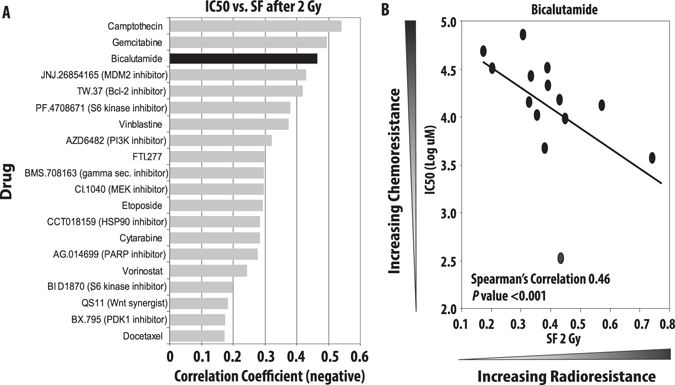
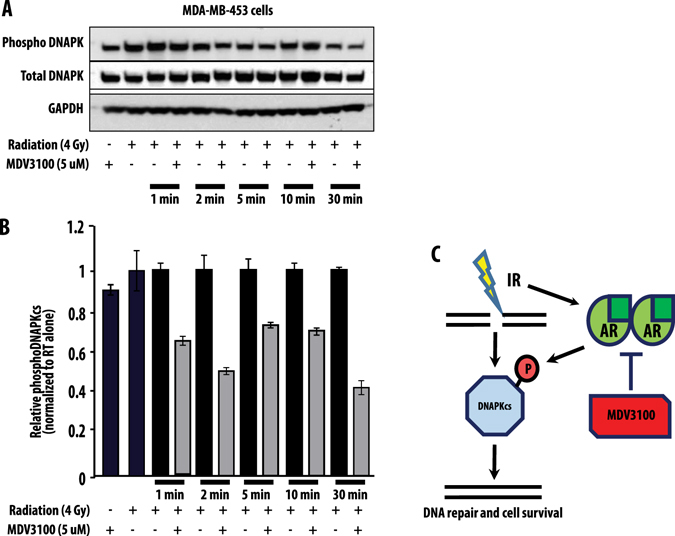
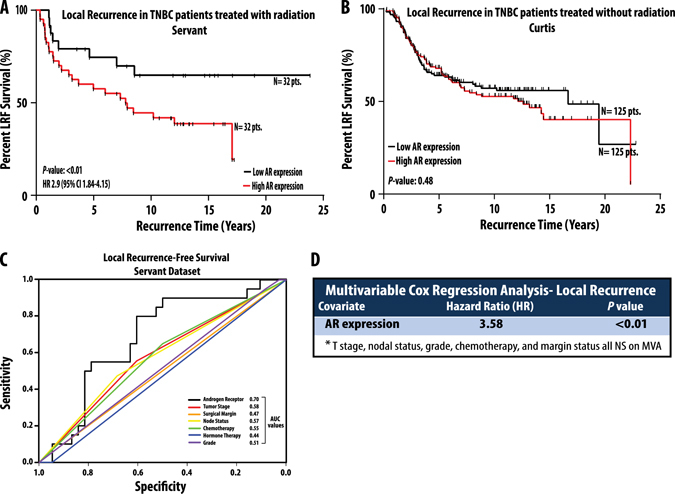
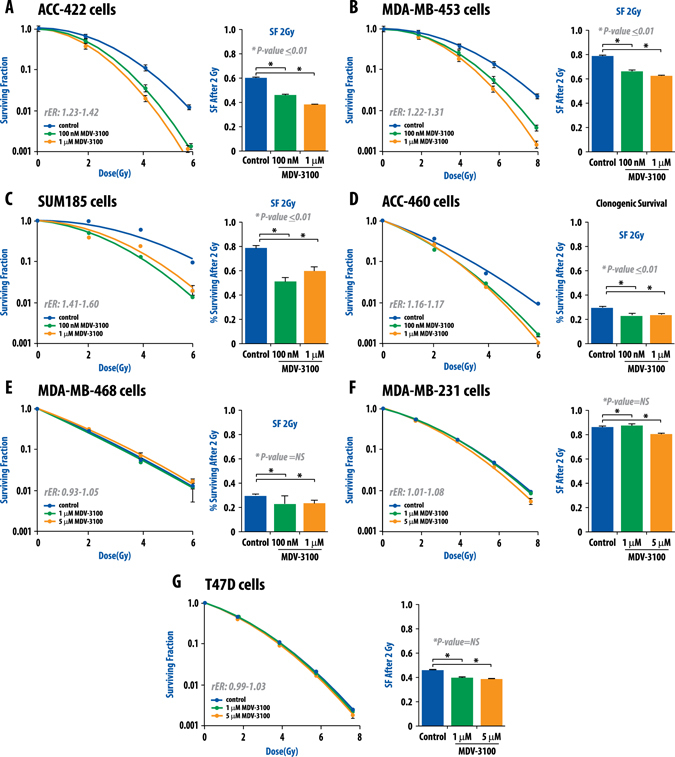
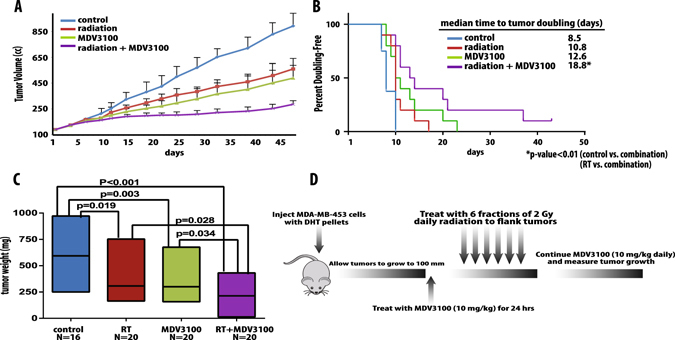
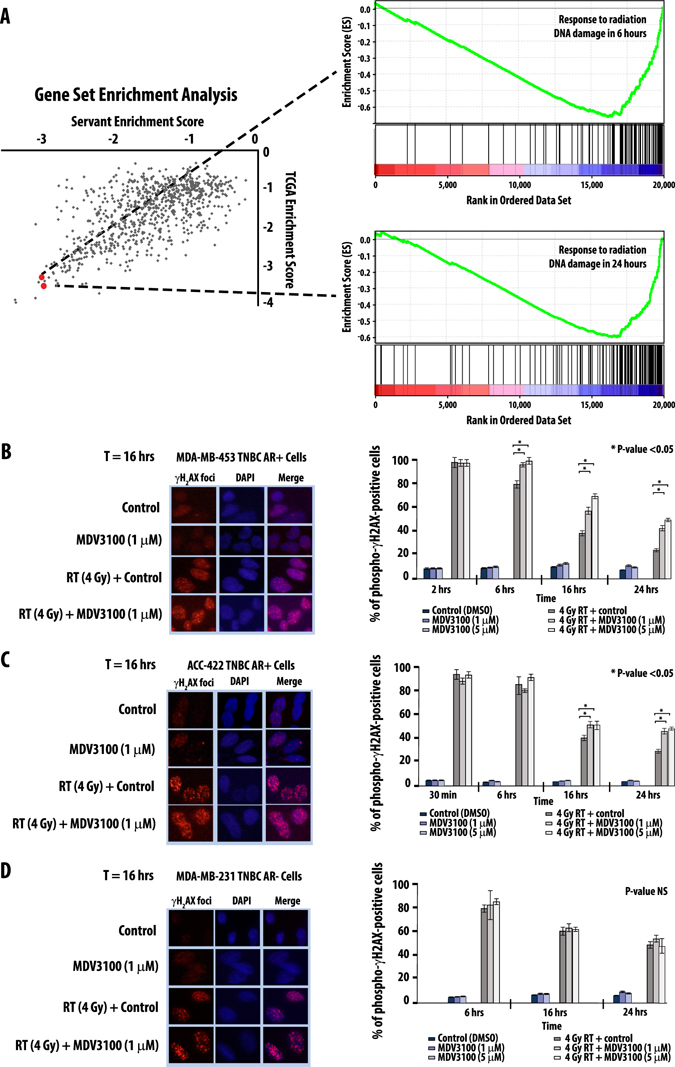
Increased rates of locoregional recurrence have been observed in triple-negative breast cancer despite chemotherapy and radiation therapy. Thus, approaches that combine therapies for radiosensitization in triple-negative breast cancer are critically needed. We characterized the radiation therapy response of 21 breast cancer cell lines and paired this radiation response data with high-throughput drug screen data to identify androgen receptor as a top target for radiosensitization. Our radiosensitizer screen nominated bicalutamide as the drug most effective in treating radiation therapy-resistant breast cancer cell lines. We subsequently evaluated the expression of androgen receptor in >2100 human breast tumor samples and 51 breast cancer cell lines and found significant heterogeneity in androgen receptor expression with enrichment at the protein and RNA level in triple-negative breast cancer. There was a strong correlation between androgen receptor RNA and protein expression across all breast cancer subtypes ( = 0.72, < 0.01). In patients with triple-negative breast cancer, expression of androgen receptor above the median was associated with increased risk of locoregional recurrence after radiation therapy (hazard ratio for locoregional recurrence 2.9-3.2)) in two independent data sets, but there was no difference in locoregional recurrence in triple-negative breast cancer patients not treated with radiation therapy when stratified by androgen receptor expression. In multivariable analysis, androgen receptor expression was most significantly associated with worse local recurrence-free survival after radiation therapy (hazard ratio of 3.58) suggesting that androgen receptor expression may be a biomarker of radiation response in triple-negative breast cancer. Inhibition of androgen receptor with MDV3100 (enzalutamide) induced radiation sensitivity (enhancement ratios of 1.22-1.60) in androgen receptor-positive triple-negative breast cancer lines, but did not affect androgen receptor-negative triple-negative breast cancer or estrogen-receptor-positive, androgen receptor-negative breast cancer cell lines. androgen receptor inhibition with MDV3100 significantly radiosensitized triple-negative breast cancer xenografts in mouse models and markedly delayed tumor doubling/tripling time and tumor weight. Radiosensitization was at least partially dependent on impaired dsDNA break repair mediated by DNA protein kinase catalytic subunit. Our results implicate androgen receptor as a mediator of radioresistance in breast cancer and identify androgen receptor inhibition as a potentially effective strategy for the treatment of androgen receptor-positive radioresistant tumors.
尽管进行了化疗和放射治疗,但三阴性乳腺癌的局部区域复发率仍有所增加。因此,迫切需要将多种治疗方法结合用于三阴性乳腺癌放射增敏的方法。我们对21种乳腺癌细胞系的放射治疗反应进行了表征,并将该放射反应数据与高通量药物筛选数据配对,以确定雄激素受体是放射增敏的首要靶点。我们的放射增敏剂筛选确定比卡鲁胺是治疗放射治疗耐药乳腺癌细胞系最有效的药物。我们随后评估了2100多个人类乳腺肿瘤样本和51种乳腺癌细胞系中雄激素受体的表达,发现雄激素受体表达存在显著异质性,在三阴性乳腺癌中蛋白和RNA水平均有富集。在所有乳腺癌亚型中,雄激素受体RNA和蛋白表达之间存在很强的相关性(r = 0.72,P < 0.01)。在三阴性乳腺癌患者中,雄激素受体表达高于中位数与放射治疗后局部区域复发风险增加相关(两个独立数据集中局部区域复发的风险比为2.9 - 3.2),但在未接受放射治疗的三阴性乳腺癌患者中,按雄激素受体表达分层时局部区域复发没有差异。在多变量分析中,雄激素受体表达与放射治疗后较差的局部无复发生存最显著相关(风险比为3.58),这表明雄激素受体表达可能是三阴性乳腺癌放射反应的一个生物标志物。用MDV3100(恩杂鲁胺)抑制雄激素受体可诱导雄激素受体阳性的三阴性乳腺癌细胞系产生放射敏感性(增强比为1.22 - 1.60),但不影响雄激素受体阴性的三阴性乳腺癌或雌激素受体阳性、雄激素受体阴性的乳腺癌细胞系。在小鼠模型中,用MDV3100抑制雄激素受体可显著使三阴性乳腺癌异种移植瘤产生放射增敏作用,并显著延迟肿瘤倍增/三倍时间和肿瘤重量。放射增敏至少部分依赖于由DNA蛋白激酶催化亚基介导的双链DNA断裂修复受损。我们的结果表明雄激素受体是乳腺癌放射抗性的介质,并确定抑制雄激素受体是治疗雄激素受体阳性放射抗性肿瘤的一种潜在有效策略。