Santoru Maria Laura, Piras Cristina, Murgia Antonio, Palmas Vanessa, Camboni Tania, Liggi Sonia, Ibba Ivan, Lai Maria Antonia, Orrù Sandro, Blois Sylvain, Loizedda Anna Lisa, Griffin Julian Leether, Usai Paolo, Caboni Pierluigi, Atzori Luigi, Manzin Aldo
Department of Biomedical Sciences, University of Cagliari, Cagliari, Italy.
Department of Life and Environmental Sciences, University of Cagliari, Cagliari, Italy.
Sci Rep. 2017 Aug 25;7(1):9523. doi: 10.1038/s41598-017-10034-5.
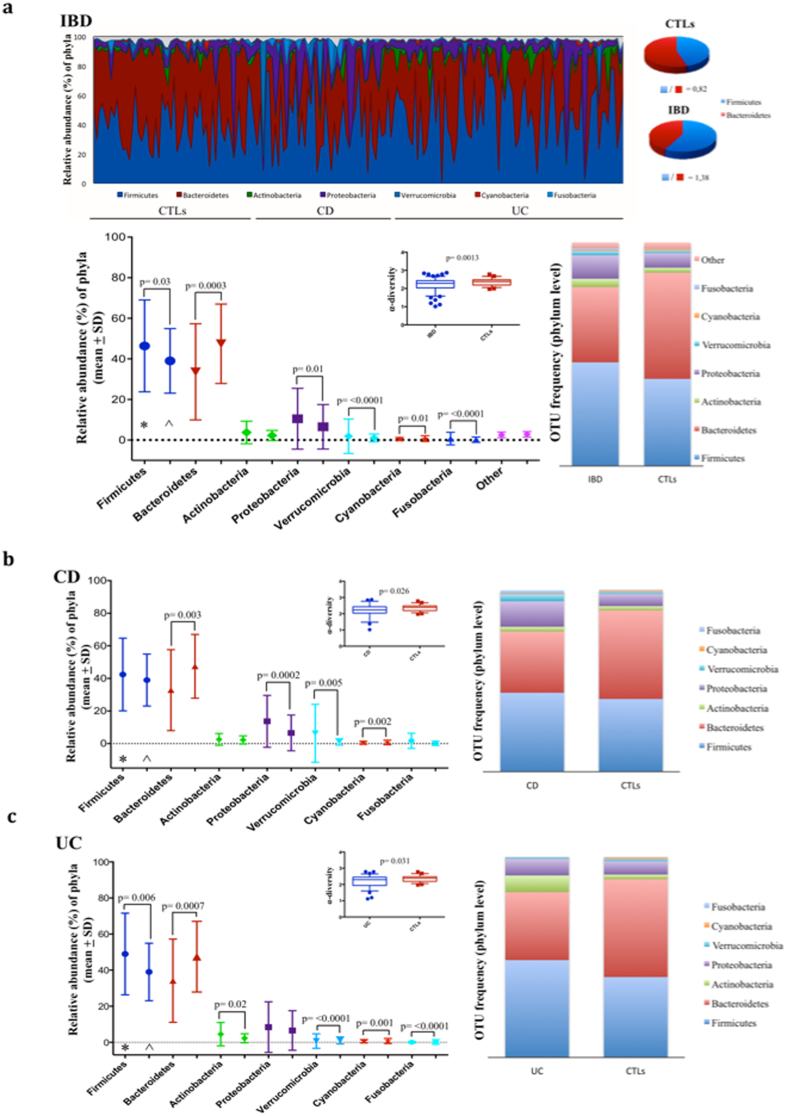
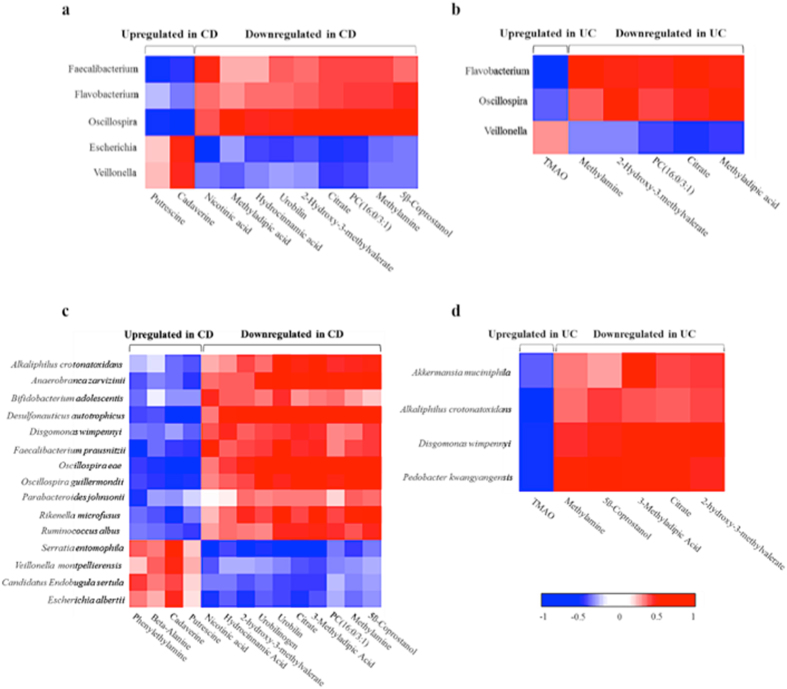
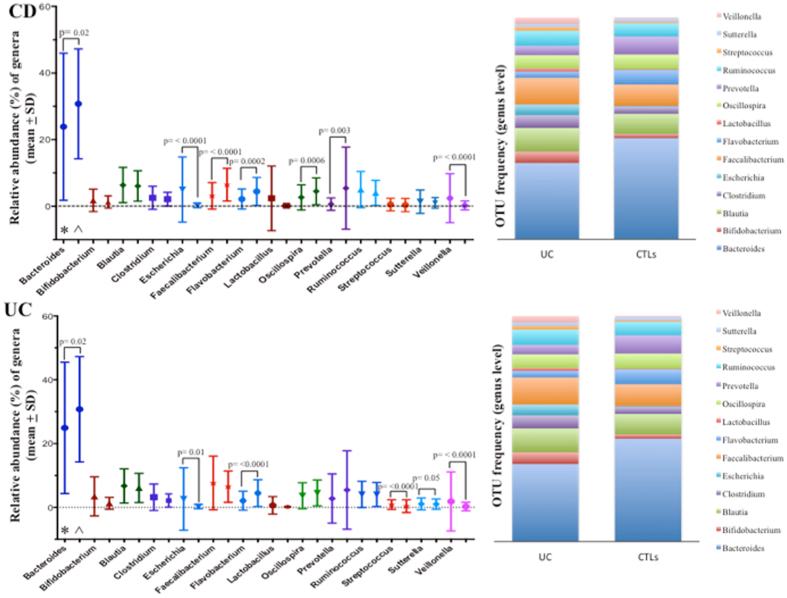
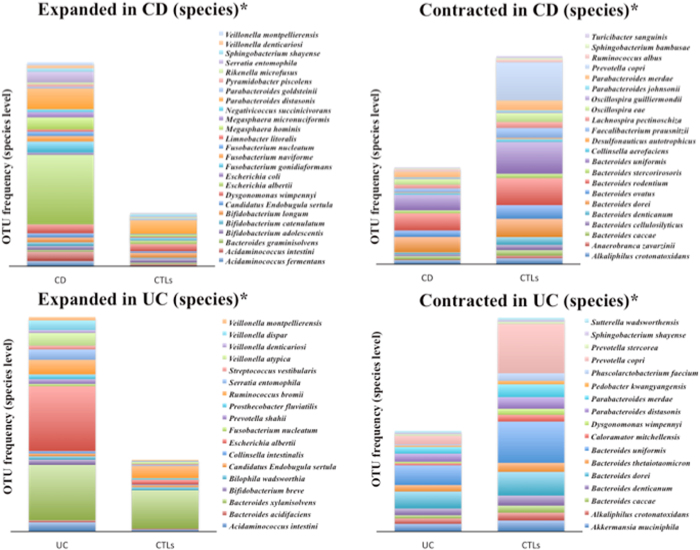
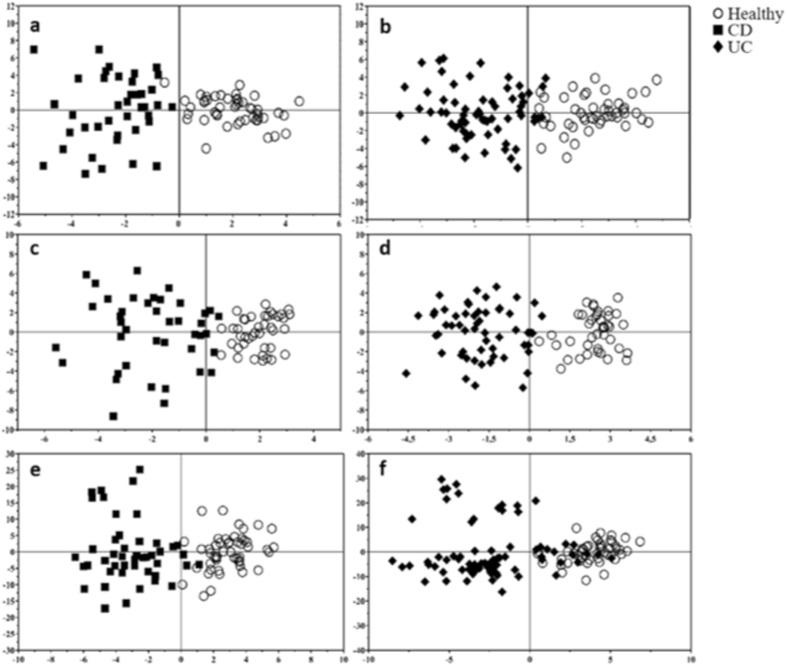
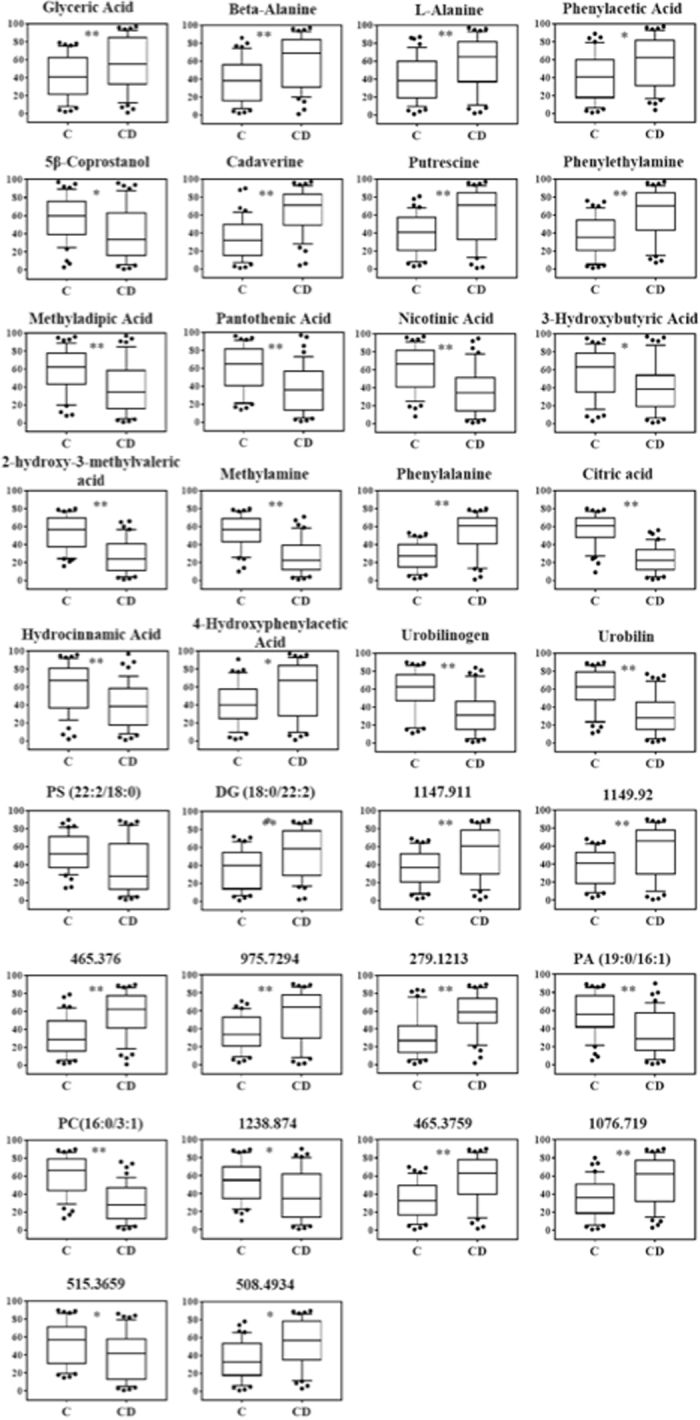
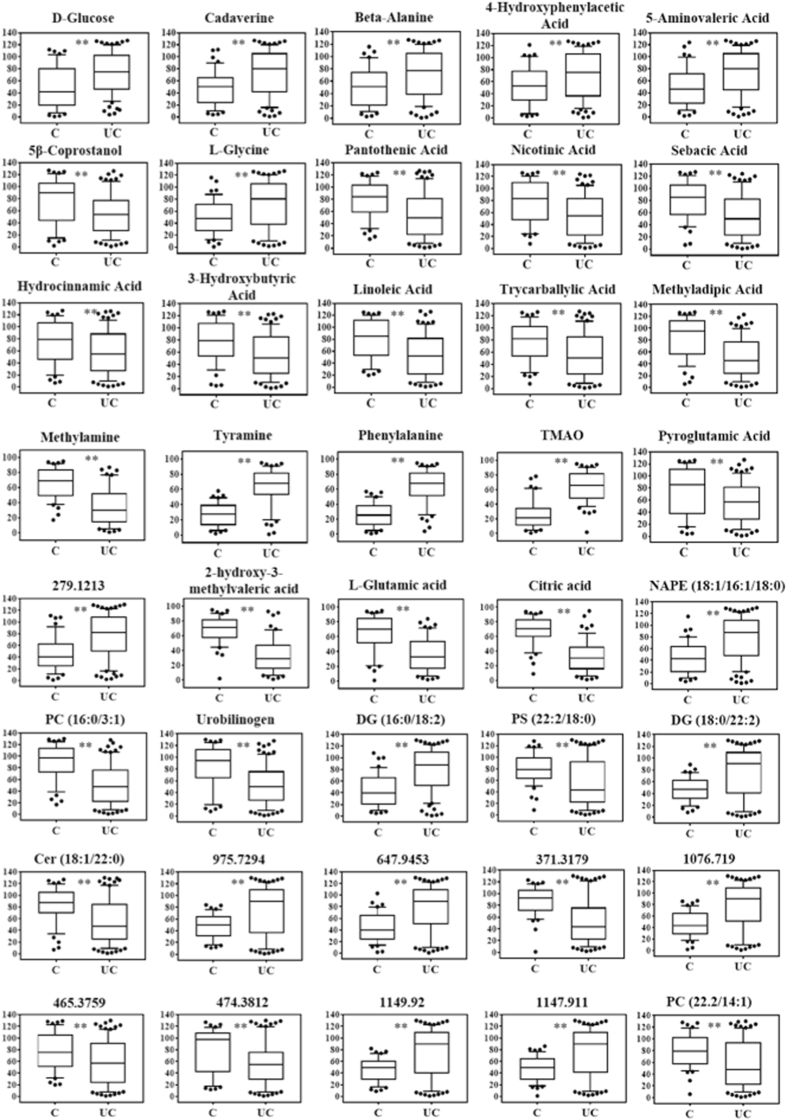
Inflammatory bowel disease (IBD) is a chronic inflammatory disease of the gastrointestinal tract of uncertain origin, which includes ulcerative colitis (UC) and Crohn's disease (CD). The composition of gut microbiota may change in IBD affected individuals, but whether dysbiosis is the cause or the consequence of inflammatory processes in the intestinal tissue is still unclear. Here, the composition of the microbiota and the metabolites in stool of 183 subjects (82 UC, 50 CD, and 51 healthy controls) were determined. The metabolites content and the microbiological profiles were significantly different between IBD and healthy subjects. In the IBD group, Firmicutes, Proteobacteria, Verrucomicrobia, and Fusobacteria were significantly increased, whereas Bacteroidetes and Cyanobacteria were decreased. At genus level Escherichia, Faecalibacterium, Streptococcus, Sutterella and Veillonella were increased, whereas Bacteroides, Flavobacterium, and Oscillospira decreased. Various metabolites including biogenic amines, amino acids, lipids, were significantly increased in IBD, while others, such as two B group vitamins, were decreased in IBD compared to healthy subjects. This study underlines the potential role of an inter-omics approach in understanding the metabolic pathways involved in IBD. The combined evaluation of metabolites and fecal microbiome can be useful to discriminate between healthy subjects and patients with IBD.
炎症性肠病(IBD)是一种起源不明的胃肠道慢性炎症性疾病,包括溃疡性结肠炎(UC)和克罗恩病(CD)。IBD患者的肠道微生物群组成可能会发生变化,但肠道微生物群失调是肠道组织炎症过程的原因还是结果仍不清楚。在此,对183名受试者(82名UC患者、50名CD患者和51名健康对照)粪便中的微生物群组成和代谢产物进行了测定。IBD患者与健康受试者之间的代谢产物含量和微生物学特征存在显著差异。在IBD组中,厚壁菌门、变形菌门、疣微菌门和梭杆菌门显著增加,而拟杆菌门和蓝细菌门减少。在属水平上,大肠杆菌、粪杆菌、链球菌、萨特菌属和韦荣球菌属增加,而拟杆菌属、黄杆菌属和颤螺菌属减少。与健康受试者相比,IBD患者中包括生物胺、氨基酸、脂质在内的各种代谢产物显著增加,而其他一些物质,如两种B族维生素则减少。本研究强调了多组学方法在理解IBD相关代谢途径中的潜在作用。代谢产物和粪便微生物群的联合评估有助于区分健康受试者和IBD患者。