Unitat de Farmacologia, Departament Patologia i Terapéutica Experimental, Facultat de Medicina, IDIBELL, Universitat de Barcelona, L'Hospitalet de Llobregat, Barcelona, Spain.
Institut de Neurociències, Universitat de Barcelona, Barcelona, Spain.
Sci Rep. 2017 Aug 25;7(1):9452. doi: 10.1038/s41598-017-10147-x.
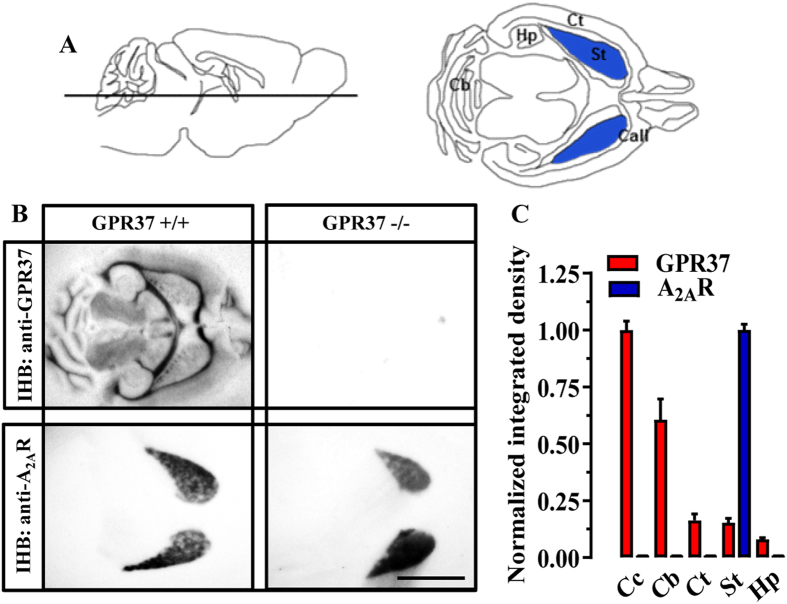
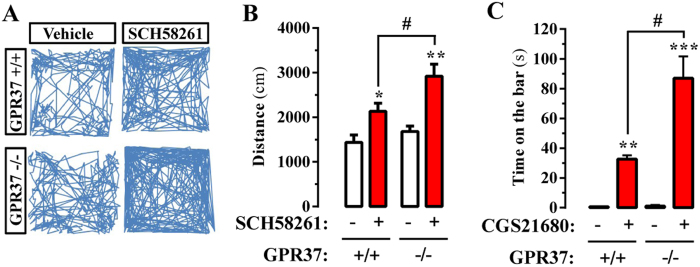
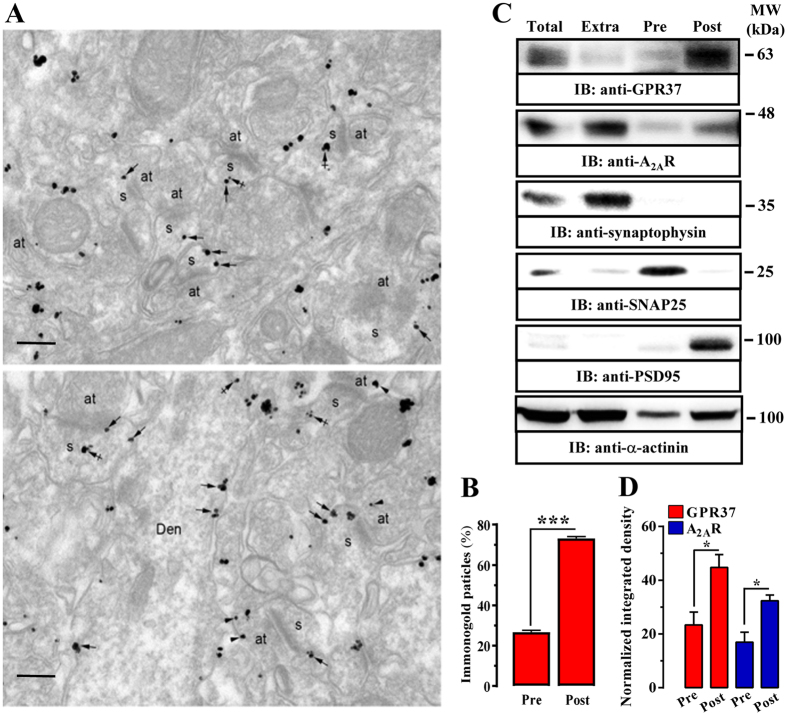
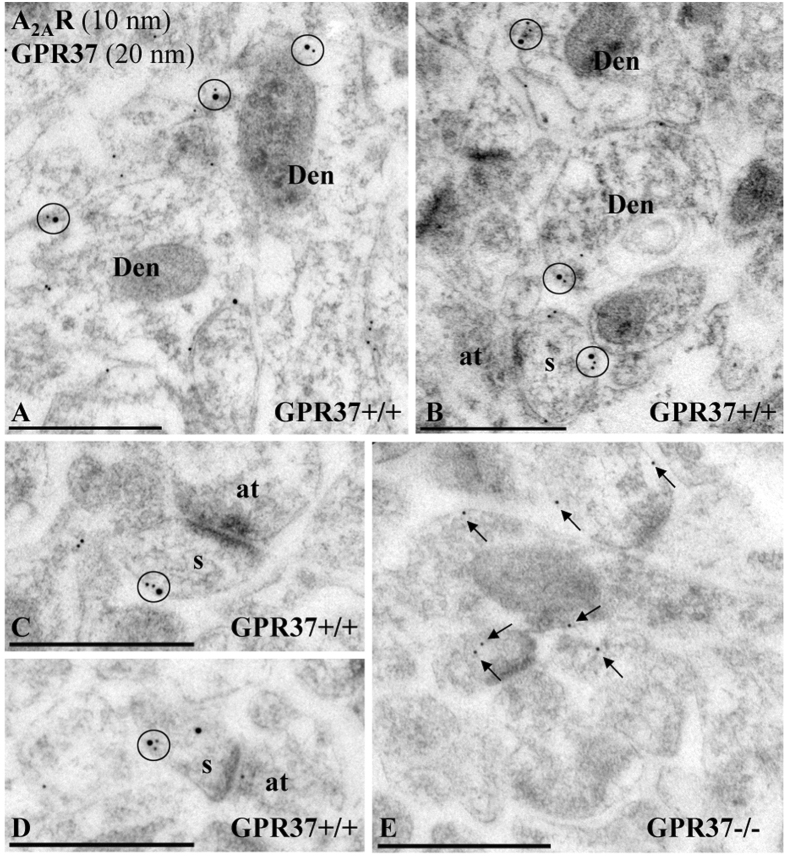
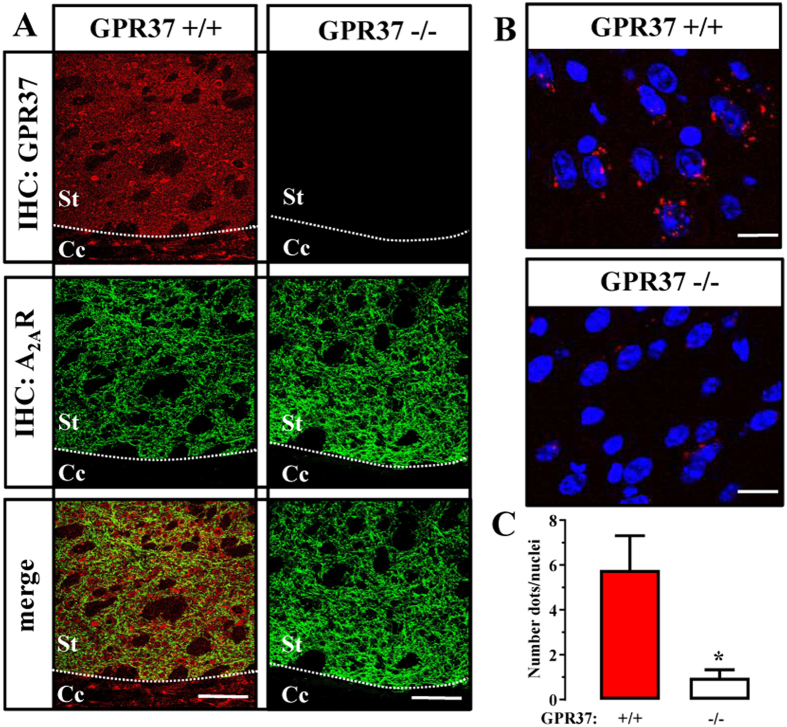
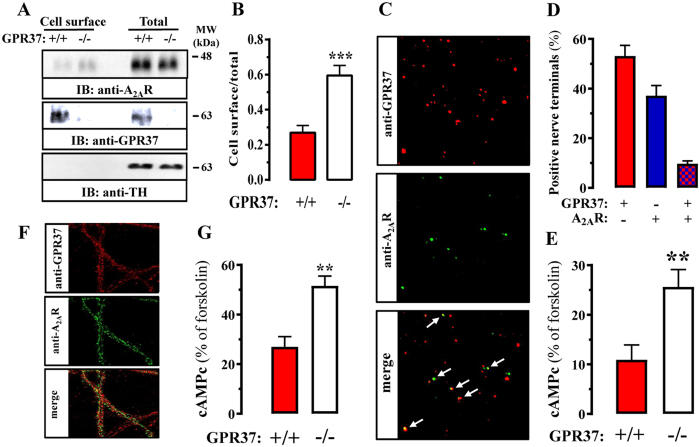
G protein-coupled receptor 37 (GPR37) is an orphan receptor associated to Parkinson's disease (PD) neuropathology. Here, we identified GPR37 as an inhibitor of adenosine A receptor (AR) cell surface expression and function in vivo. In addition, we showed that GPR37 and AR do oligomerize in the striatum. Thus, a close proximity of GPR37 and AR at the postsynaptic level of striatal synapses was observed by double-labelling post-embedding immunogold detection. Indeed, the direct receptor-receptor interaction was further substantiated by proximity ligation in situ assay. Interestingly, GPR37 deletion promoted striatal AR cell surface expression that correlated well with an increased AR agonist-mediated cAMP accumulation, both in primary striatal neurons and nerve terminals. Furthermore, GPR37-/- mice showed enhanced AR agonist-induced catalepsy and an increased response to AR antagonist-mediated locomotor activity. Overall, these results revealed a key role for GPR37 controlling AR biology in the striatum, which may be relevant for PD management.
G 蛋白偶联受体 37(GPR37)是一种与帕金森病(PD)神经病理学相关的孤儿受体。在这里,我们鉴定出 GPR37 是体内腺苷 A 受体(AR)细胞表面表达和功能的抑制剂。此外,我们还表明 GPR37 和 AR 在纹状体中形成寡聚体。因此,通过双标记后嵌入免疫胶体金检测观察到 GPR37 和 AR 在纹状体突触的突触后水平上的紧密接近。实际上,通过原位邻近连接测定进一步证实了直接的受体-受体相互作用。有趣的是,GPR37 缺失促进了纹状体 AR 的细胞表面表达,这与 AR 激动剂介导的 cAMP 积累增加密切相关,无论是在原代纹状体神经元还是神经末梢中。此外,GPR37-/- 小鼠表现出增强的 AR 激动剂诱导的僵住和对 AR 拮抗剂介导的运动活性增加的反应。总的来说,这些结果揭示了 GPR37 在控制纹状体 AR 生物学方面的关键作用,这可能与 PD 的治疗有关。