Department of Psychology, University of Georgia, 125 Baldwin Street, Athens, GA, 30602, USA.
Department of Psychology, University of Georgia, 125 Baldwin Street, Athens, GA, 30602, USA; Center for Alcohol and Addiction Studies, Brown University, Providence, RI, 02912, USA.
Neuroimage. 2017 Nov 1;161:261-270. doi: 10.1016/j.neuroimage.2017.08.045. Epub 2017 Aug 31.
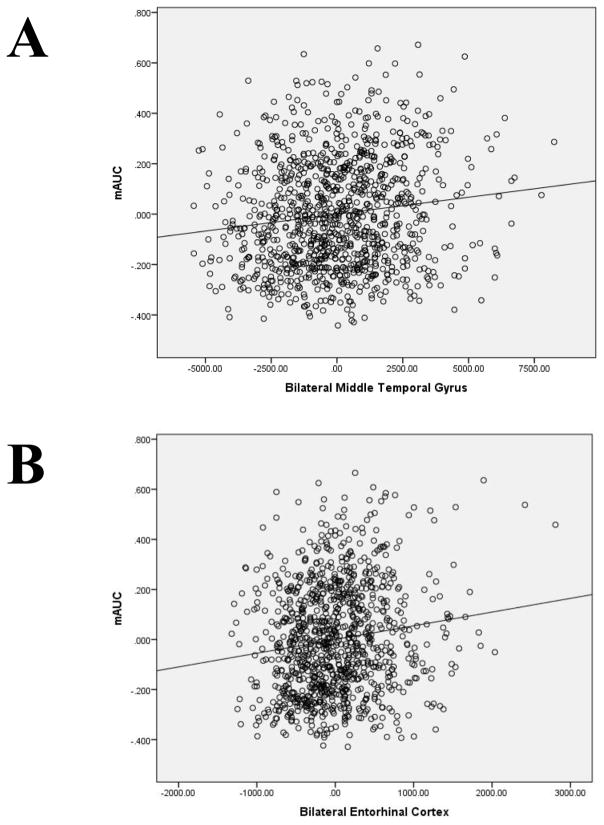
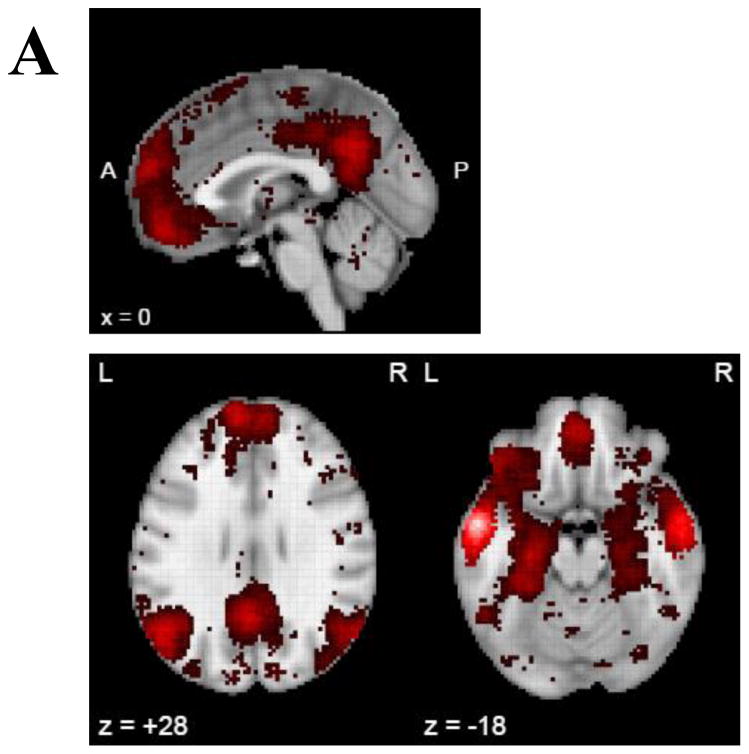
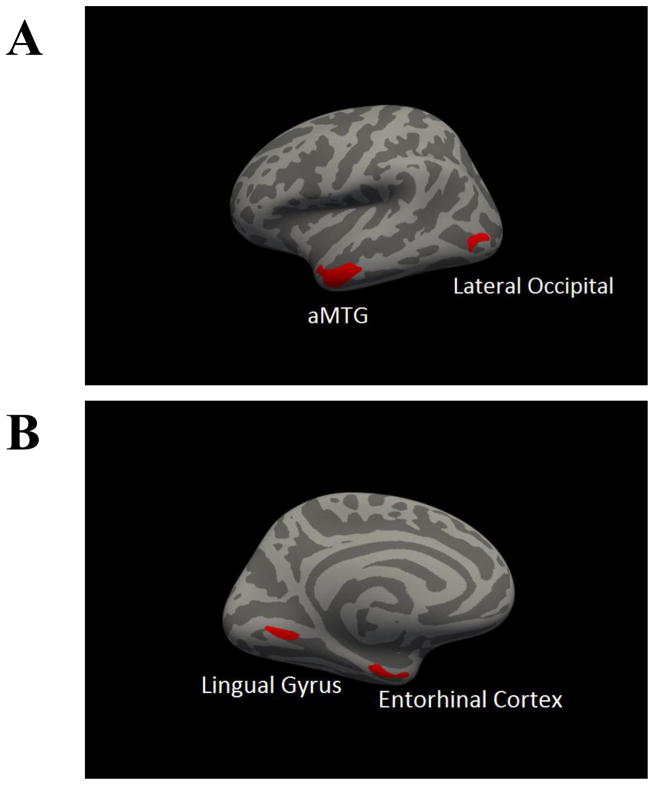
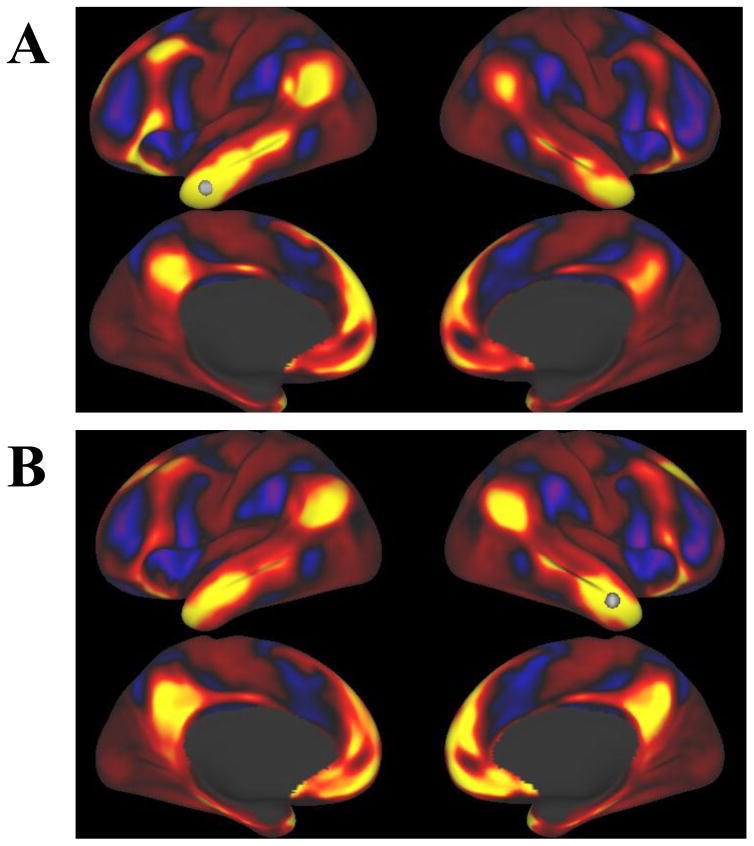
Resolving tradeoffs between smaller immediate rewards and larger delayed rewards is ubiquitous in daily life and steep discounting of future rewards is associated with several psychiatric conditions. This form of decision-making is referred to as delayed reward discounting (DRD) and the features of brain structure associated with DRD are not well understood. The current study characterized the relationship between gray matter volume (GMV) and DRD in a sample of 1038 healthy adults (54.7% female) using cortical parcellation, subcortical segmentation, and voxelwise cortical surface-based group analyses. The results indicate that steeper DRD was significantly associated with lower total cortical GMV, but not subcortical GMV. In parcellation analyses, less GMV in 20 discrete cortical regions was associated with steeper DRD. Of these regions, only GMV in the middle temporal gyrus (MTG) and entorhinal cortex (EC) were uniquely associated with DRD. Voxelwise surface-based analyses corroborated these findings, again revealing significant associations between steeper DRD and less GMV in the MTG and EC. To inform the roles of MTG and EC in DRD, connectivity analysis of resting state data (N = 1003) using seed regions from the structural findings was conducted. This revealed that spontaneous activity in the MTG and EC was correlated with activation in the ventromedial prefrontal cortex, posterior cingulate cortex, and inferior parietal lobule, regions associated with the default mode network, which involves prospection, self-reflective thinking and mental simulation. Furthermore, meta-analytic co-activation analysis using Neurosynth revealed a similar pattern across 11,406 task-fMRI studies. Collectively, these findings provide robust evidence that morphometric characteristics of the temporal lobe are associated with DRD preferences and suggest it may be because of their role in mental activities in common with default mode activity.
在日常生活中,权衡较小的即时奖励和较大的延迟奖励之间的关系是普遍存在的,而对未来奖励的大幅折扣与几种精神疾病有关。这种形式的决策被称为延迟奖励折扣(DRD),与 DRD 相关的大脑结构特征尚未得到很好的理解。本研究使用皮质分割、皮质下分割和基于体素的皮质表面组分析,在 1038 名健康成年人(女性占 54.7%)样本中描述了灰质体积(GMV)与 DRD 之间的关系。结果表明,DRD 越陡峭与总皮质 GMV 越低显著相关,但与皮质下 GMV 无关。在分区分析中,20 个离散皮质区域的 GMV 越少与 DRD 越陡峭相关。在这些区域中,只有颞中回(MTG)和内嗅皮质(EC)的 GMV 与 DRD 有独特的关联。基于体素的表面分析证实了这些发现,再次表明 DRD 越陡峭与 MTG 和 EC 中的 GMV 越少之间存在显著关联。为了说明 MTG 和 EC 在 DRD 中的作用,对来自结构发现的种子区域进行了 1003 名静息状态数据的连通性分析。这表明 MTG 和 EC 的自发活动与腹内侧前额叶皮层、后扣带回皮层和下顶叶小叶的激活相关,这些区域与默认模式网络有关,默认模式网络涉及前瞻性、自我反思性思维和心理模拟。此外,使用 Neurosynth 进行的元分析共激活分析在 11406 项任务 fMRI 研究中显示出类似的模式。总的来说,这些发现提供了有力的证据,表明颞叶形态特征与 DRD 偏好有关,并表明这可能是因为它们在与默认模式活动相关的心理活动中的作用。