Shen Ming Hong, Samsel Paulina, Shen Louise L, Narov Kalin, Yang Jian, Sampson Julian R
Institute of Medical Genetics, Division of Cancer and Genetics, School of Medicine, Cardiff University, Heath Park, Cardiff CF14 4XN, UK.
Institute of Medical Genetics, Division of Cancer and Genetics, School of Medicine, Cardiff University, Heath Park, Cardiff CF14 4XN, UK.
Transl Oncol. 2017 Oct;10(5):793-799. doi: 10.1016/j.tranon.2017.07.009. Epub 2017 Aug 24.
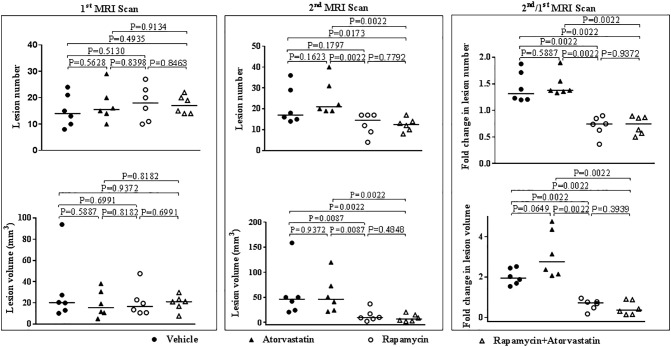
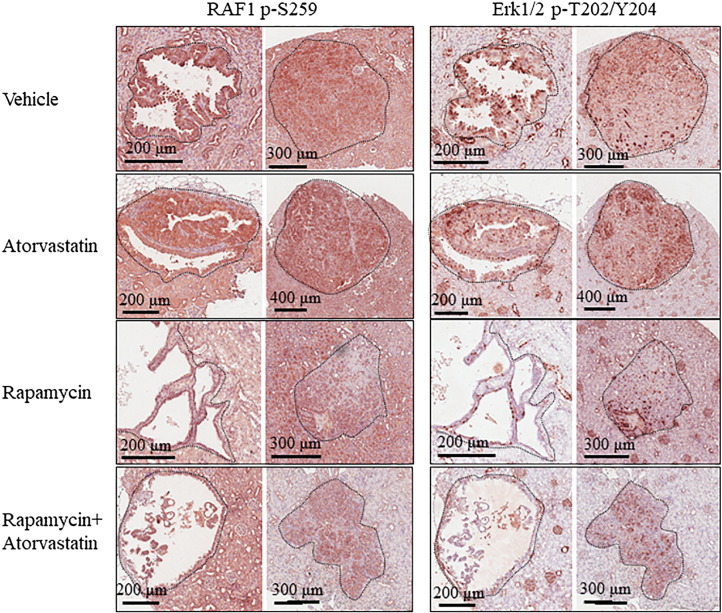
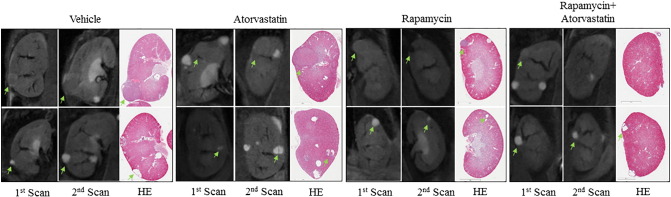
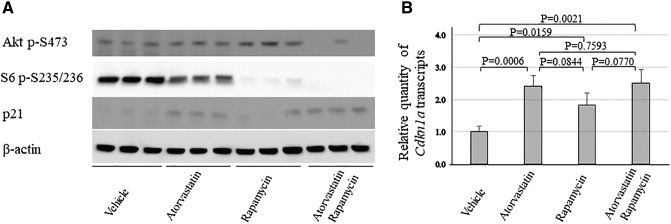
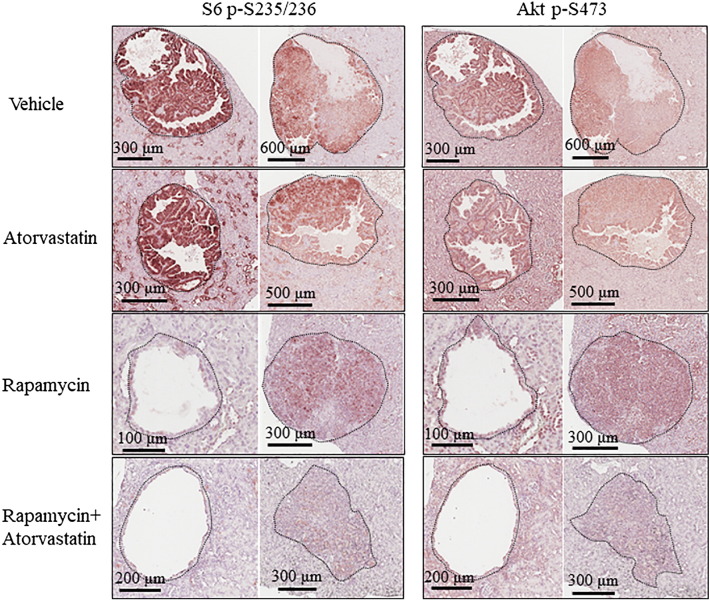
Atorvastatin is widely used to lower blood cholesterol and to reduce risk of cardiovascular disease-associated complications. Epidemiological investigations and preclinical studies suggest that statins such as atorvastatin have antitumor activity for various types of cancer. Tuberous sclerosis (TSC) is a tumor syndrome caused by TSC1 or TSC2 mutations that lead to aberrant activation of mTOR and tumor formation in multiple organs. Previous studies have demonstrated that atorvastatin selectively suppressed growth and proliferation of mouse Tsc2 null embryonic fibroblasts through inhibition of mTOR. However, atorvastatin alone did not reduce tumor burden in the liver and kidneys of Tsc2 mice as assessed by histological analysis, and no combination therapy of rapamycin and atorvastatin has been tried. In this study, we used T2-weighted magnetic resonance imaging to track changes in tumor number and size in the kidneys of a Tsc1 mouse model and to assess the efficacy of rapamycin and atorvastatin alone and as a combination therapy. We found that rapamycin alone or rapamycin combined with atorvastatin significantly reduced tumor burden, while atorvastatin alone did not. Combined therapy with rapamycin and atorvastatin appeared to be more effective for treating renal tumors than rapamycin alone, but the difference was not statistically significant. We conclude that combined therapy with rapamycin and atorvastatin is unlikely to provide additional benefit over rapamycin as a single agent in the treatment of Tsc-associated renal tumors.
阿托伐他汀被广泛用于降低血液胆固醇水平以及降低心血管疾病相关并发症的风险。流行病学调查和临床前研究表明,像阿托伐他汀这样的他汀类药物对多种类型的癌症具有抗肿瘤活性。结节性硬化症(TSC)是一种由TSC1或TSC2基因突变引起的肿瘤综合征,这些突变会导致mTOR异常激活以及多个器官中肿瘤的形成。先前的研究已经证明,阿托伐他汀通过抑制mTOR选择性地抑制小鼠Tsc2基因缺失的胚胎成纤维细胞的生长和增殖。然而,通过组织学分析评估,单独使用阿托伐他汀并没有减轻Tsc2小鼠肝脏和肾脏中的肿瘤负担,并且尚未尝试过雷帕霉素与阿托伐他汀的联合治疗。在本研究中,我们使用T2加权磁共振成像来追踪Tsc1小鼠模型肾脏中肿瘤数量和大小的变化,并评估单独使用雷帕霉素和阿托伐他汀以及联合治疗的疗效。我们发现,单独使用雷帕霉素或雷帕霉素与阿托伐他汀联合使用均能显著减轻肿瘤负担,而单独使用阿托伐他汀则不能。雷帕霉素与阿托伐他汀联合治疗似乎比单独使用雷帕霉素治疗肾肿瘤更有效,但差异无统计学意义。我们得出结论,在治疗与TSC相关的肾肿瘤方面,雷帕霉素与阿托伐他汀联合治疗不太可能比单独使用雷帕霉素带来额外的益处。