Soreng Katherine, Levy Roma, Fakile Yetunde
Siemens Healthcare Diagnostics Inc., Tarrytown, New York.
Siemens Healthcare Diagnostics Inc., Los Angeles, California.
Clin Microbiol Newsl. 2014 Dec 15;36(24):195-202. doi: 10.1016/j.clinmicnews.2014.12.001.
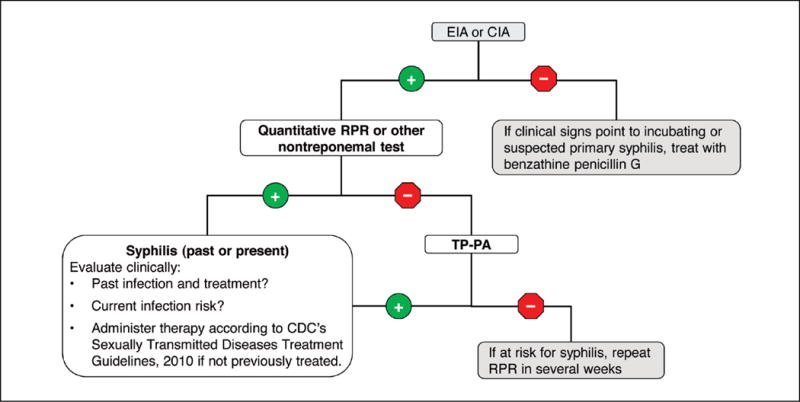
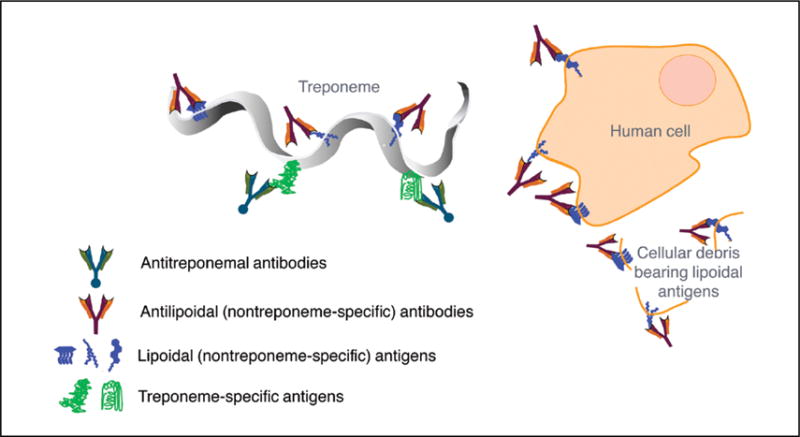
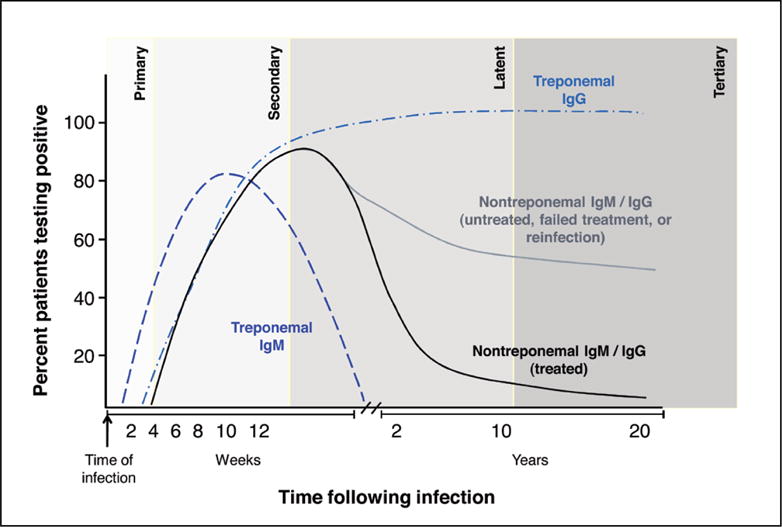
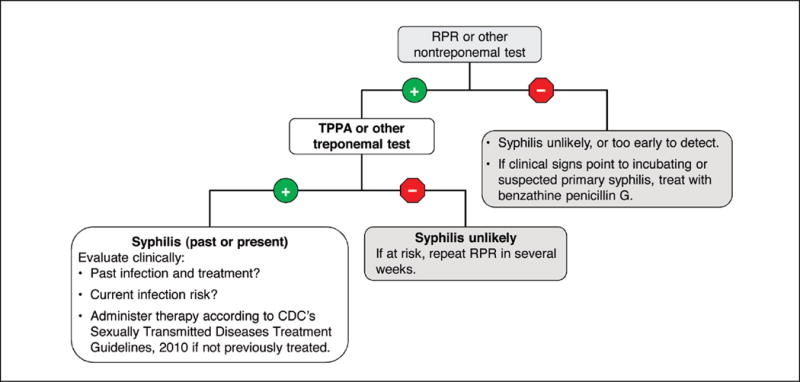
Syphilis is a human infection of global importance. Its diagnosis can be challenging, requiring construction of a serologic profile based on the results of at least two types of antibody tests: treponemal and nontreponemal. The traditional approach to the serodiagnosis of syphilis has been the use of a nontreponemal screening assay followed by the performance of a treponemal confirmatory test if the initial nontreponemal screening test was reactive. With the increasing availability of automated, easier-to-perform, and rapid treponemal assays, an increasing number of laboratory testing sites are adopting reverse sequence screening for the serodiagnosis of syphilis: screening with a treponemal assay first, then confirmation with a nontreponemal assay and, when necessary, discrepant resolution using another treponemal test. In addition to offering automation and increased throughput, a reverse algorithm can increase disease detection, especially in late latent and early primary stages of infection when the nontreponemal antibody test may be nonreactive. However, a disadvantage to this approach is that there can be an increase in false-positive test results. This article reviews the clinical and workflow benefits and limitations of a reverse testing algorithm and discusses current guidance available from the Centers for Disease Control and Prevention.
梅毒是一种具有全球重要性的人类感染性疾病。其诊断可能具有挑战性,需要根据至少两种抗体检测结果构建血清学特征:梅毒螺旋体抗体检测和非梅毒螺旋体抗体检测。梅毒血清学诊断的传统方法是先进行非梅毒螺旋体筛查试验,如果初始非梅毒螺旋体筛查试验呈阳性,则进行梅毒螺旋体确证试验。随着自动化程度更高、操作更简便且快速的梅毒螺旋体检测方法越来越普及,越来越多的实验室检测机构采用反向序列筛查进行梅毒血清学诊断:先进行梅毒螺旋体检测,然后用非梅毒螺旋体检测进行确证,必要时使用另一种梅毒螺旋体检测解决结果不一致的问题。除了提供自动化和更高的通量外,反向算法还可以提高疾病检测率,特别是在感染的晚期潜伏和早期一期阶段,此时非梅毒螺旋体抗体检测可能呈阴性。然而,这种方法的一个缺点是假阳性检测结果可能会增加。本文回顾了反向检测算法的临床和工作流程优势及局限性,并讨论了美国疾病控制与预防中心目前提供的指导意见。