Department of Radiotherapy, First Affiliated Hospital of Guangxi Medical University, Nanning, Guangxi Zhuang Autonomous Region 530021, P.R. China.
Department of Pathology, First Affiliated Hospital of Guangxi Medical University, Nanning, Guangxi Zhuang Autonomous Region 530021, P.R. China.
Mol Med Rep. 2017 Oct;16(4):5393-5405. doi: 10.3892/mmr.2017.7275. Epub 2017 Aug 17.
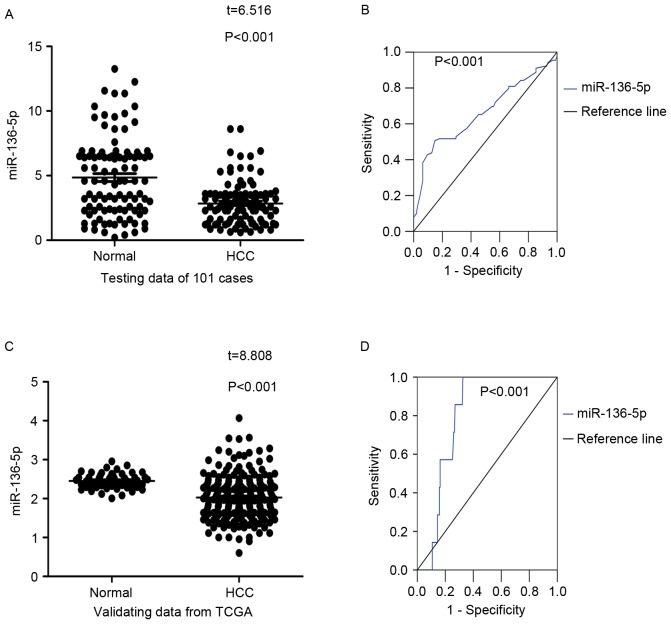
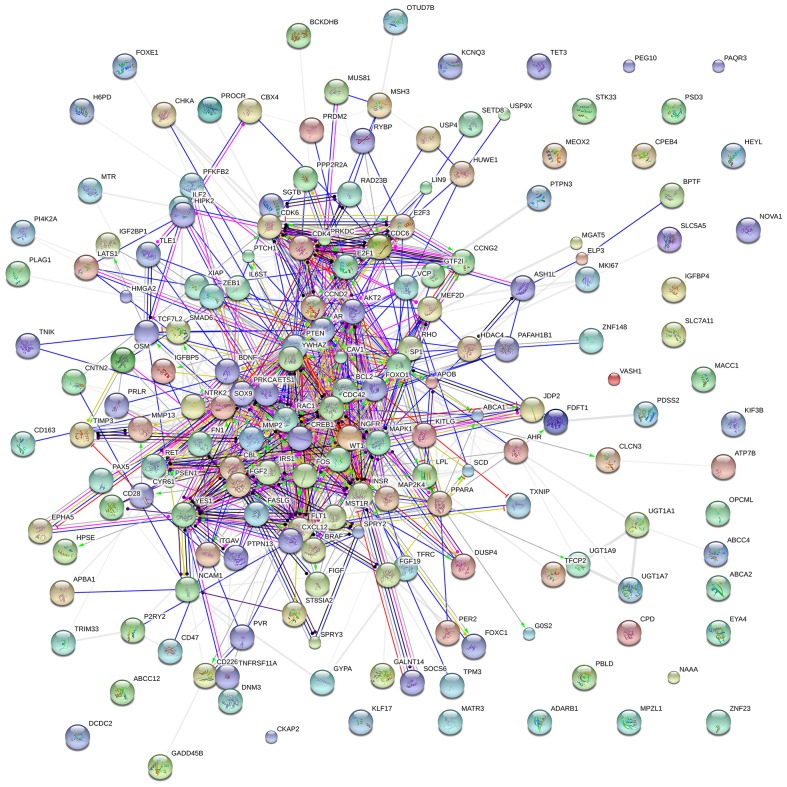
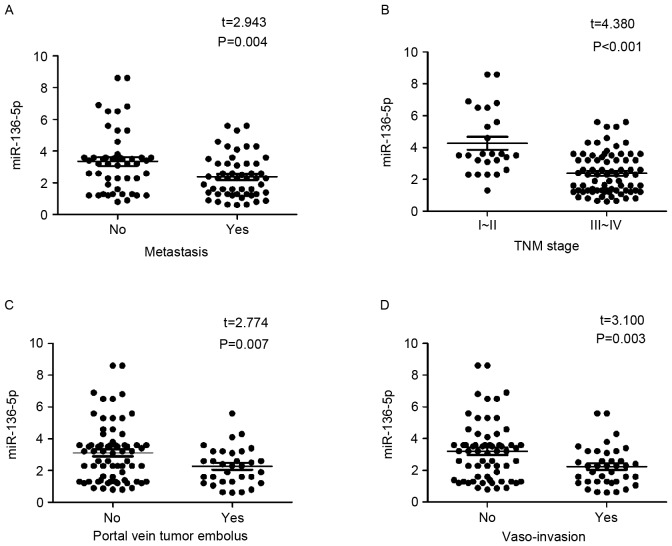
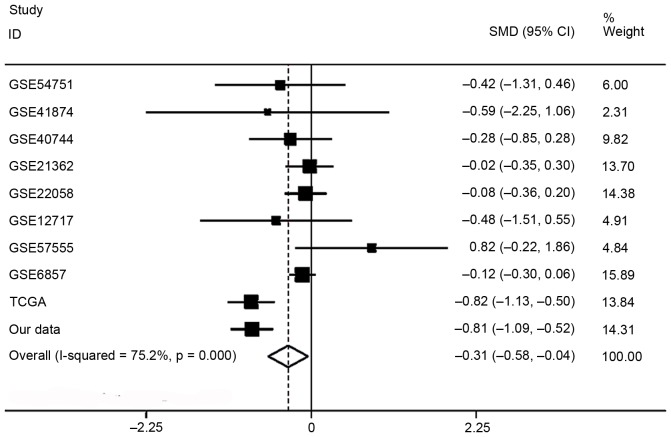
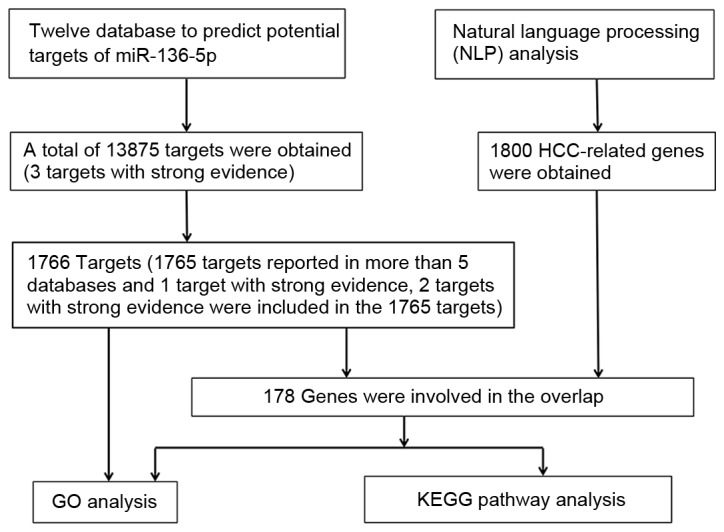
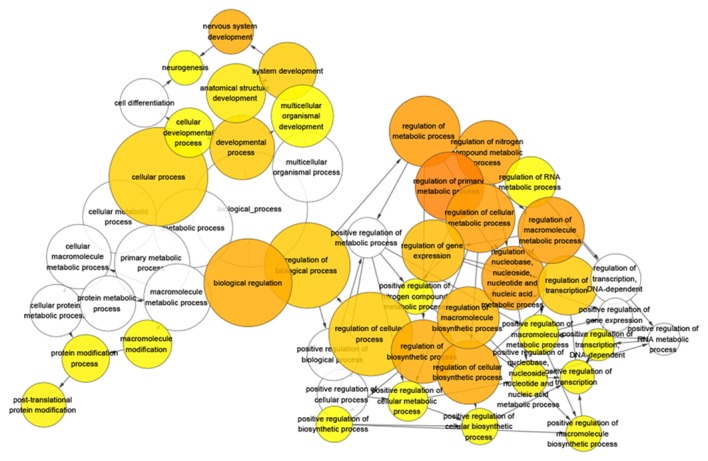
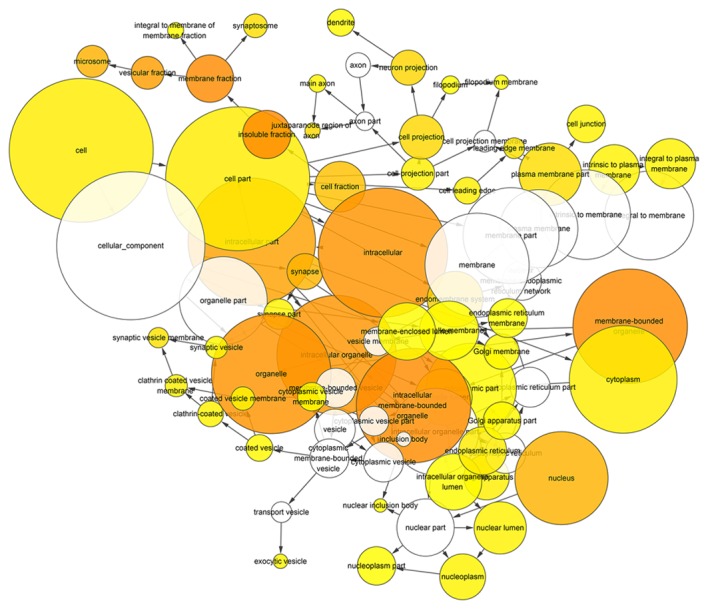
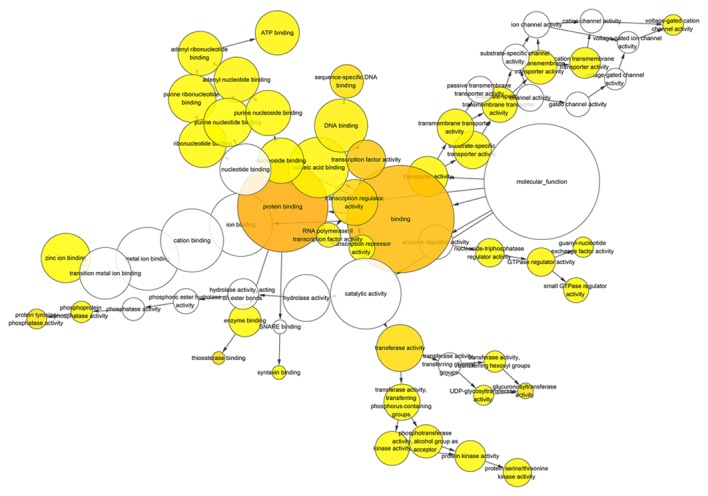
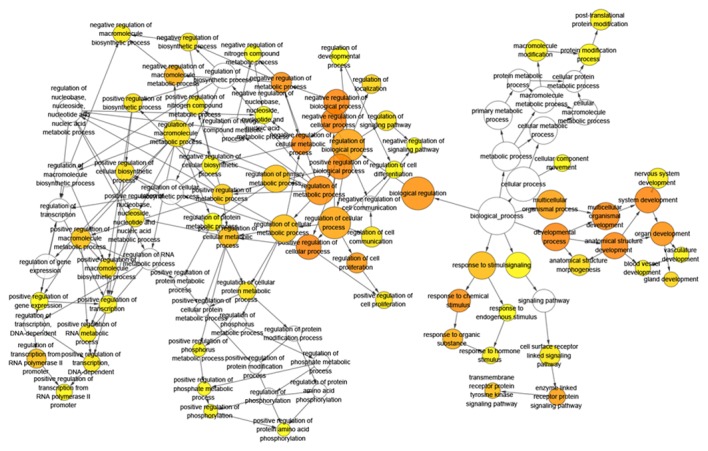
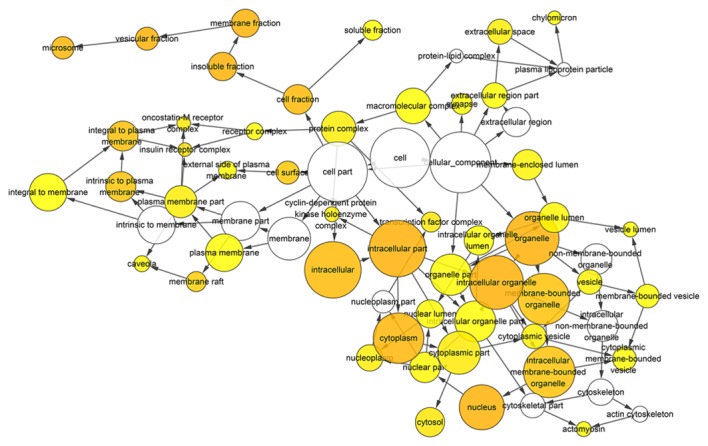
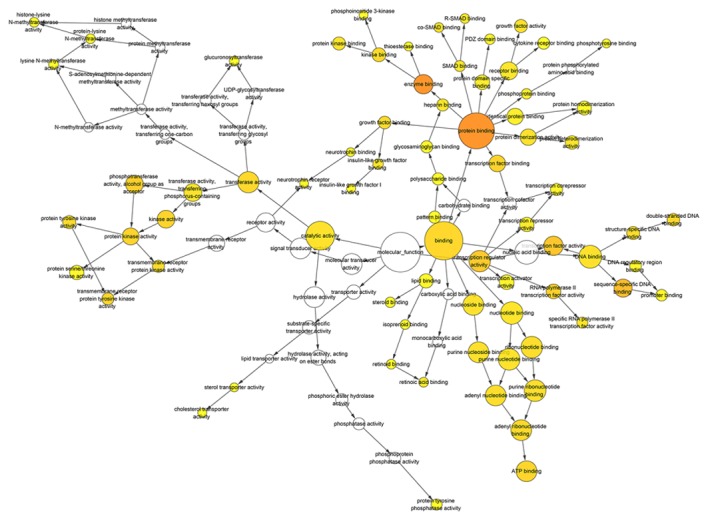
The clinical significance of microRNA (miR)‑136‑5p in hepatocellular carcinoma (HCC) has not been verified. Therefore, in the current study, the authors aimed to explore miR‑136‑5p expression and its clinical significance in HCC, as well as to investigate its potential target genes function. The authors detected the levels of miR‑136‑5p in 101 pairs of HCC and para‑cancer tissues via reverse transcription‑quantitative polymerase chain reaction. Gene Expression Omnibus database and the Cancer Genome Atlas (TCGA) database were used to further verify the clinical significance of miR‑136‑5p expression in HCC. The target genes prediction analysis of miR‑136‑5p, natural language processing (NLP) analysis of HCC in PubMed and gene functional enrichment analysis were conducted. The miR‑136‑5p level was markedly downregulated in HCC tissue, compared to para‑non‑tumor tissue. MiR‑136‑5p expression decreased in HCC patients with metastasis (P=0.004), advance TNM stage (P<0.001), portal vein tumor embolus (P=0.007) and vaso‑invasion (P=0.003), compared with those HCC patients with non‑metastasis, early TNM stage, non‑portal vein tumor embolus and non‑vaso‑invasion, respectively. In the TCGA database, downregulated miR‑136‑5p was also observed in HCC tissue compared to normal liver tissue (P<0.001). There were 178 genes obtained from the overlap between predicted targets and NLP analysis. GO and KEGG pathway analyses revealed some significant pathways related to cancers. Downregulation of miR‑136‑5p may be responsible for the carcinogenesis and aggressiveness of HCC. miR‑136‑5p may act as an anti‑carcinoma miRNA, which is essential for HCC progression through the regulation of various signaling pathways. Thus, miR‑136‑5p interaction may provide a novel strategy for HCC treatment.
miR-136-5p 在肝细胞癌 (HCC) 中的临床意义尚未得到验证。因此,在本研究中,作者旨在探讨 miR-136-5p 在 HCC 中的表达及其临床意义,并研究其潜在的靶基因功能。作者通过逆转录-定量聚合酶链反应检测了 101 对 HCC 及癌旁组织中 miR-136-5p 的水平。基因表达综合数据库和癌症基因组图谱 (TCGA) 数据库进一步验证了 miR-136-5p 在 HCC 中的表达的临床意义。对 miR-136-5p 的靶基因预测分析、PubMed 中 HCC 的自然语言处理 (NLP) 分析以及基因功能富集分析。miR-136-5p 的水平在 HCC 组织中明显下调,与癌旁非肿瘤组织相比。miR-136-5p 表达降低与 HCC 患者转移 (P=0.004)、进展期 TNM 分期 (P<0.001)、门静脉癌栓 (P=0.007)和血管侵犯 (P=0.003)有关,而与无转移、早期 TNM 分期、无门静脉癌栓和无血管侵犯的 HCC 患者相比。在 TCGA 数据库中,与正常肝组织相比,HCC 组织中也观察到下调的 miR-136-5p (P<0.001)。通过预测靶基因与 NLP 分析的重叠,得到了 178 个基因。GO 和 KEGG 通路分析显示了一些与癌症相关的显著通路。miR-136-5p 的下调可能与 HCC 的发生和侵袭性有关。miR-136-5p 可能作为一种抗癌 miRNA,通过调节各种信号通路对 HCC 的进展起关键作用。因此,miR-136-5p 的相互作用可能为 HCC 的治疗提供一种新的策略。