• 文献检索
  • 文档翻译
  • 深度研究
  • 学术资讯
  • Suppr Zotero 插件Zotero 插件
  • 邀请有礼
  • 套餐&价格
  • 历史记录
应用&插件
Suppr Zotero 插件Zotero 插件浏览器插件Mac 客户端Windows 客户端微信小程序
定价
高级版会员购买积分包购买API积分包
服务
文献检索文档翻译深度研究API 文档MCP 服务
关于我们
关于 Suppr公司介绍联系我们用户协议隐私条款
关注我们

Suppr 超能文献

核心技术专利:CN118964589B侵权必究
粤ICP备2023148730 号-1Suppr @ 2026

文献检索

告别复杂PubMed语法,用中文像聊天一样搜索,搜遍4000万医学文献。AI智能推荐,让科研检索更轻松。

立即免费搜索

文件翻译

保留排版,准确专业,支持PDF/Word/PPT等文件格式,支持 12+语言互译。

免费翻译文档

深度研究

AI帮你快速写综述,25分钟生成高质量综述,智能提取关键信息,辅助科研写作。

立即免费体验

用于物联网雾计算应用的高安全性节能网关的实际评估

A Practical Evaluation of a High-Security Energy-Efficient Gateway for IoT Fog Computing Applications.

作者信息

Suárez-Albela Manuel, Fernández-Caramés Tiago M, Fraga-Lamas Paula, Castedo Luis

机构信息

Department Computer Engineering, Faculty of Computer Science, Universidade da Coruña, 15071 A Coruña, Spain.

出版信息

Sensors (Basel). 2017 Aug 29;17(9):1978. doi: 10.3390/s17091978.

DOI:10.3390/s17091978
PMID:28850104
原文链接:https://pmc.ncbi.nlm.nih.gov/articles/PMC5620735/
Abstract

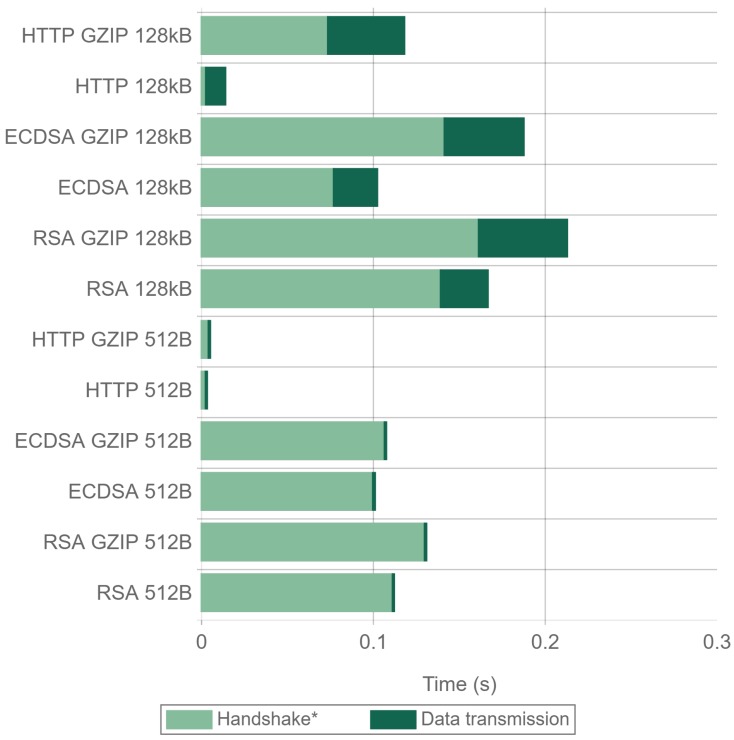
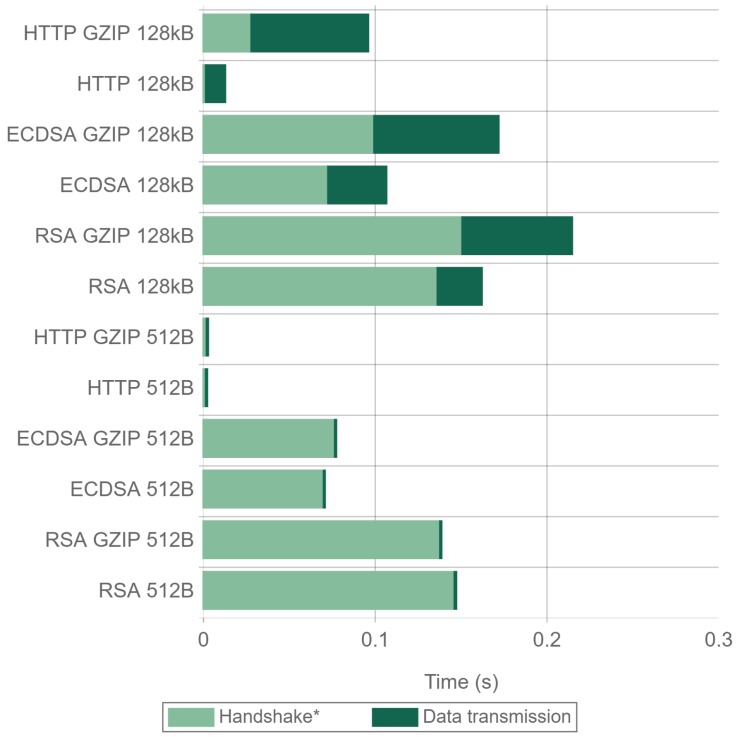
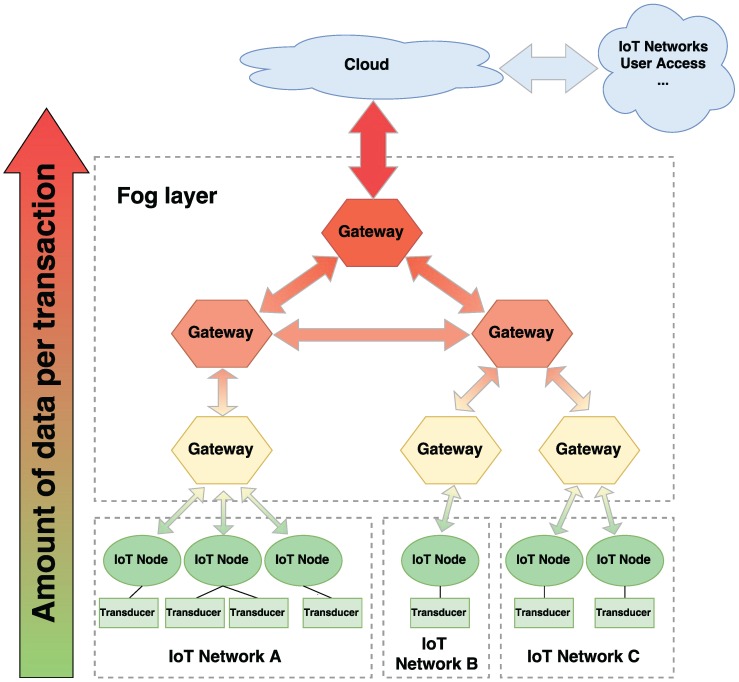
Fog computing extends cloud computing to the edge of a network enabling new Internet of Things (IoT) applications and services, which may involve critical data that require privacy and security. In an IoT fog computing system, three elements can be distinguished: IoT nodes that collect data, the cloud, and interconnected IoT gateways that exchange messages with the IoT nodes and with the cloud. This article focuses on securing IoT gateways, which are assumed to be constrained in terms of computational resources, but that are able to offload some processing from the cloud and to reduce the latency in the responses to the IoT nodes. However, it is usually taken for granted that IoT gateways have direct access to the electrical grid, which is not always the case: in mission-critical applications like natural disaster relief or environmental monitoring, it is common to deploy IoT nodes and gateways in large areas where electricity comes from solar or wind energy that charge the batteries that power every device. In this article, how to secure IoT gateway communications while minimizing power consumption is analyzed. The throughput and power consumption of Rivest-Shamir-Adleman (RSA) and Elliptic Curve Cryptography (ECC) are considered, since they are really popular, but have not been thoroughly analyzed when applied to IoT scenarios. Moreover, the most widespread Transport Layer Security (TLS) cipher suites use RSA as the main public key-exchange algorithm, but the key sizes needed are not practical for most IoT devices and cannot be scaled to high security levels. In contrast, ECC represents a much lighter and scalable alternative. Thus, RSA and ECC are compared for equivalent security levels, and power consumption and data throughput are measured using a testbed of IoT gateways. The measurements obtained indicate that, in the specific fog computing scenario proposed, ECC is clearly a much better alternative than RSA, obtaining energy consumption reductions of up to 50% and a data throughput that doubles RSA in most scenarios. These conclusions are then corroborated by a frame temporal analysis of Ethernet packets. In addition, current data compression algorithms are evaluated, concluding that, when dealing with the small payloads related to IoT applications, they do not pay off in terms of real data throughput and power consumption.

摘要

雾计算将云计算扩展到网络边缘,支持新的物联网(IoT)应用和服务,这些应用和服务可能涉及需要隐私和安全保护的关键数据。在物联网雾计算系统中,可以区分出三个要素:收集数据的物联网节点、云,以及与物联网节点和云交换消息的互联物联网网关。本文重点关注保护物联网网关的安全,假定这些网关在计算资源方面受到限制,但能够减轻云的一些处理负担,并减少对物联网节点响应的延迟。然而,通常认为物联网网关可以直接接入电网,但实际情况并非总是如此:在诸如自然灾害救援或环境监测等关键任务应用中,通常会在大面积区域部署物联网节点和网关,这些区域的电力来自太阳能或风能,用于为为每个设备供电的电池充电。本文分析了如何在最小化功耗的同时保护物联网网关通信的安全。考虑了Rivest-Shamir-Adleman(RSA)和椭圆曲线密码学(ECC)的吞吐量和功耗,因为它们非常流行,但在应用于物联网场景时尚未得到充分分析。此外,最广泛使用的传输层安全(TLS)密码套件使用RSA作为主要的公钥交换算法,但所需的密钥大小对大多数物联网设备来说不实用,也无法扩展到高安全级别。相比之下,ECC是一种更轻量级且可扩展的替代方案。因此,对RSA和ECC在等效安全级别下进行了比较,并使用物联网网关测试平台测量了功耗和数据吞吐量。获得的测量结果表明,在提出的特定雾计算场景中,ECC显然比RSA是更好的选择,在大多数场景中能耗降低高达50%,数据吞吐量是RSA的两倍。然后通过对以太网数据包的帧时间分析来证实这些结论。此外,对当前的数据压缩算法进行了评估,得出的结论是,在处理与物联网应用相关的小数据包时,它们在实际数据吞吐量和功耗方面并无益处。
https://cdn.ncbi.nlm.nih.gov/pmc/blobs/e7dc/5620735/ba01da41c70a/sensors-17-01978-g023.jpg
https://cdn.ncbi.nlm.nih.gov/pmc/blobs/e7dc/5620735/709b31c0c6b4/sensors-17-01978-g001.jpg
https://cdn.ncbi.nlm.nih.gov/pmc/blobs/e7dc/5620735/9c4095a1cf1e/sensors-17-01978-g002.jpg
https://cdn.ncbi.nlm.nih.gov/pmc/blobs/e7dc/5620735/b429ddcc59aa/sensors-17-01978-g003.jpg
https://cdn.ncbi.nlm.nih.gov/pmc/blobs/e7dc/5620735/994afa2250d0/sensors-17-01978-g004.jpg
https://cdn.ncbi.nlm.nih.gov/pmc/blobs/e7dc/5620735/f718e44395b5/sensors-17-01978-g005.jpg
https://cdn.ncbi.nlm.nih.gov/pmc/blobs/e7dc/5620735/f74bbfbd135d/sensors-17-01978-g006.jpg
https://cdn.ncbi.nlm.nih.gov/pmc/blobs/e7dc/5620735/6f228b302df0/sensors-17-01978-g007.jpg
https://cdn.ncbi.nlm.nih.gov/pmc/blobs/e7dc/5620735/9a26477a0368/sensors-17-01978-g008.jpg
https://cdn.ncbi.nlm.nih.gov/pmc/blobs/e7dc/5620735/d22434f6f292/sensors-17-01978-g009.jpg
https://cdn.ncbi.nlm.nih.gov/pmc/blobs/e7dc/5620735/dc4ad70dcfa3/sensors-17-01978-g010.jpg
https://cdn.ncbi.nlm.nih.gov/pmc/blobs/e7dc/5620735/3d6d2cc0c4d7/sensors-17-01978-g011.jpg
https://cdn.ncbi.nlm.nih.gov/pmc/blobs/e7dc/5620735/773c70d9d67f/sensors-17-01978-g012.jpg
https://cdn.ncbi.nlm.nih.gov/pmc/blobs/e7dc/5620735/a34ce9b912ba/sensors-17-01978-g013.jpg
https://cdn.ncbi.nlm.nih.gov/pmc/blobs/e7dc/5620735/0ac68107b062/sensors-17-01978-g014.jpg
https://cdn.ncbi.nlm.nih.gov/pmc/blobs/e7dc/5620735/c0e41754837b/sensors-17-01978-g015.jpg
https://cdn.ncbi.nlm.nih.gov/pmc/blobs/e7dc/5620735/bc17cffc6c1c/sensors-17-01978-g016.jpg
https://cdn.ncbi.nlm.nih.gov/pmc/blobs/e7dc/5620735/d019475314a3/sensors-17-01978-g017.jpg
https://cdn.ncbi.nlm.nih.gov/pmc/blobs/e7dc/5620735/41ab3103bdce/sensors-17-01978-g018.jpg
https://cdn.ncbi.nlm.nih.gov/pmc/blobs/e7dc/5620735/ce9e5e9399b6/sensors-17-01978-g019.jpg
https://cdn.ncbi.nlm.nih.gov/pmc/blobs/e7dc/5620735/40ea7fe6b470/sensors-17-01978-g020.jpg
https://cdn.ncbi.nlm.nih.gov/pmc/blobs/e7dc/5620735/ede0a920a0e6/sensors-17-01978-g021.jpg
https://cdn.ncbi.nlm.nih.gov/pmc/blobs/e7dc/5620735/af9fac54e522/sensors-17-01978-g022.jpg
https://cdn.ncbi.nlm.nih.gov/pmc/blobs/e7dc/5620735/ba01da41c70a/sensors-17-01978-g023.jpg
https://cdn.ncbi.nlm.nih.gov/pmc/blobs/e7dc/5620735/709b31c0c6b4/sensors-17-01978-g001.jpg
https://cdn.ncbi.nlm.nih.gov/pmc/blobs/e7dc/5620735/9c4095a1cf1e/sensors-17-01978-g002.jpg
https://cdn.ncbi.nlm.nih.gov/pmc/blobs/e7dc/5620735/b429ddcc59aa/sensors-17-01978-g003.jpg
https://cdn.ncbi.nlm.nih.gov/pmc/blobs/e7dc/5620735/994afa2250d0/sensors-17-01978-g004.jpg
https://cdn.ncbi.nlm.nih.gov/pmc/blobs/e7dc/5620735/f718e44395b5/sensors-17-01978-g005.jpg
https://cdn.ncbi.nlm.nih.gov/pmc/blobs/e7dc/5620735/f74bbfbd135d/sensors-17-01978-g006.jpg
https://cdn.ncbi.nlm.nih.gov/pmc/blobs/e7dc/5620735/6f228b302df0/sensors-17-01978-g007.jpg
https://cdn.ncbi.nlm.nih.gov/pmc/blobs/e7dc/5620735/9a26477a0368/sensors-17-01978-g008.jpg
https://cdn.ncbi.nlm.nih.gov/pmc/blobs/e7dc/5620735/d22434f6f292/sensors-17-01978-g009.jpg
https://cdn.ncbi.nlm.nih.gov/pmc/blobs/e7dc/5620735/dc4ad70dcfa3/sensors-17-01978-g010.jpg
https://cdn.ncbi.nlm.nih.gov/pmc/blobs/e7dc/5620735/3d6d2cc0c4d7/sensors-17-01978-g011.jpg
https://cdn.ncbi.nlm.nih.gov/pmc/blobs/e7dc/5620735/773c70d9d67f/sensors-17-01978-g012.jpg
https://cdn.ncbi.nlm.nih.gov/pmc/blobs/e7dc/5620735/a34ce9b912ba/sensors-17-01978-g013.jpg
https://cdn.ncbi.nlm.nih.gov/pmc/blobs/e7dc/5620735/0ac68107b062/sensors-17-01978-g014.jpg
https://cdn.ncbi.nlm.nih.gov/pmc/blobs/e7dc/5620735/c0e41754837b/sensors-17-01978-g015.jpg
https://cdn.ncbi.nlm.nih.gov/pmc/blobs/e7dc/5620735/bc17cffc6c1c/sensors-17-01978-g016.jpg
https://cdn.ncbi.nlm.nih.gov/pmc/blobs/e7dc/5620735/d019475314a3/sensors-17-01978-g017.jpg
https://cdn.ncbi.nlm.nih.gov/pmc/blobs/e7dc/5620735/41ab3103bdce/sensors-17-01978-g018.jpg
https://cdn.ncbi.nlm.nih.gov/pmc/blobs/e7dc/5620735/ce9e5e9399b6/sensors-17-01978-g019.jpg
https://cdn.ncbi.nlm.nih.gov/pmc/blobs/e7dc/5620735/40ea7fe6b470/sensors-17-01978-g020.jpg
https://cdn.ncbi.nlm.nih.gov/pmc/blobs/e7dc/5620735/ede0a920a0e6/sensors-17-01978-g021.jpg
https://cdn.ncbi.nlm.nih.gov/pmc/blobs/e7dc/5620735/af9fac54e522/sensors-17-01978-g022.jpg
https://cdn.ncbi.nlm.nih.gov/pmc/blobs/e7dc/5620735/ba01da41c70a/sensors-17-01978-g023.jpg

相似文献

1
A Practical Evaluation of a High-Security Energy-Efficient Gateway for IoT Fog Computing Applications.用于物联网雾计算应用的高安全性节能网关的实际评估
Sensors (Basel). 2017 Aug 29;17(9):1978. doi: 10.3390/s17091978.
2
A Practical Evaluation on RSA and ECC-Based Cipher Suites for IoT High-Security Energy-Efficient Fog and Mist Computing Devices.基于 RSA 和 ECC 的密码套件在物联网高安全性节能雾和霾计算设备中的实用评估。
Sensors (Basel). 2018 Nov 10;18(11):3868. doi: 10.3390/s18113868.
3
Clock Frequency Impact on the Performance of High-Security Cryptographic Cipher Suites for Energy-Efficient Resource-Constrained IoT Devices.时钟频率对节能资源受限物联网设备的高安全性密码套件性能的影响。
Sensors (Basel). 2018 Dec 20;19(1):15. doi: 10.3390/s19010015.
4
Design, Implementation and Practical Evaluation of an IoT Home Automation System for Fog Computing Applications Based on MQTT and ZigBee-WiFi Sensor Nodes.基于 MQTT 和 ZigBee-WiFi 传感器节点的物联网智能家居自动化系统的设计、实现与实用评估。
Sensors (Basel). 2018 Aug 13;18(8):2660. doi: 10.3390/s18082660.
5
Integrating meta-heuristic with named data networking for secure edge computing in IoT enabled healthcare monitoring system.将元启发式与命名数据网络集成到物联网支持的医疗保健监测系统中的安全边缘计算中。
Sci Rep. 2024 Sep 15;14(1):21532. doi: 10.1038/s41598-024-71506-z.
6
Device-Based Security to Improve User Privacy in the Internet of Things .基于设备的安全性提高物联网中的用户隐私。
Sensors (Basel). 2018 Aug 14;18(8):2664. doi: 10.3390/s18082664.
7
Design, Implementation, and Empirical Validation of an IoT Smart Irrigation System for Fog Computing Applications Based on LoRa and LoRaWAN Sensor Nodes.基于LoRa和LoRaWAN传感器节点的用于雾计算应用的物联网智能灌溉系统的设计、实现与实证验证
Sensors (Basel). 2020 Nov 30;20(23):6865. doi: 10.3390/s20236865.
8
Hybrid computing framework security in dynamic offloading for IoT-enabled smart home system.支持物联网的智能家居系统动态卸载中的混合计算框架安全
PeerJ Comput Sci. 2024 Aug 23;10:e2211. doi: 10.7717/peerj-cs.2211. eCollection 2024.
9
A Secure and Efficient ECC-Based Scheme for Edge Computing and Internet of Things.一种用于边缘计算和物联网的基于椭圆曲线密码体制的安全高效方案。
Sensors (Basel). 2020 Oct 29;20(21):6158. doi: 10.3390/s20216158.
10
Design and Experimental Validation of a LoRaWAN Fog Computing Based Architecture for IoT Enabled Smart Campus Applications.用于支持物联网的智能校园应用的基于LoRaWAN雾计算架构的设计与实验验证。
Sensors (Basel). 2019 Jul 26;19(15):3287. doi: 10.3390/s19153287.

引用本文的文献

1
Green IoT and Edge AI as Key Technological Enablers for a Sustainable Digital Transition towards a Smart Circular Economy: An Industry 5.0 Use Case.绿色物联网和边缘人工智能是可持续数字转型向智能循环经济发展的关键技术推动者:工业 5.0 应用案例。
Sensors (Basel). 2021 Aug 26;21(17):5745. doi: 10.3390/s21175745.
2
Toward IoT fog computing-enabled system energy consumption modeling and optimization by adaptive TCP/IP protocol.面向通过自适应TCP/IP协议实现的物联网雾计算系统能耗建模与优化
PeerJ Comput Sci. 2021 Aug 5;7:e653. doi: 10.7717/peerj-cs.653. eCollection 2021.
3
Towards Scalable and Efficient Architecture for Modeling Trust in IoT Environments.

本文引用的文献

1
Towards the Internet of Smart Trains: A Review on Industrial IoT-Connected Railways.迈向智能列车物联网:工业物联网连接铁路的综述
Sensors (Basel). 2017 Jun 21;17(6):1457. doi: 10.3390/s17061457.
2
An Electricity Price-Aware Open-Source Smart Socket for the Internet of Energy.一种用于能源互联网的电价感知开源智能插座。
Sensors (Basel). 2017 Mar 21;17(3):643. doi: 10.3390/s17030643.
3
VineSens: An Eco-Smart Decision-Support Viticulture System.VineSens:一个生态智能决策支持的葡萄栽培系统。
面向物联网环境中信任建模的可扩展和高效架构。
Sensors (Basel). 2021 Apr 24;21(9):2986. doi: 10.3390/s21092986.
4
Hyperledger Fabric Blockchain for Securing the Edge Internet of Things.用于保障边缘物联网安全的超级账本织物区块链
Sensors (Basel). 2021 Jan 7;21(2):359. doi: 10.3390/s21020359.
5
A Novel Blockchain Framework for Industrial IoT Edge Computing.一种用于工业物联网边缘计算的新型区块链框架。
Sensors (Basel). 2020 Apr 7;20(7):2061. doi: 10.3390/s20072061.
6
An Edge-Fog Secure Self-Authenticable Data Transfer Protocol.一种边缘雾安全自认证数据传输协议。
Sensors (Basel). 2019 Aug 19;19(16):3612. doi: 10.3390/s19163612.
7
Enabling the Internet of Mobile Crowdsourcing Health Things: A Mobile Fog Computing, Blockchain and IoT Based Continuous Glucose Monitoring System for Diabetes Mellitus Research and Care.实现移动众包健康物联网:基于移动雾计算、区块链和物联网的用于糖尿病研究和护理的连续血糖监测系统。
Sensors (Basel). 2019 Jul 28;19(15):3319. doi: 10.3390/s19153319.
8
Smart Industrial IoT Monitoring and Control System Based on UAV and Cloud Computing Applied to a Concrete Plant.基于无人机和云计算的智能工业物联网监控与控制系统应用于混凝土搅拌站
Sensors (Basel). 2019 Jul 28;19(15):3316. doi: 10.3390/s19153316.
9
Design and Experimental Validation of a LoRaWAN Fog Computing Based Architecture for IoT Enabled Smart Campus Applications.用于支持物联网的智能校园应用的基于LoRaWAN雾计算架构的设计与实验验证。
Sensors (Basel). 2019 Jul 26;19(15):3287. doi: 10.3390/s19153287.
10
Enabling the Orchestration of IoT Slices through Edge and Cloud Microservice Platforms.通过边缘和云微服务平台实现物联网切片的编排。
Sensors (Basel). 2019 Jul 5;19(13):2980. doi: 10.3390/s19132980.
Sensors (Basel). 2017 Feb 25;17(3):465. doi: 10.3390/s17030465.
4
Reverse Engineering and Security Evaluation of Commercial Tags for RFID-Based IoT Applications.基于射频识别(RFID)的物联网应用中商业标签的逆向工程与安全评估
Sensors (Basel). 2016 Dec 24;17(1):28. doi: 10.3390/s17010028.
5
Smart Pipe System for a Shipyard 4.0.用于船厂4.0的智能管道系统。
Sensors (Basel). 2016 Dec 20;16(12):2186. doi: 10.3390/s16122186.
6
A Review on Internet of Things for Defense and Public Safety.物联网在国防与公共安全领域的综述
Sensors (Basel). 2016 Oct 5;16(10):1644. doi: 10.3390/s16101644.
7
Home Automation System Based on Intelligent Transducer Enablers.基于智能传感器赋能器的家庭自动化系统。
Sensors (Basel). 2016 Sep 28;16(10):1595. doi: 10.3390/s16101595.