Marquez-Ortiz Ricaurte Alejandro, Haggerty Leanne, Olarte Narda, Duarte Carolina, Garza-Ramos Ulises, Silva-Sanchez Jesus, Castro Betsy E, Sim Eby M, Beltran Mauricio, Moncada María V, Valderrama Alberto, Castellanos Jaime E, Charles Ian G, Vanegas Natasha, Escobar-Perez Javier, Petty Nicola K
Bacterial Molecular Genetics Laboratory, Universidad El Bosque, Bogotá, D.C., Colombia.
The ithree Institute, University of Technology Sydney, New South Wales, Australia.
Genome Biol Evol. 2017 Jun 1;9(6):1725-1741. doi: 10.1093/gbe/evx115.
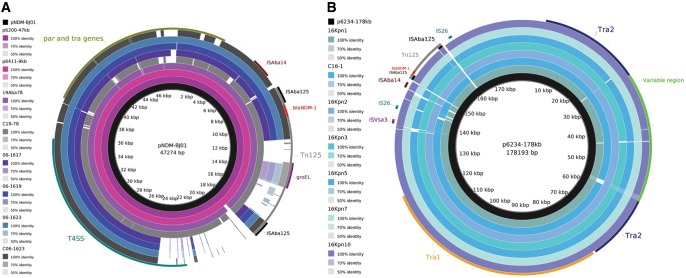
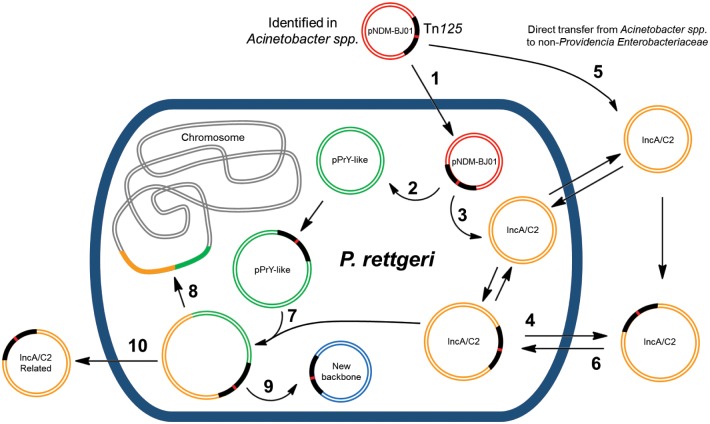
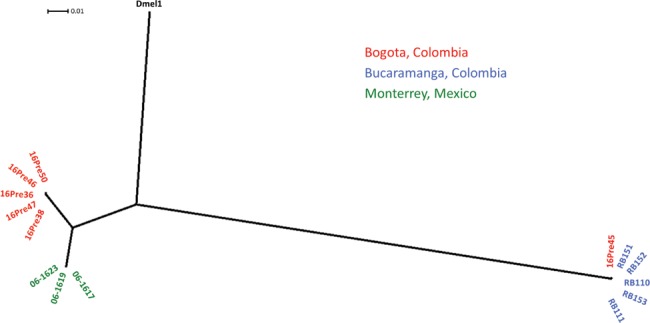
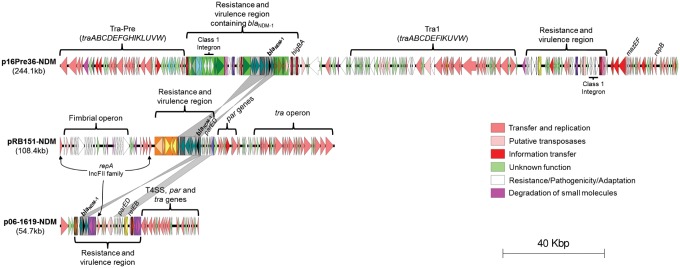
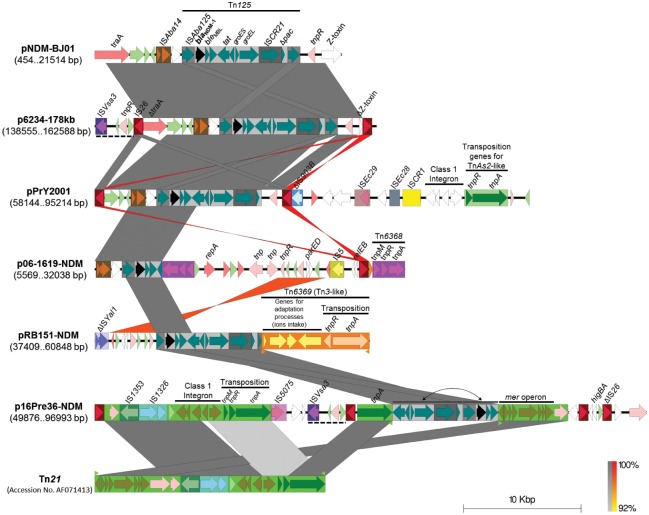
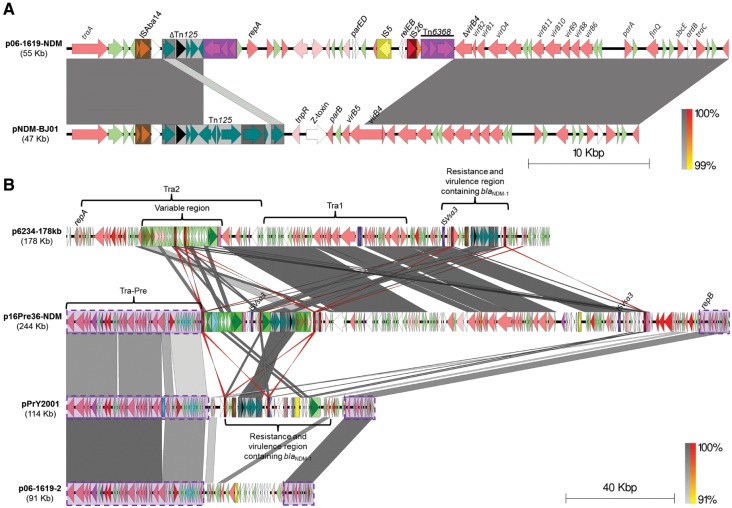
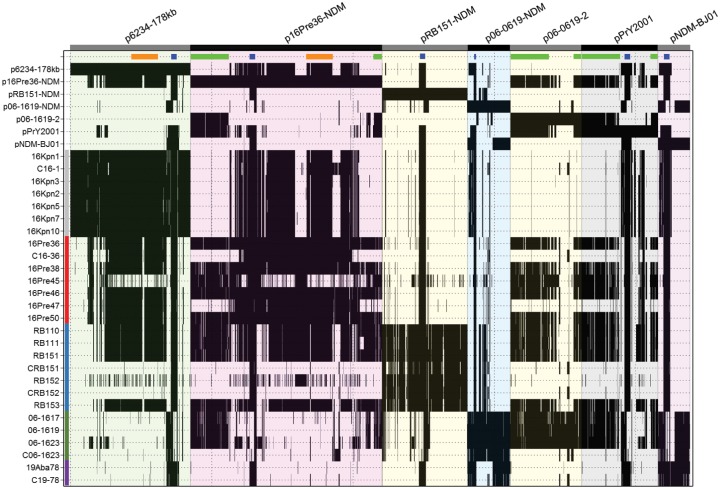
Bacteria that produce the broad-spectrum Carbapenem antibiotic New Delhi Metallo-β-lactamase (NDM) place a burden on health care systems worldwide, due to the limited treatment options for infections caused by them and the rapid global spread of this antibiotic resistance mechanism. Although it is believed that the associated resistance gene blaNDM-1 originated in Acinetobacter spp., the role of Enterobacteriaceae in its dissemination remains unclear. In this study, we used whole genome sequencing to investigate the dissemination dynamics of blaNDM-1-positive plasmids in a set of 21 clinical NDM-1-positive isolates from Colombia and Mexico (Providencia rettgeri, Klebsiella pneumoniae, and Acinetobacter baumannii) as well as six representative NDM-1-positive Escherichia coli transconjugants. Additionally, the plasmids from three representative P. rettgeri isolates were sequenced by PacBio sequencing and finished. Our results demonstrate the presence of previously reported plasmids from K. pneumoniae and A. baumannii in different genetic backgrounds and geographically distant locations in Colombia. Three new previously unclassified plasmids were also identified in P. rettgeri from Colombia and Mexico, plus an interesting genetic link between NDM-1-positive P. rettgeri from distant geographic locations (Canada, Mexico, Colombia, and Israel) without any reported epidemiological links was discovered. Finally, we detected a relationship between plasmids present in P. rettgeri and plasmids from A. baumannii and K. pneumoniae. Overall, our findings suggest a Russian doll model for the dissemination of blaNDM-1 in Latin America, with P. rettgeri playing a central role in this process, and reveal new insights into the evolution and dissemination of plasmids carrying such antibiotic resistance genes.
产生广谱碳青霉烯抗生素新德里金属β-内酰胺酶(NDM)的细菌给全球医疗保健系统带来了负担,因为针对它们所引起感染的治疗选择有限,且这种抗生素耐药机制在全球迅速传播。尽管人们认为相关耐药基因blaNDM-1起源于不动杆菌属,但肠杆菌科在其传播中的作用仍不清楚。在本研究中,我们使用全基因组测序来调查blaNDM-1阳性质粒在一组来自哥伦比亚和墨西哥的21株临床NDM-1阳性分离株(雷氏普罗威登斯菌、肺炎克雷伯菌和鲍曼不动杆菌)以及六株代表性NDM-1阳性大肠杆菌接合子中的传播动态。此外,对三株代表性雷氏普罗威登斯菌分离株的质粒进行了PacBio测序并完成测序。我们的结果表明,在哥伦比亚不同遗传背景和地理位置上存在先前报道的来自肺炎克雷伯菌和鲍曼不动杆菌的质粒。在来自哥伦比亚和墨西哥的雷氏普罗威登斯菌中还鉴定出三个新的先前未分类的质粒,此外还发现了来自遥远地理位置(加拿大、墨西哥、哥伦比亚和以色列)的NDM-1阳性雷氏普罗威登斯菌之间有趣的遗传联系,而没有任何报道的流行病学联系。最后,我们检测到雷氏普罗威登斯菌中存在的质粒与鲍曼不动杆菌和肺炎克雷伯菌的质粒之间的关系。总体而言,我们的研究结果提示了blaNDM-1在拉丁美洲传播的俄罗斯套娃模型,其中雷氏普罗威登斯菌在这一过程中发挥核心作用,并揭示了携带此类抗生素耐药基因的质粒的进化和传播的新见解。