Sorbonne Universités, UPMC Univ Paris 06, INSERM, UMRS1158 Neurophysiologie respiratoire expérimentale et clinique, Paris, France.
Laboratory of Cognitive Neuroscience, Center for Neuroprosthetics, Ecole Polytechnique Fédérale de Lausanne, Geneva, Switzerland.
Sci Rep. 2017 Aug 30;7(1):9990. doi: 10.1038/s41598-017-11045-y.
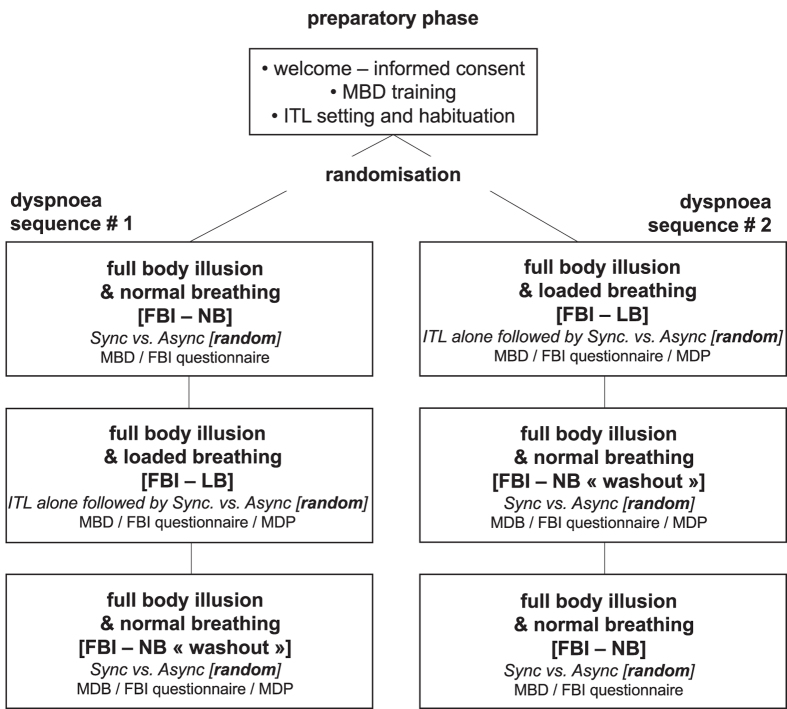
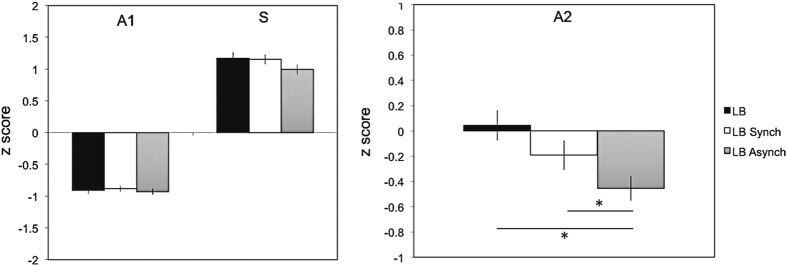
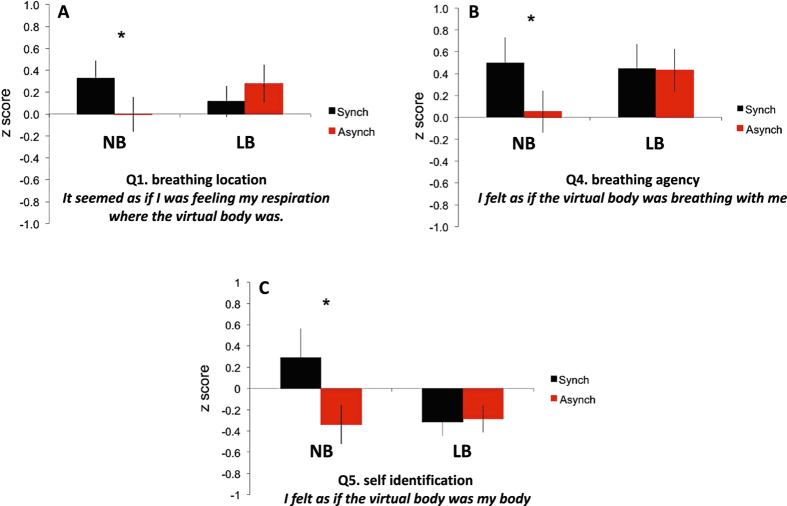
Dyspnoea, a subjective experience of breathing discomfort, is a most distressing symptom. It implicates complex cortical networks that partially overlap with those underlying bodily self-consciousness, the experience that the body is one's own within a given location (self-identification and self-location, respectively). Breathing as an interoceptive signal contributes to bodily self-consciousness: we predicted that inducing experimental dyspnoea would modify or disrupt this contribution. We also predicted that manipulating bodily self-consciousness with respiratory-visual stimulation would possibly attenuate dyspnoea. Twenty-five healthy volunteers were exposed to synchronous and asynchronous respiratory-visual illumination of an avatar during normal breathing and mechanically loaded breathing that elicited dyspnoea. During normal breathing, synchronous respiratory-visual stimulation induced illusory self-identification with the avatar and an illusory location of the subjects' breathing towards the avatar. This did not occur when respiratory-visual stimulation was performed during dyspnoea-inducing loaded breathing. In this condition, the affective impact of dyspnoea was attenuated by respiratory-visual stimulation, particularly when asynchronous. This study replicates and reinforces previous studies about the integration of interoceptive and exteroceptive signals in the construction of bodily self-consciousness. It confirms the existence of interferences between experimental dyspnoea and cognitive functions. It suggests that respiratory-visual stimulation should be tested as a non-pharmacological approach of dyspnoea treatment.
呼吸困难是一种主观的呼吸不适体验,是一种非常痛苦的症状。它涉及到复杂的皮质网络,这些网络与身体自我意识的部分重叠,身体自我意识是指身体在特定位置上是自己的(自我认同和自我定位)。呼吸作为一种内感受信号,有助于身体自我意识的形成:我们预测,诱导实验性呼吸困难会改变或破坏这种贡献。我们还预测,通过呼吸-视觉刺激来操纵身体自我意识,可能会减轻呼吸困难。25 名健康志愿者在正常呼吸和机械负荷呼吸时接受同步和异步呼吸-视觉照明的刺激,从而诱发呼吸困难。在正常呼吸期间,同步呼吸-视觉刺激会引起与化身的虚幻自我认同,并引起主体呼吸向化身方向的虚幻位置。当在诱发呼吸困难的负荷呼吸期间进行呼吸-视觉刺激时,这种情况不会发生。在这种情况下,呼吸-视觉刺激减轻了呼吸困难的情感影响,尤其是在异步的情况下。这项研究复制并加强了以前关于内感受和外感受信号在身体自我意识构建中的整合的研究。它证实了实验性呼吸困难和认知功能之间存在干扰。它表明,呼吸-视觉刺激应该作为一种非药物治疗呼吸困难的方法进行测试。