Johannsen Hannah, Muppala Vijayakumar, Gröschel Carina, Monecke Sebastian, Elsner Leslie, Didié Michael, Zimmermann Wolfram-Hubertus, Dressel Ralf
Institute of Cellular and Molecular Immunology, University Medical Center Göttingen, Göttingen, Germany.
Institute of Pharmacology and Toxicology, University Medical Center Göttingen, Göttingen, Germany.
Front Immunol. 2017 Aug 4;8:924. doi: 10.3389/fimmu.2017.00924. eCollection 2017.
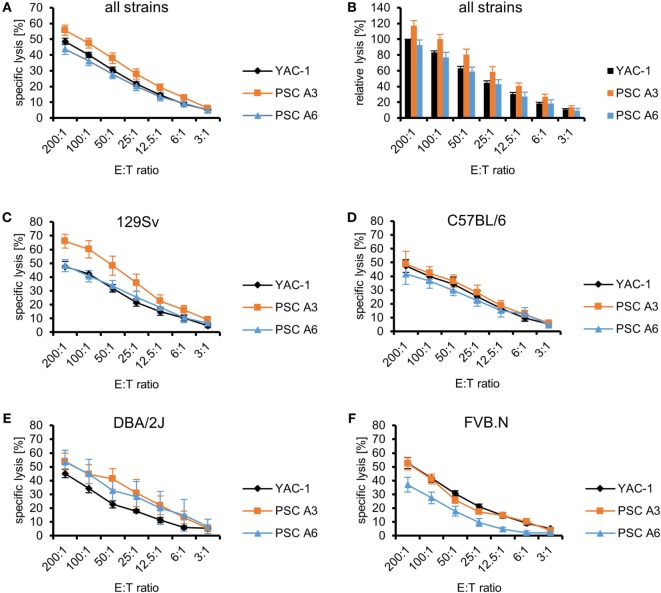
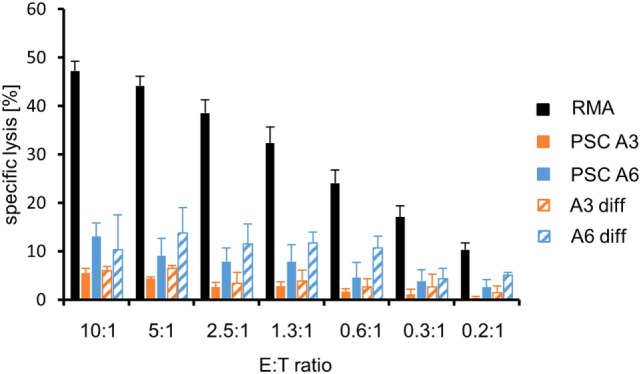
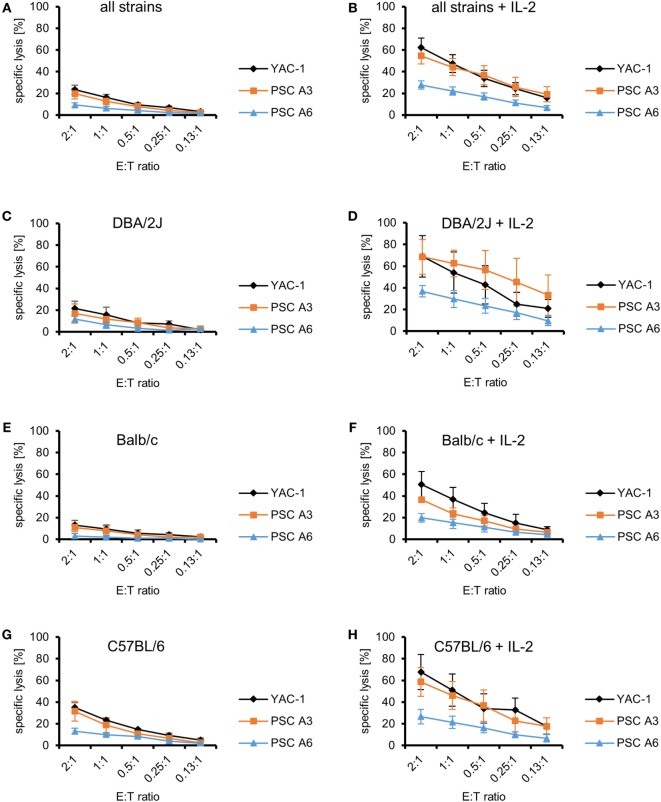
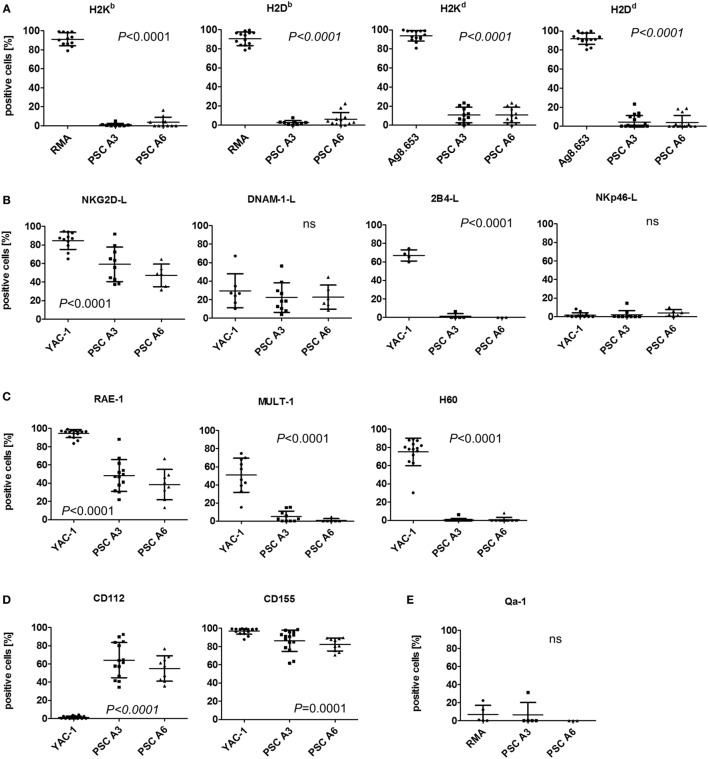
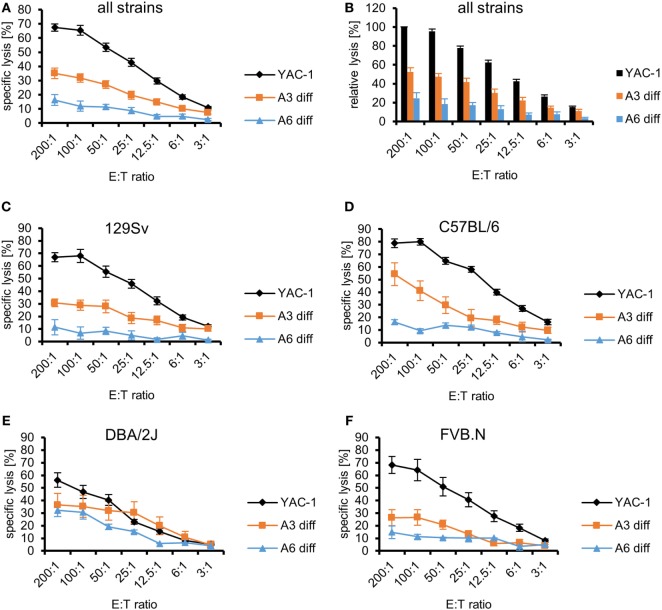
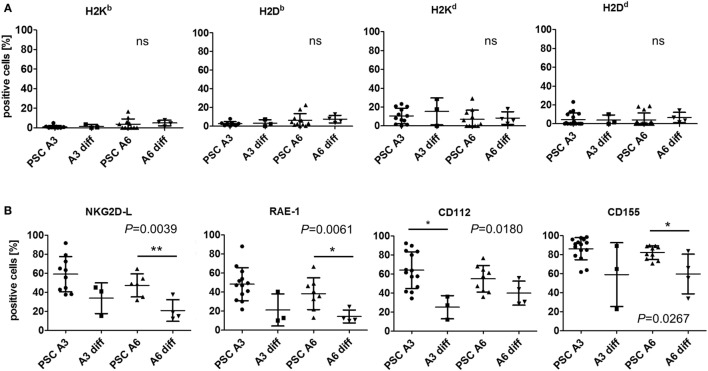
The perspective to transplant grafts derived from pluripotent stem cells has gained much attention in recent years. Parthenogenetic stem cells (PSCs) are an alternative pluripotent stem cell type that is attractive as source of grafts for allogeneic transplantations because most PSCs are haploidentical for the major histocompatibility complex (MHC). This reduced immunogenetic complexity of PSCs could tremendously simplify the search for MHC-matched allogeneic stem cells. In this study, we have characterized immunological properties of the MHC haploidentical PSC line A3 (H2) and the heterologous PSC line A6 (H2). Both PSC lines largely lack MHC class I molecules, which present peptides to cytotoxic T lymphocytes (CTLs) and serve as ligands for inhibitory natural killer (NK) receptors. They express ligands for activating NK receptors, including the NKG2D ligand RAE-1, and the DNAM-1 ligands CD112 and CD155. Consequently, both PSC lines are highly susceptible to killing by IL-2-activated NK cells. -differentiated cells acquire resistance and downregulate ligands for activating NK receptors but fail to upregulate MHC class I molecules. The PSC line A6 and differentiated A6 cells are largely resistant to CTLs derived from T cell receptor transgenic OT-I mice after pulsing of the targets with the appropriate peptide. The high susceptibility to killing by activated NK cells may constitute a general feature of pluripotent stem cells as it has been also found with other pluripotent stem cell types. This activity potentially increases the safety of transplantations, if grafts contain traces of undifferentiated cells that could be tumorigenic in the recipient.
近年来,源自多能干细胞的移植移植物前景备受关注。孤雌生殖干细胞(PSCs)是另一种多能干细胞类型,作为异体移植的移植物来源颇具吸引力,因为大多数PSCs在主要组织相容性复合体(MHC)方面是单倍体相同的。PSCs这种降低的免疫遗传复杂性可极大简化寻找MHC匹配的异体干细胞的过程。在本研究中,我们已对MHC单倍体相同的PSC系A3(H2)和异源PSC系A6(H2)的免疫特性进行了表征。这两种PSC系在很大程度上缺乏MHC I类分子,MHC I类分子将肽呈递给细胞毒性T淋巴细胞(CTLs)并作为抑制性自然杀伤(NK)受体的配体。它们表达激活NK受体的配体,包括NKG2D配体RAE - 1以及DNAM - 1配体CD112和CD155。因此,这两种PSC系都极易被IL - 2激活的NK细胞杀伤。分化细胞获得抗性并下调激活NK受体的配体,但未能上调MHC I类分子。在用适当肽刺激靶细胞后,PSC系A6和分化的A6细胞对源自T细胞受体转基因OT - I小鼠的CTLs具有很大抗性。对激活的NK细胞杀伤的高度敏感性可能是多能干细胞的一个普遍特征,因为在其他多能干细胞类型中也已发现这一点。如果移植物含有可能在受体中致瘤的未分化细胞痕迹,这种活性可能会提高移植的安全性。