Centro de Excelencia en Salud Cardiovascular para el Cono Sur (CESCAS), C1414CPV Ciudad Autónoma de Buenos Aires, Argentina.
Escuela de Nutrición, Universidad de Buenos Aires, C1122AAD Ciudad Autónoma de Buenos Aires, Argentina.
Nutrients. 2017 Aug 31;9(9):964. doi: 10.3390/nu9090964.
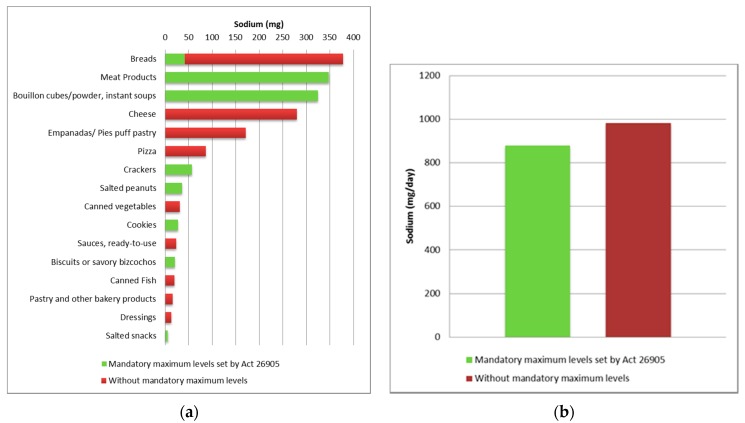
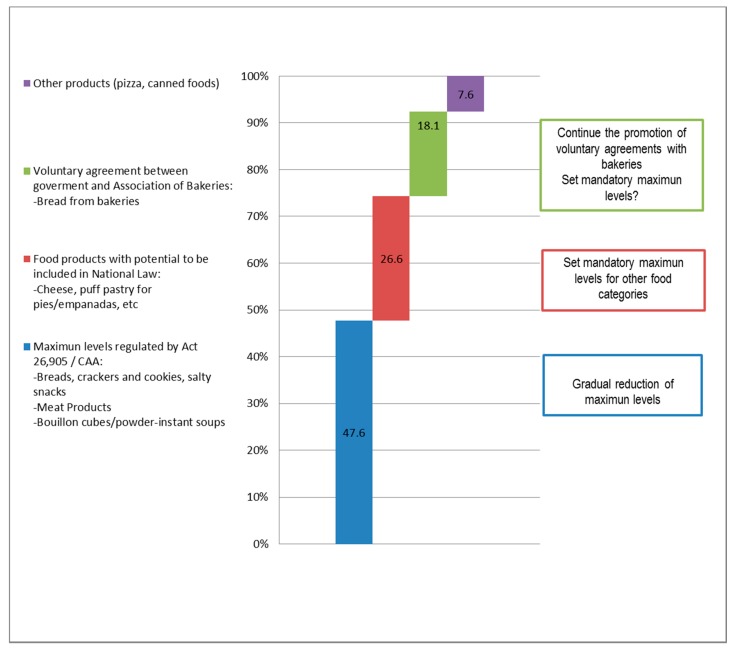
The maximum content of sodium in selected processed foods (PF) in Argentina was limited by a law enacted in 2013. Data about intake of these and other foods are necessary for policy planning, implementation, evaluation, and monitoring. We examined data from the CESCAS I population-based cohort study to assess the main dietary sources among PF and frequency of discretionary salt use by sex, age, and education attainment, before full implementation of the regulations in 2015. We used a validated 34-item FFQ (Food Frequency Questionnaire) to assess PF intake and discretional salt use. Among 2127 adults in two Argentinean cities, aged 35-76 years, mean salt intake from selected PFs was 4.7 g/day, higher among male and low education subgroups. Categories of foods with regulated maximum limits provided near half of the sodium intake from PFs. Use of salt (always/often) at the table and during cooking was reported by 9% and 73% of the population, respectively, with higher proportions among young people. Reducing salt consumption to the target of 5 g/day may require adjustments to the current regulation (reducing targets, including other food categories), as well as reinforcing strategies such as education campaigns, labeling, and voluntary agreement with bakeries.
2013 年阿根廷颁布法律,限制部分加工食品(PF)中钠的最高含量。为了进行政策规划、实施、评估和监测,有必要了解这些食品和其他食品的摄入量。我们利用 CESCAS I 基于人群的队列研究数据,在 2015 年全面实施法规之前,按性别、年龄和教育程度评估 PF 及随意用盐的主要膳食来源和频率。我们使用经过验证的 34 项食物频率问卷(FFQ)评估 PF 摄入量和随意用盐情况。在阿根廷两个城市的 2127 名 35-76 岁成年人中,选定 PF 的平均盐摄入量为 4.7 克/天,男性和低教育程度亚组的摄入量更高。受法规限制的最高限量食品类别提供了近一半的 PF 钠摄入量。分别有 9%和 73%的人在餐桌上和烹饪时经常/总是用盐,年轻人中这一比例更高。要将盐摄入量减少到 5 克/天的目标,可能需要调整现行法规(降低目标,包括其他食品类别),并加强教育宣传、标签和与面包店自愿协议等策略。