Czolowski Eliza D, Santoro Renee L, Srebotnjak Tanja, Shonkoff Seth B C
PSE Healthy Energy , Ithaca, New York, USA.
Harvey Mudd College , Claremont, California, USA.
Environ Health Perspect. 2017 Aug 23;125(8):086004. doi: 10.1289/EHP1535.
Higher risk of exposure to environmental health hazards near oil and gas wells has spurred interest in quantifying populations that live in proximity to oil and gas development. The available studies on this topic lack consistent methodology and ignore aspects of oil and gas development of value to public health-relevant assessment and decision-making.
We aim to present a methodological framework for oil and gas development proximity studies grounded in an understanding of hydrocarbon geology and development techniques.
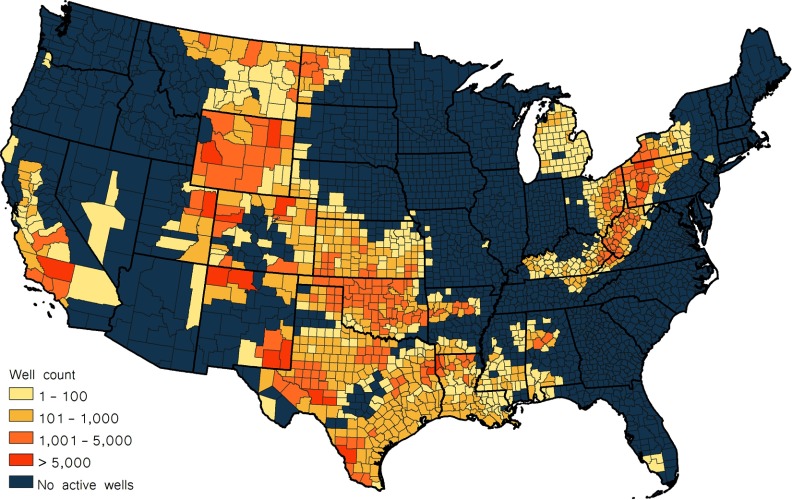
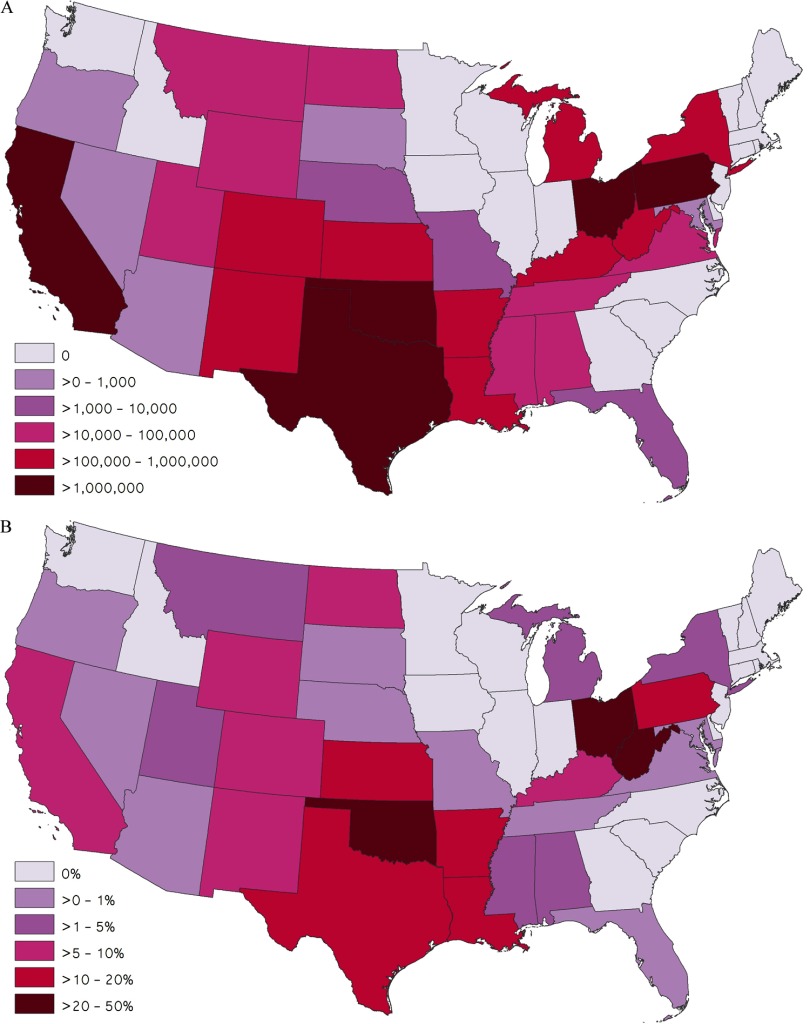
We geospatially overlay locations of active oil and gas wells in the conterminous United States and Census data to estimate the population living in proximity to hydrocarbon development at the national and state levels. We compare our methods and findings with existing proximity studies.
Nationally, we estimate that 17.6 million people live within 1,600m (∼1 mi) of at least one active oil and/or gas well. Three of the eight studies overestimate populations at risk from actively producing oil and gas wells by including wells without evidence of production or drilling completion and/or using inappropriate population allocation methods. The remaining five studies, by omitting conventional wells in regions dominated by historical conventional development, significantly underestimate populations at risk.
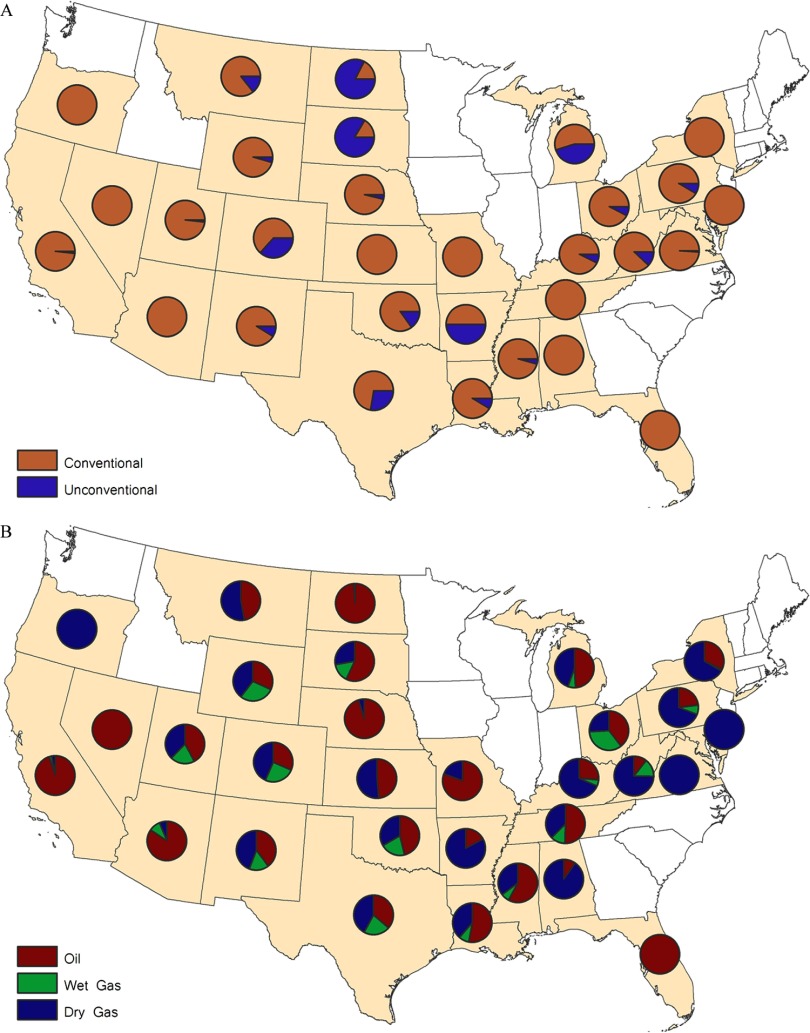
The well inventory guidelines we present provide an improved methodology for hydrocarbon proximity studies by acknowledging the importance of both conventional and unconventional well counts as well as the relative exposure risks associated with different primary production categories (e.g., oil, wet gas, dry gas) and developmental stages of wells. https://doi.org/10.1289/EHP1535.
在油气井附近接触环境健康危害的风险较高,这激发了人们对量化居住在油气开发附近人口的兴趣。关于这一主题的现有研究缺乏一致的方法,并且忽略了对与公共卫生相关的评估和决策有价值的油气开发方面。
我们旨在提出一个基于对烃类地质和开发技术理解的油气开发邻近度研究方法框架。
我们将美国本土活跃油气井的位置与人口普查数据进行地理空间叠加,以估计国家和州层面居住在烃类开发附近的人口。我们将我们的方法和结果与现有的邻近度研究进行比较。
在全国范围内,我们估计有1760万人居住在距至少一口活跃油井和/或气井1600米(约1英里)范围内。八项研究中的三项通过纳入没有生产或钻井完成证据的油井和/或使用不适当的人口分配方法,高估了活跃产油井和气井带来的风险人群。其余五项研究由于忽略了历史常规开发主导地区的常规油井,显著低估了风险人群。
我们提出的油井清单指南为烃类邻近度研究提供了一种改进的方法,承认了常规和非常规油井数量的重要性,以及与不同主要生产类别(如石油、湿气、干气)和油井开发阶段相关的相对暴露风险。https://doi.org/10.1289/EHP1535