Han Jaeseok, Kaufman Randal J
Soonchunhyang Institute of Medi-Bio Science (SIMS), Soonchunhyang University, Cheonan-si, Choongchungnam-do 31151, Republic of Korea.
Degenerative Diseases Program, Sanford Burnham Prebys Medical Discovery Institute, La Jolla, California, 92307 USA.
Genes Dev. 2017 Jul 15;31(14):1417-1438. doi: 10.1101/gad.297374.117.
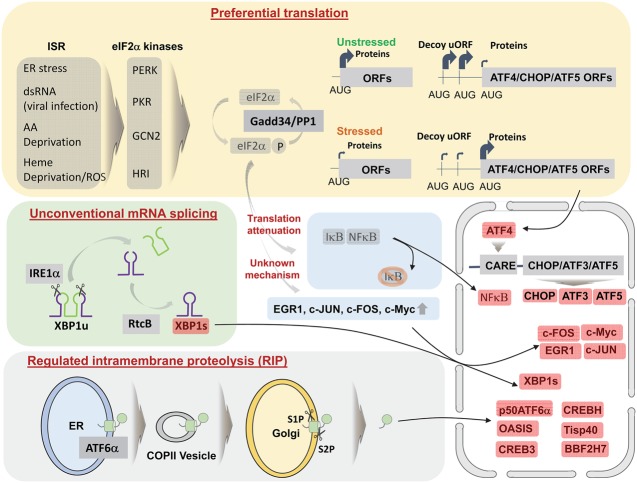
Numerous environmental, physiological, and pathological insults disrupt protein-folding homeostasis in the endoplasmic reticulum (ER), referred to as ER stress. Eukaryotic cells evolved a set of intracellular signaling pathways, collectively termed the unfolded protein response (UPR), to maintain a productive ER protein-folding environment through reprogramming gene transcription and mRNA translation. The UPR is largely dependent on transcription factors (TFs) that modulate expression of genes involved in many physiological and pathological conditions, including development, metabolism, inflammation, neurodegenerative diseases, and cancer. Here we summarize the current knowledge about these mechanisms, their impact on physiological/pathological processes, and potential therapeutic applications.
许多环境、生理和病理损伤会破坏内质网(ER)中的蛋白质折叠稳态,即所谓的内质网应激。真核细胞进化出了一组细胞内信号通路,统称为未折叠蛋白反应(UPR),通过重新编程基因转录和mRNA翻译来维持内质网高效的蛋白质折叠环境。UPR在很大程度上依赖于转录因子(TFs),这些转录因子可调节参与许多生理和病理状况(包括发育、代谢、炎症、神经退行性疾病和癌症)的基因表达。在此,我们总结了关于这些机制、它们对生理/病理过程的影响以及潜在治疗应用的现有知识。