
全基因组鉴定和特征分析陆地棉(Gossypium hirsutum)中的 TCP 转录因子基因。
Genome-wide identification and characterization of TCP transcription factor genes in upland cotton (Gossypium hirsutum).
机构信息
Hubei Key Laboratory of Genetic Regulation and Integrative Biology, School of Life Sciences, Central China Normal University, Wuhan, 430079, China.
出版信息
Sci Rep. 2017 Aug 31;7(1):10118. doi: 10.1038/s41598-017-10609-2.
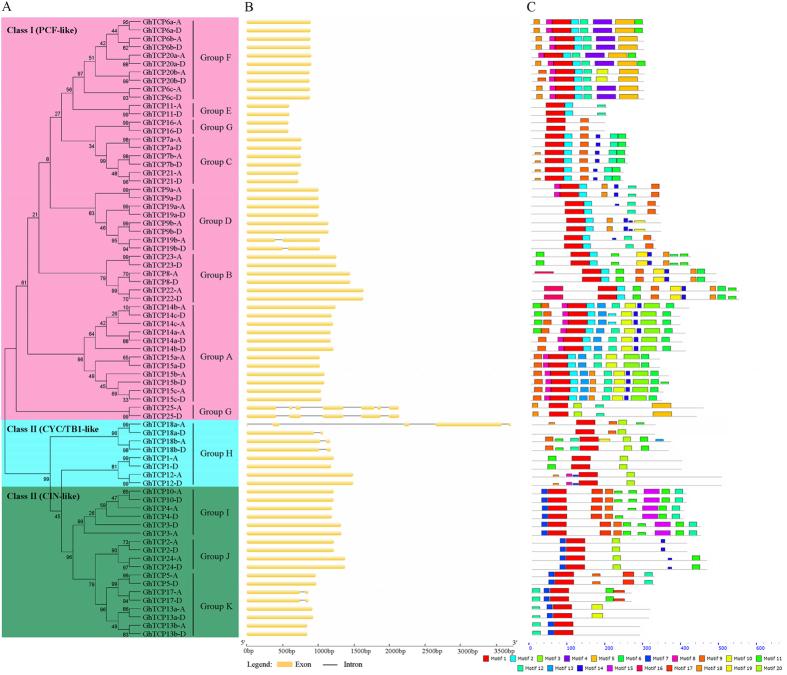
TCP proteins are plant-specific transcription factors (TFs), and perform a variety of physiological functions in plant growth and development. In this study, 74 non-redundant TCP genes were identified in upland cotton (Gossypium hirsutum L.) genome. Cotton TCP family can be classified into two classes (class I and class II) that can be further divided into 11 types (groups) based on their motif composition. Quantitative RT-PCR analysis indicated that GhTCPs display different expression patterns in cotton tissues. The majority of these genes are preferentially or specifically expressed in cotton leaves, while some GhTCP genes are highly expressed in initiating fibers and/or elongating fibers of cotton. Yeast two-hybrid results indicated that GhTCPs can interact with each other to form homodimers or heterodimers. In addition, GhTCP14a and GhTCP22 can interact with some transcription factors which are involved in fiber development. These results lay solid foundation for further study on the functions of TCP genes during cotton fiber development.
TCP 蛋白是植物特有的转录因子(TFs),在植物生长发育过程中发挥着多种生理功能。本研究在陆地棉基因组中鉴定出 74 个非冗余的 TCP 基因。棉花 TCP 家族可分为两类(I 类和 II 类),根据其基序组成可进一步分为 11 种(组)。定量 RT-PCR 分析表明,GhTCPs 在棉花组织中呈现不同的表达模式。这些基因中的大多数在棉花叶片中优先或特异性表达,而一些 GhTCP 基因在棉花起始纤维和/或伸长纤维中高度表达。酵母双杂交结果表明,GhTCPs 可以相互作用形成同源二聚体或异源二聚体。此外,GhTCP14a 和 GhTCP22 可以与一些参与纤维发育的转录因子相互作用。这些结果为进一步研究 TCP 基因在棉花纤维发育过程中的功能奠定了坚实的基础。




 Zotero 插件