State Key Laboratory of Applied Organic Chemistry, Key Laboratory of Nonferrous Metal Chemistry and Resources Utilization of Gansu Province, College of Chemistry and Chemical Engineering, Lanzhou University, Lanzhou, 730000, P. R. China.
Key laboratory of Magnetic Resonance in Biological Systems, State Key Laboratory of Magnetic Resonance and Atomic and Molecular Physics, Wuhan Institute of Physics and Mathematics, Chinese Academy of Sciences, Wuhan, 430071, China.
Sci Rep. 2017 Aug 31;7(1):10290. doi: 10.1038/s41598-017-10221-4.
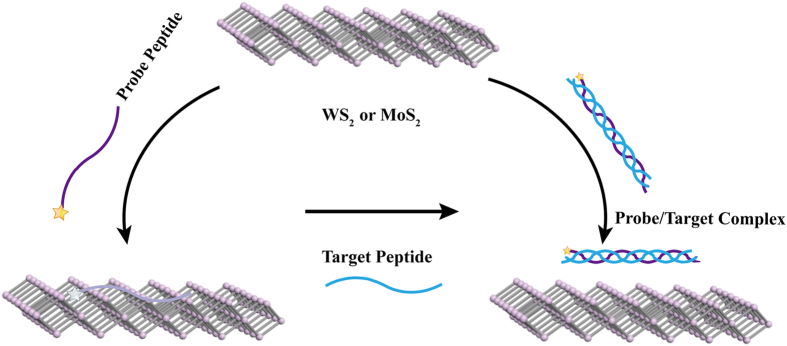
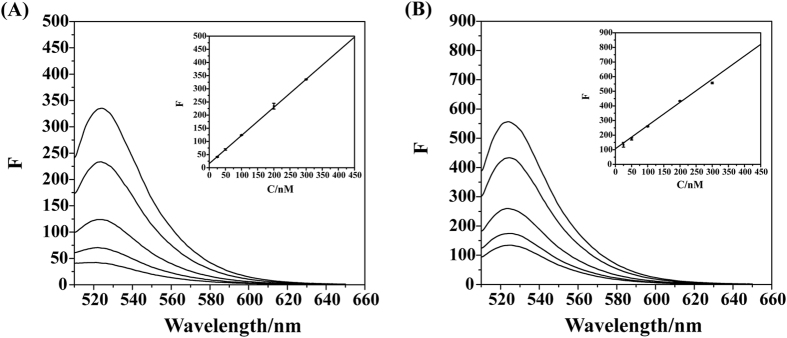
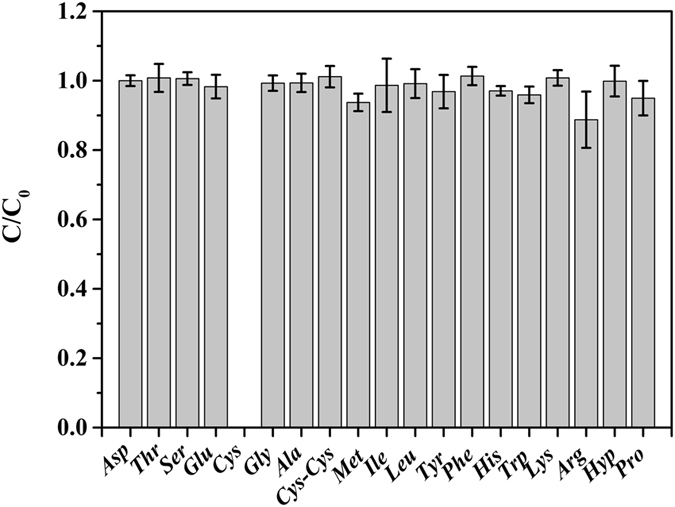
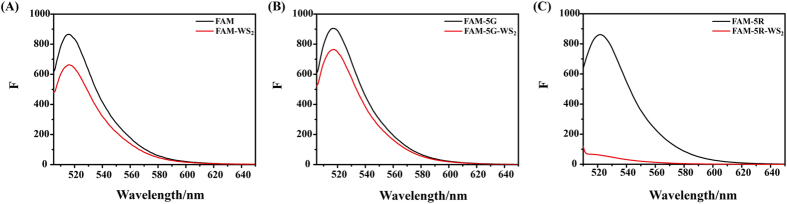
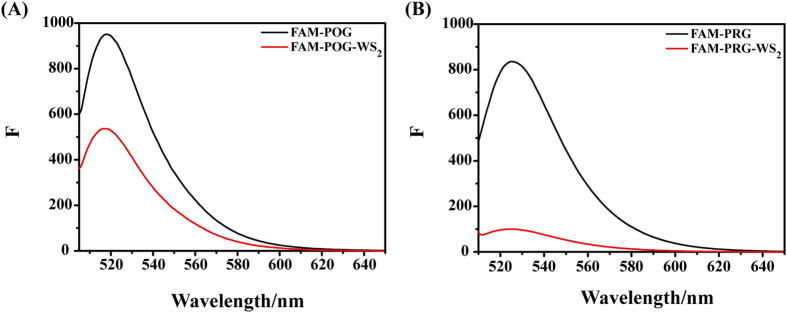
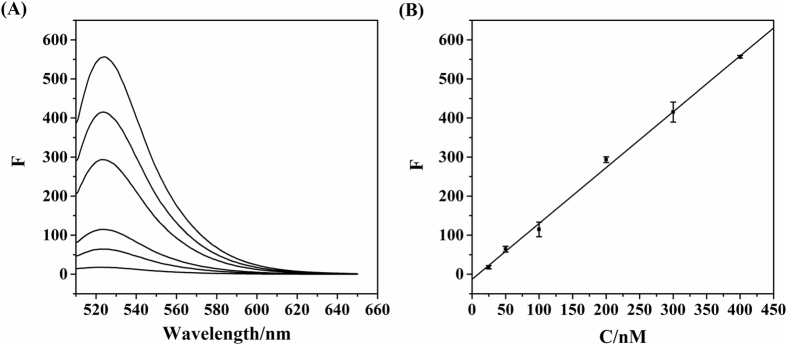
Biosensors based on the two-dimensional layered nanomaterials transition metal dichalcogenides such as WS and MoS have shown broad applications, while they largely rely on the utilization of single stranded DNA as probe biomolecules. Herein we have constructed novel WS- and MoS- based biosensing platforms using peptides as probe biomolecules. We have revealed for the first time that the WS and MoS nanosheets display a distinct adsorption for Arg amino acid and particularly, Arg-rich peptdies. We have demonstrated that the WS and MoS dramatically quench the fluorescence of our constructed Arg-rich probe peptide, while the hybridization of the probe peptide with its target collagen sequence leads to the fluorescence recovery. The WS-based platform provides a sensitive fluorescence-enhanced assay that is highly specific to the target collagen peptide with little interferences from other proteins. This assay can be applied for quantitative detection of collagen biomarkers in complex biological fluids. The successful development of WS- and MoS- based biosensors using non-ssDNA probes opens great opportunities for the construction of novel multifunctional biosensing platforms, which may have great potential in a wide range of biomedical field.
基于二维层状纳米材料过渡金属二硫属化物(如 WS 和 MoS)的生物传感器具有广泛的应用,而它们在很大程度上依赖于单链 DNA 作为探针生物分子的利用。在此,我们使用肽作为探针生物分子构建了新型的 WS 和 MoS 基生物传感平台。我们首次揭示了 WS 和 MoS 纳米片对 Arg 氨基酸表现出明显的吸附作用,尤其是富含 Arg 的肽。我们已经证明,WS 和 MoS 会剧烈猝灭我们构建的富含 Arg 的探针肽的荧光,而探针肽与靶标胶原蛋白序列的杂交会导致荧光恢复。基于 WS 的平台提供了一种灵敏的荧光增强分析方法,该方法对靶标胶原蛋白肽具有高度特异性,几乎不受其他蛋白质的干扰。该分析方法可用于复杂生物流体中胶原蛋白生物标志物的定量检测。使用非 ssDNA 探针成功开发的 WS 和 MoS 基生物传感器为构建新型多功能生物传感平台开辟了巨大的机会,这些平台在广泛的生物医学领域可能具有巨大的潜力。