Durán Paola, Jorquera Milko, Viscardi Sharon, Carrion Victor J, Mora María de la Luz, Pozo María J
Scientific and Technological Bioresource Nucleus, Universidad de La FronteraTemuco, Chile.
Biocontrol Research Laboratory, Universidad de La FronteraTemuco, Chile.
Front Microbiol. 2017 Aug 15;8:1552. doi: 10.3389/fmicb.2017.01552. eCollection 2017.
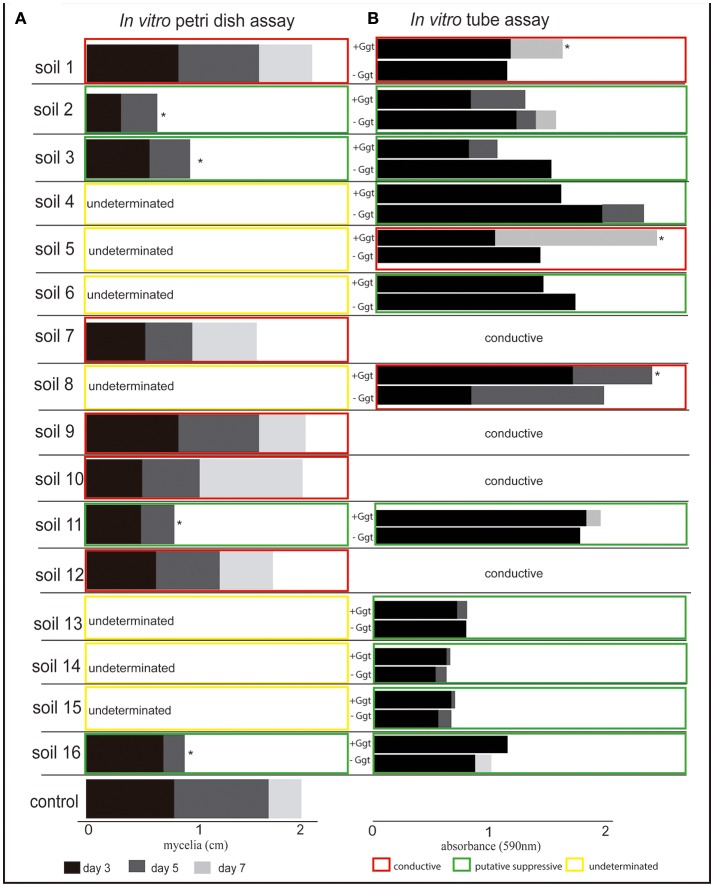
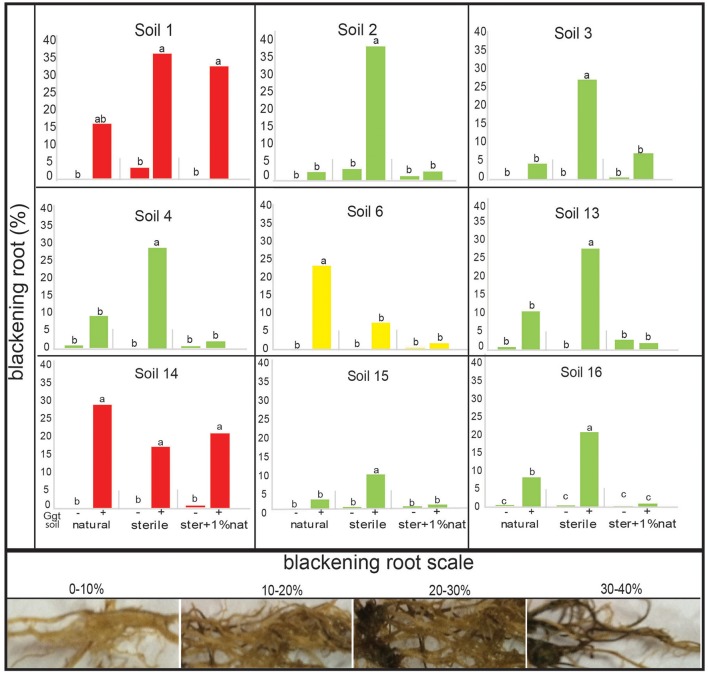
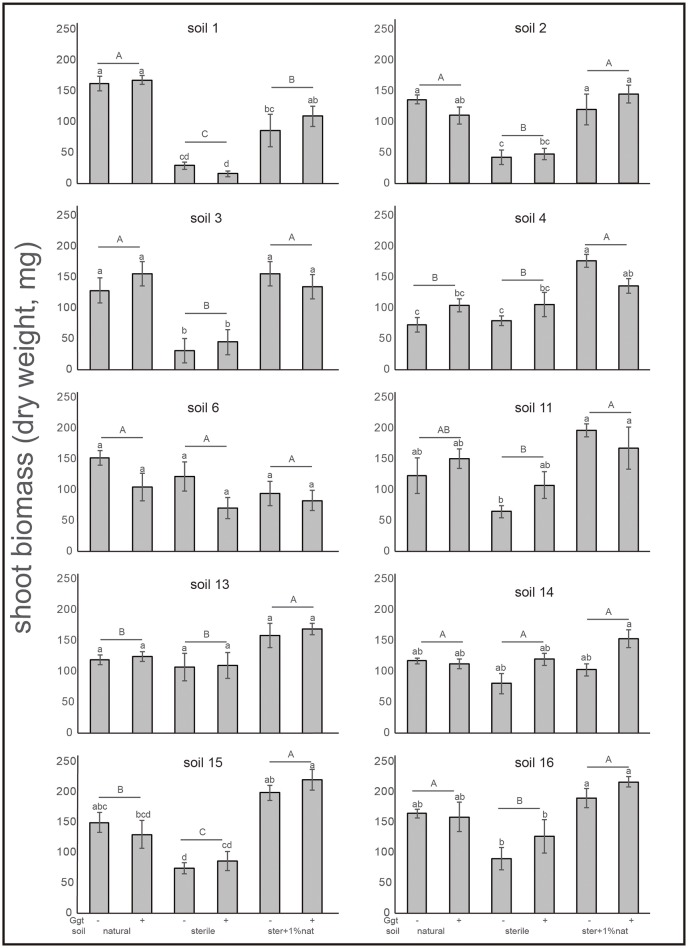
Wheat production around the world is severely compromised by the occurrence of "take-all" disease, which is caused by the soil-borne pathogen var. tritici (Ggt). In this context, suppressive soils are those environments in which plants comparatively suffer less soil-borne pathogen diseases than expected, owing to native soil microorganism activities. In southern Chile, where 85% of the national cereal production takes place, several studies have suggested the existence of suppressive soils under extensive wheat cropping. Thus, this study aimed to screen Ggt-suppressive soil occurrence in 16 locations managed by indigenous "Mapuche" communities, using extensive wheat cropping for more than 10 years. Ggt growth inhibition screenings allowed the identification of nine putative suppressive soils. Six of these soils, including Andisols and Ultisols, were confirmed to be suppressive, since they reduced take-all disease in wheat plants growing under greenhouse conditions. Suppressiveness was lost upon soil sterilization, and recovered by adding 1% of the natural soil, hence confirming that suppressiveness was closely associated to the soil microbiome community composition. Our results demonstrate that long-term extensive wheat cropping, established by small Mapuche communities, can generate suppressive soils that can be used as effective microorganism sources for take-all disease biocontrol. Accordingly, suppressive soil identification and characterization are key steps for the development of environmentally-friendly and efficient biotechnological applications for soil-borne disease control.
全球小麦生产受到“全蚀病”的严重影响,该病由土壤传播的病原菌禾顶囊壳变种(Ggt)引起。在这种情况下,抑病土壤是指由于本地土壤微生物活动,植物遭受土壤传播病原菌病害的程度比预期相对较轻的环境。在智利南部,全国85%的谷物生产都集中在此,多项研究表明,在大面积种植小麦的情况下存在抑病土壤。因此,本研究旨在对由当地“马普切”社区管理的16个地点进行筛选,这些地点长期(超过10年)大面积种植小麦,以检测是否存在对Ggt有抑制作用的土壤。通过对Ggt生长抑制的筛选,确定了9种假定的抑病土壤。其中6种土壤,包括安第斯土和老成土,被证实具有抑制作用,因为它们能减轻温室条件下生长的小麦植株的全蚀病。土壤灭菌后抑制作用消失,添加1%的天然土壤后抑制作用恢复,从而证实抑制作用与土壤微生物群落组成密切相关。我们的结果表明,马普切小社区长期进行大面积小麦种植能够产生抑病土壤,可作为防治全蚀病的有效微生物来源。因此,抑病土壤的鉴定和表征是开发环境友好型高效土壤传播病害防治生物技术应用的关键步骤。