Department of Medical Physiology, University Medical Center Utrecht, Yalelaan 50, 3584CM, Utrecht, The Netherlands.
Hubrecht Institute, Royal Netherlands Academy of Arts and Sciences (KNAW), University Medical Centre Utrecht, 3584CT, Utrecht, The Netherlands.
Basic Res Cardiol. 2017 Aug 31;112(5):56. doi: 10.1007/s00395-017-0645-y.
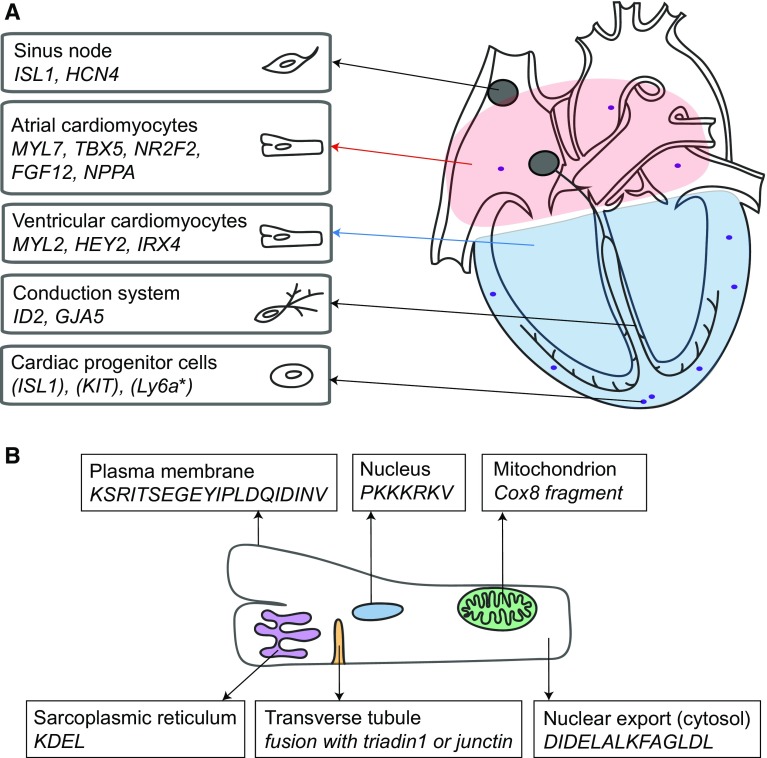
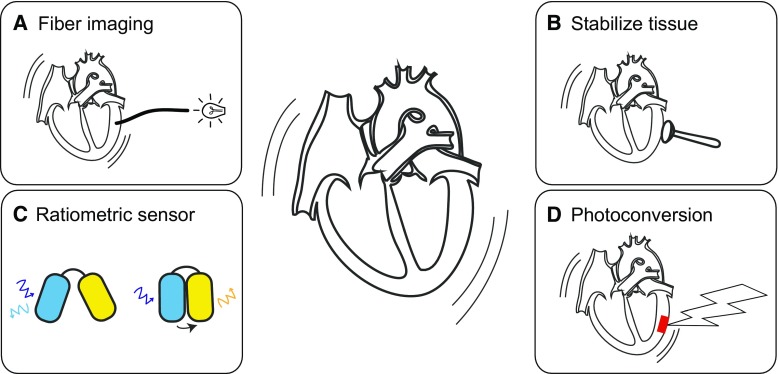
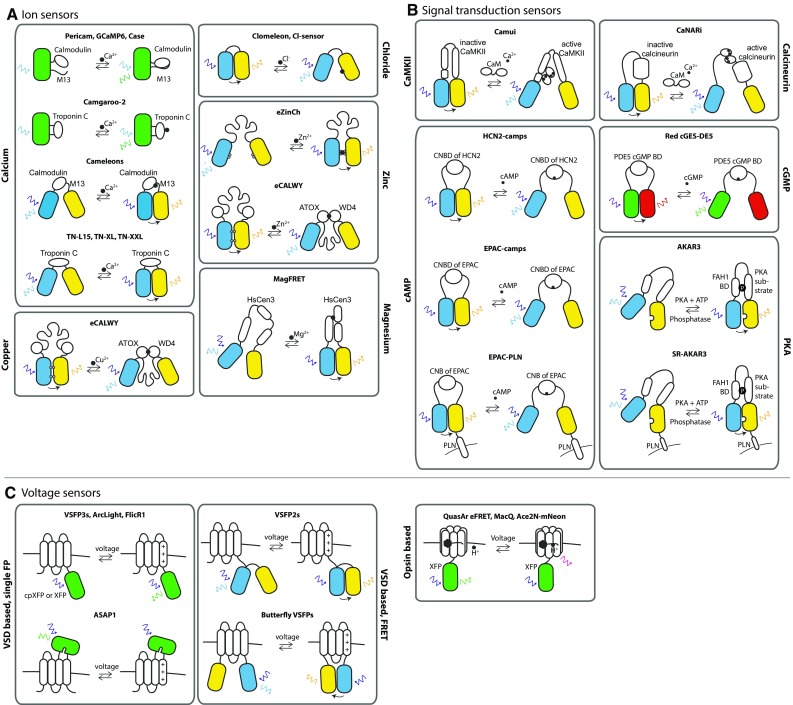
Our current understanding of cardiac excitation and its coupling to contraction is largely based on ex vivo studies utilising fluorescent organic dyes to assess cardiac action potentials and signal transduction. Recent advances in optogenetic sensors open exciting new possibilities for cardiac research and allow us to answer research questions that cannot be addressed using the classic organic dyes. Especially thrilling is the possibility to use optogenetic sensors to record parameters of cardiac excitation and contraction in vivo. In addition, optogenetics provide a high spatial resolution, as sensors can be coupled to motifs and targeted to specific cell types and subcellular domains of the heart. In this review, we will give a comprehensive overview of relevant optogenetic sensors, how they can be utilised in cardiac research and how they have been applied in cardiac research up to now.
我们目前对于心脏兴奋及其与收缩的偶联的理解在很大程度上基于利用荧光有机染料来评估心脏动作电位和信号转导的离体研究。光遗传学传感器的最新进展为心脏研究开辟了令人兴奋的新可能性,并使我们能够回答使用经典有机染料无法解决的研究问题。特别令人兴奋的是,有可能使用光遗传学传感器在体内记录心脏兴奋和收缩的参数。此外,光遗传学提供了高空间分辨率,因为传感器可以与基序偶联,并针对心脏的特定细胞类型和亚细胞域进行靶向。在这篇综述中,我们将全面概述相关的光遗传学传感器,它们如何在心脏研究中得到利用,以及迄今为止它们在心脏研究中的应用。